
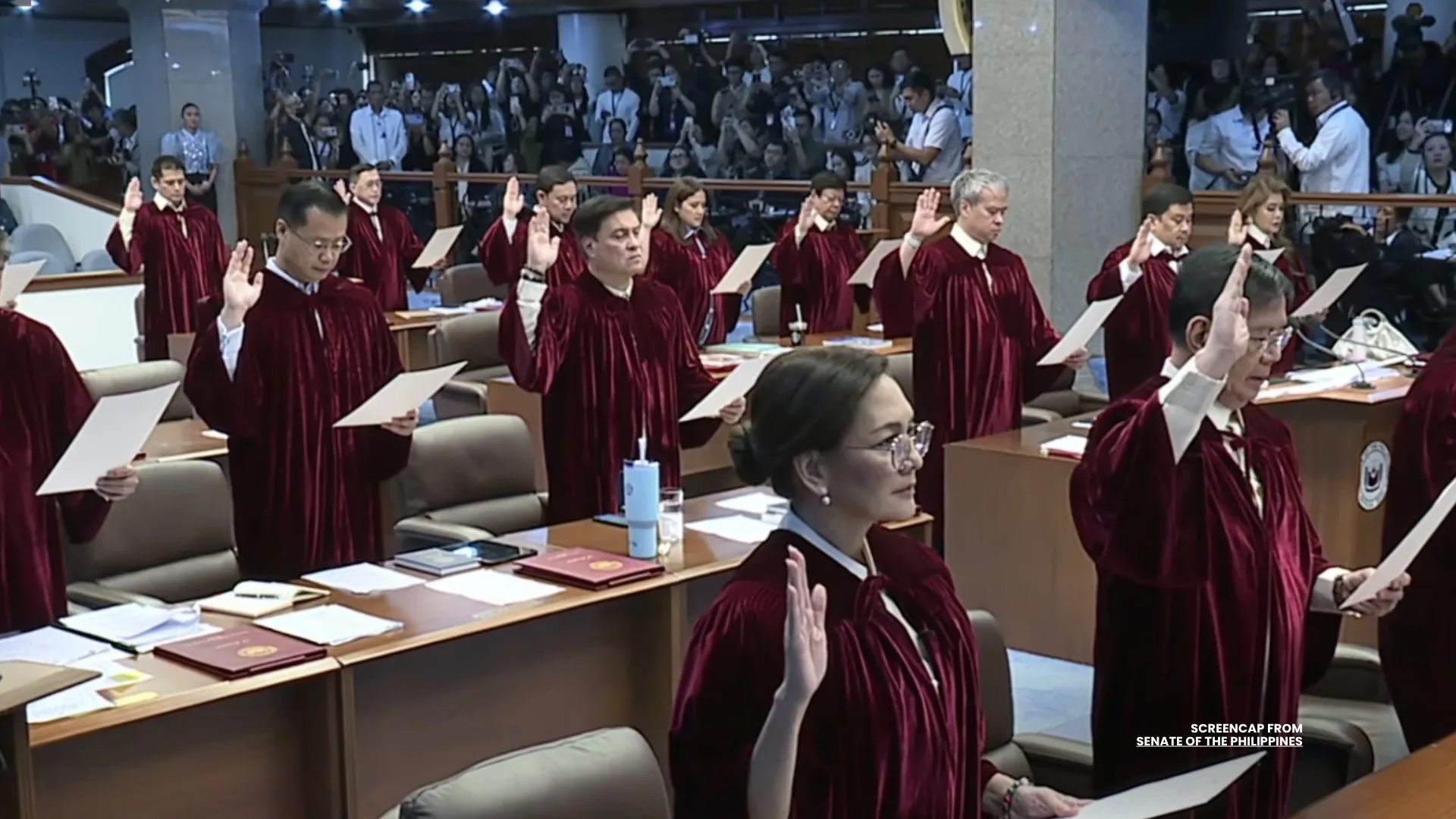
The Senate on Monday formally convened as an impeachment court for the trial of Vice President Sara Duterte before proceeding to approve a new set of committee chairmanships, marking a politically significant day for the chamber amid intensifying national tensions.
After weeks of anticipation, 23 of the Senate’s 24 members, wearing deep crimson robes, took their oath as “impartial” judges as the Senate officially transformed into an impeachment court.
Senate President Alan Peter Cayetano likewise took his oath as presiding officer of the court.
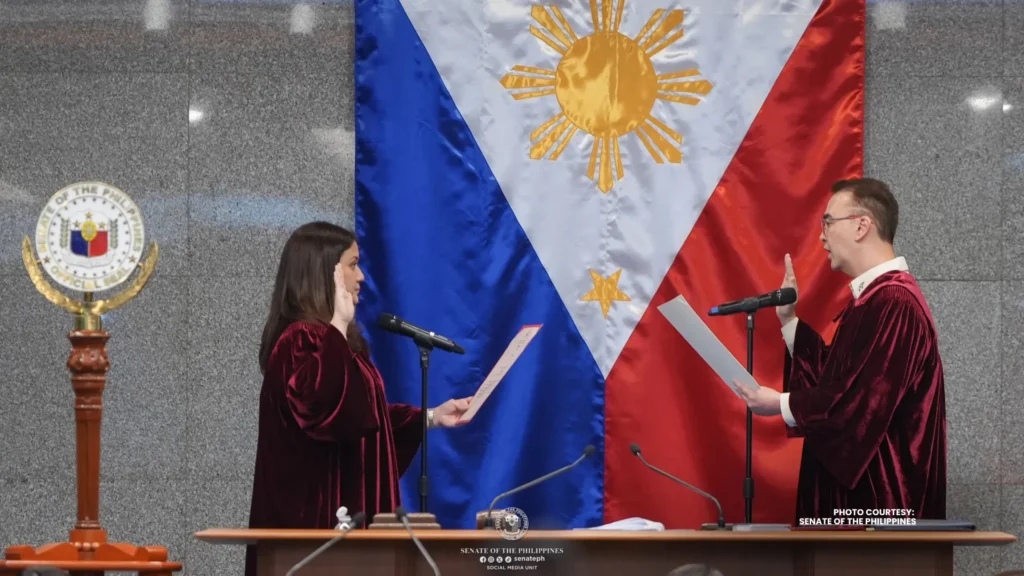
Duterte is facing allegations involving the supposed misuse of confidential funds, threats against President Ferdinand Marcos Jr. and his family, and the accumulation of alleged unexplained wealth.
Under the Constitution, the Senate is mandated to proceed “forthwith” with an impeachment trial once a verified complaint is transmitted by the House of Representatives.
The proceedings have drawn heightened public attention after senators perceived to be allied with Duterte gained influence in the chamber earlier this month, prompting concerns from constitutional experts and lawmakers that the impeachment complaint could be dismissed without a full trial.
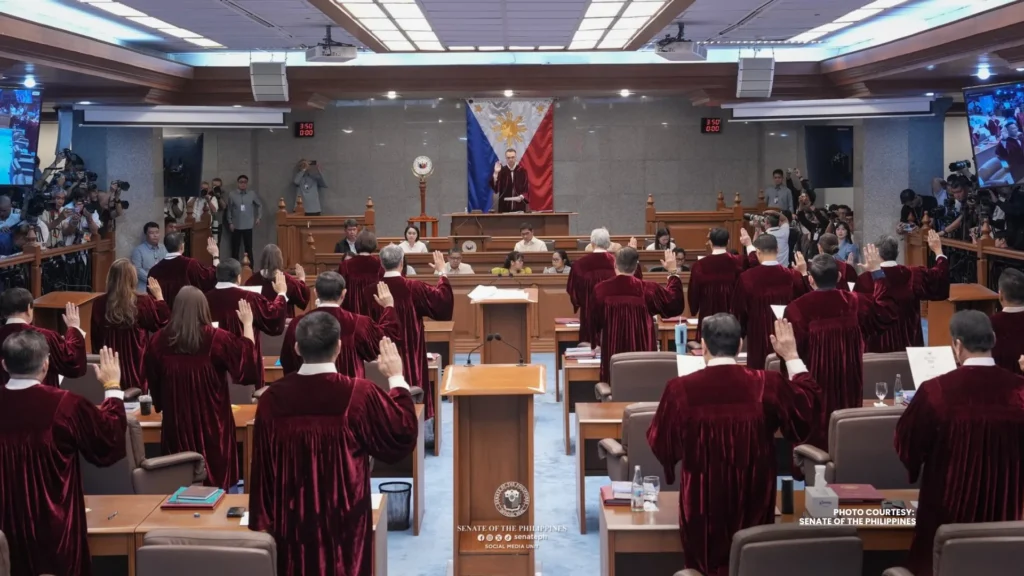
Cayetano, however, assured the public that the Senate would uphold constitutional processes and decide the case based solely on evidence presented during the proceedings.
Several House lawmakers and legal experts have argued that once convened as an impeachment court, the Senate cannot simply dismiss the complaint outright without conducting trial proceedings.
Former Integrated Bar of the Philippines president Domingo Cayosa said the impeachment process is constitutionally mandatory.
“Hindi po ito puwedeng i-shortcut at i-dismiss na lang kasi hindi yan yung essence ng impeachment,” Cayosa said in an interview.
Duterte’s legal team earlier said they are prepared to face trial, while the Vice President has repeatedly denied wrongdoing and maintained that there is no evidence supporting the allegations against her.
Malacañang, meanwhile, reiterated that the impeachment proceedings are solely within the Senate’s authority.
Palace Press Officer Claire Castro said President Marcos would not interfere in Senate affairs, including leadership decisions related to the impeachment proceedings.
“Hindi kailangan na makialam ang Pangulo sa mandato ng Senado dahil mayroon po tayong separation of powers,” Castro said.
Following the impeachment court session, senators also approved several committee leadership assignments.
Loren Legarda was designated to chair the committees on Culture and the Arts and Basic Education, while Pia Cayetano was assigned to lead the committees on Ways and Means, Sustainable Development Goals, Innovation and Futures Thinking, and Energy.
Bong Go was named chair of the committees on Health and Demography and Sports, while Joel Villanueva retained the Higher, Technical and Vocational Education committee.
The Senate also approved the designation of Jinggoy Estrada as chair of the committees on National Defense and Security, Peace, Unification and Reconciliation, and Games and Amusement.
Meanwhile, Rodante Marcoleta was named chair of the Public Services committee, while Robin Padilla took over the committees on Public Information and Mass Media and Cultural Communities and Muslim Affairs.