
President Ferdinand Marcos Jr. on Monday reassured the farmers in the country of his administration’s continued efforts to find ways to ease their burdens, increase agricultural productivity, and provide sustainable sources of livelihood, even while ensuring the country’s food security amid rising production costs and the growing challenges of climate change and the prolonged El Niño.
Part of these efforts is the establishment and development of 3,000 solar-powered irrigation systems nationwide to reduce dependence on conventional electricity sources and support agricultural production.
The President inaugurated the Pamplona Solar Pump Irrigation Project (SPIP) in Barangay Gattu in Pamplona, Cagayan, which aims to improve irrigation services to 307 farmers and strengthen agricultural production across the western Cagayan municipality, even amid the current El Niño onslaught.
Marcos in the afternoon inaugurated the P1.49-billion Alfonso Lista Pump Irrigation System (ALPIS) in Ifugao, which is expected to irrigate some 2,300 hectares of farmland and benefit 1,315 farmers.
The irrigation beneficiaries include farmlands from Barangays Gattu, Capallalian, San Juan, Allasitan, and Cassitan in Pamplona, Cagayan; and Barangays Sto. Domingo, Namnama, Namillangan, and Calupaan in Alfonso Lista, Ifugao.
Speaking in Cagayan, the President assured the farmers of his administration’s continued efforts to explore ways to ease their burdens, increase agricultural productivity, and provide sustainable sources of livelihood, even while ensuring the country’s food security amid rising production costs and the growing challenges of climate change and the prolonged El Niño.
“Patuloy po ang aming lahat ng ginagawa. Asahan po ninyo na ang inyong pamahalaan ay nandito upang gawin ang lahat ng maaaring gawin upang pagandahin ang hanapbuhay ng ating mga nagsasakripisyo (We are continuing all our ongoing efforts. Rest assured that your government is here to do everything possible to improve the livelihoods of those who make sacrifices),” Marcos said.
He also encouraged farmers to communicate their concerns and propose additional measures that could help improve their livelihood, promising that the government will respond whenever possible.
The National Irrigation Administration (NIA), meanwhile, said the SPIP, which is part of the East Apayao-Abulug Irrigation System, consists of three 50-horsepower solar-powered submersible pumps that are supported by 384 solar panels and will cover a total service area of 602.62 hectares.
The project, which also restored irrigation service to 100 hectares of agricultural land, will enable farmers to improve their cropping activities and reduce their dependence on seasonal rainfall.
The ALPIS, meanwhile, is expected to increase annual palay production from 900 metric tons to 26,000 metric tons, enable farmers to plant and harvest twice a year, and raise their combined annual net income from P16 million to P159 million.
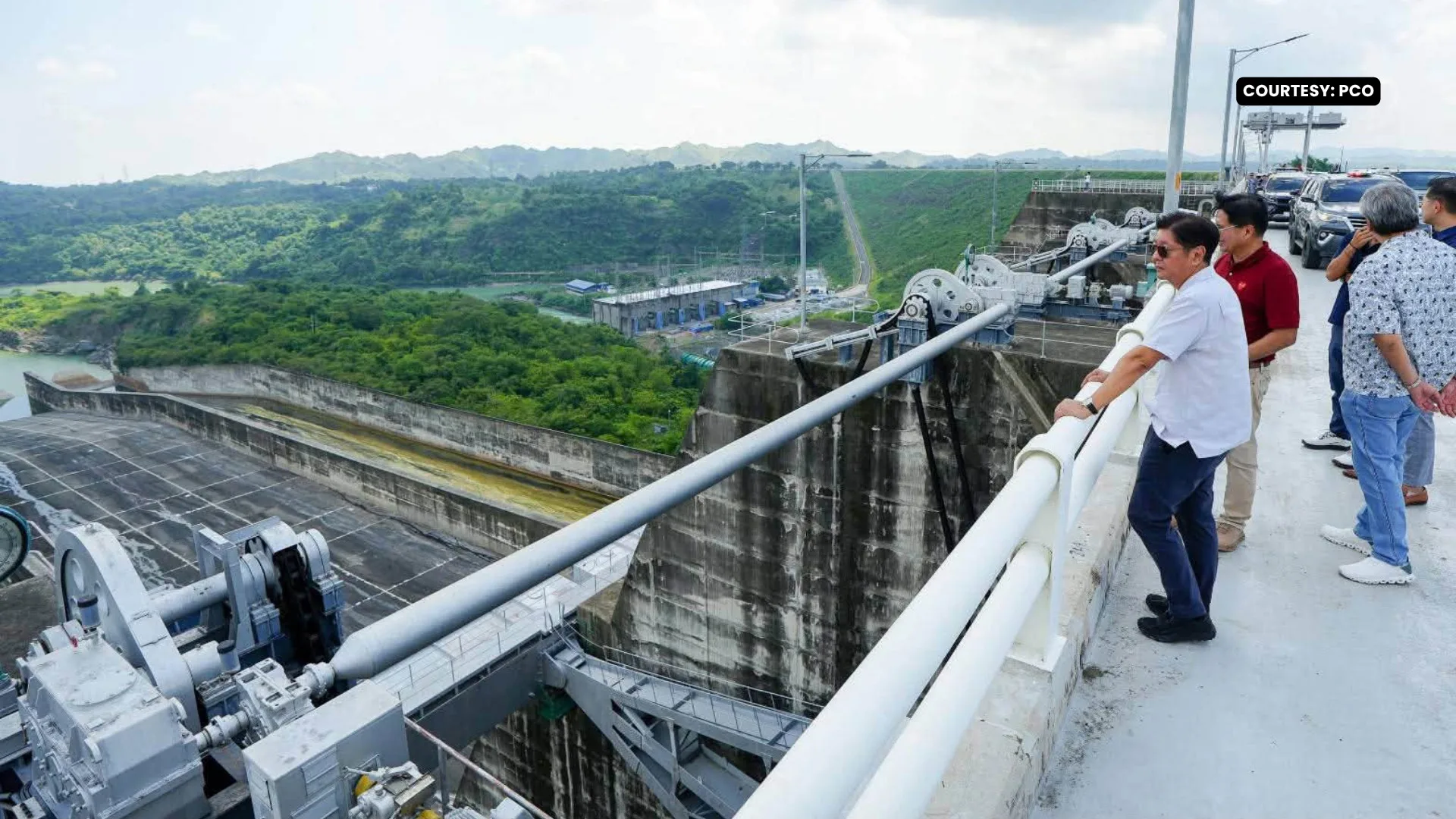
It includes a pumping station, water intake facility, electrical substation, transbasin tunnel, diversion canals, and access roads. It draws water from the Magat River and pumps it to agricultural areas across the river.
“Pinakamahalaga sa pagsasaka ay ang patubig. At malaki ang pagbabago kapag yung non-irrigated areas ay nagawa natin ang paraan na maipapatubig (The most important element in farming is irrigation. And there is a significant transformation when we find a way to provide irrigation to areas that were previously unirrigated),” Marcos also said.
The NIA said approximately 2.2 million hectares of the country’s estimated 3.13 million hectares of irrigable land had been developed for irrigation as of December 2025.