
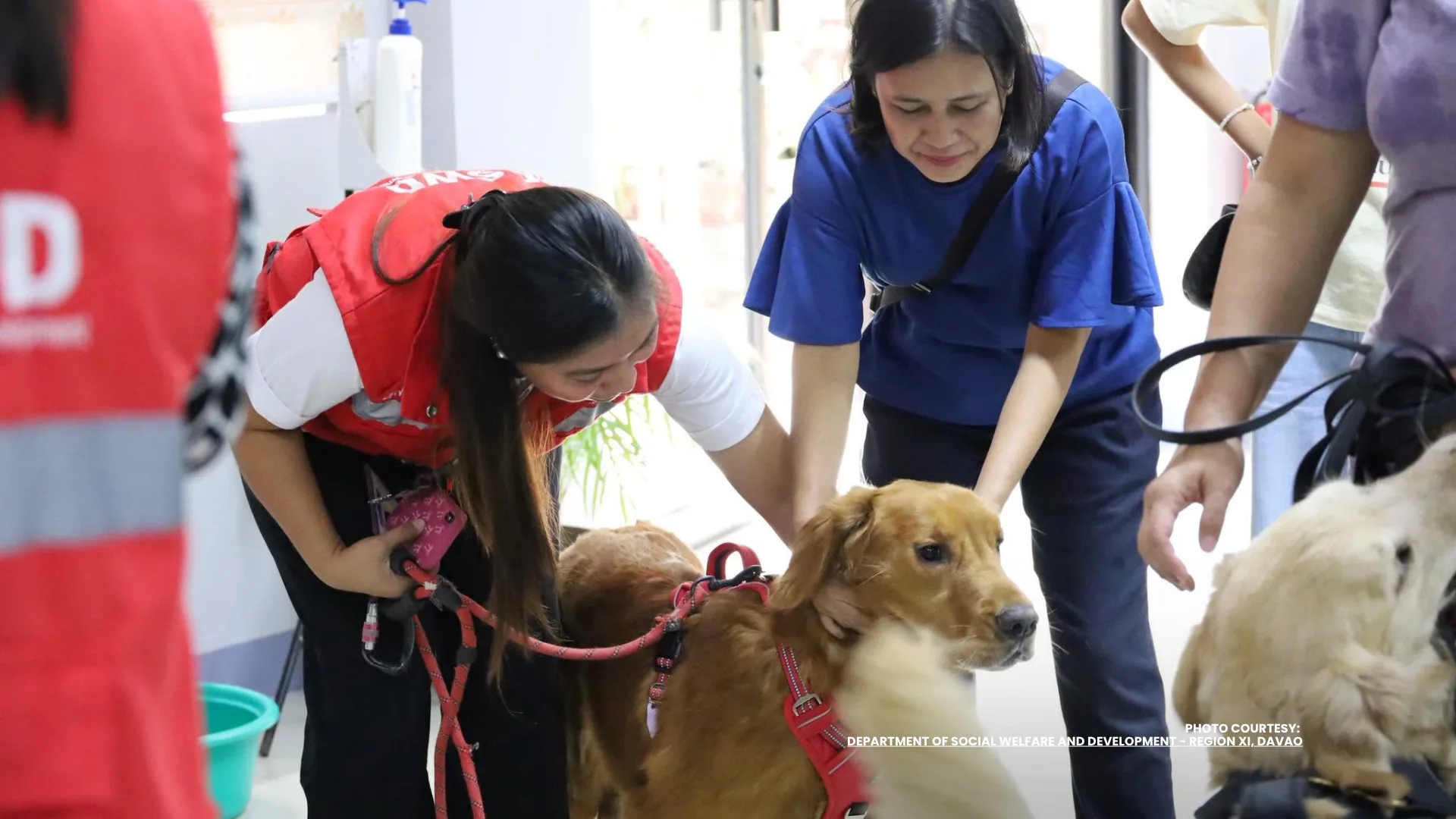
Ten volunteer dogs have qualified as “Doctor Dogs” under the Department of Social Welfare and Development’s (DSWD) Angel Pets Project in Davao Region after passing a temperament test on June 3.
The assessment was held at the DSWD Field Office 11’s Home for Girls and Women in Maa, Davao City.
Of the 13 dogs that joined the screening, 10 passed and were cleared to serve as official partners in the department’s animal-assisted therapy program.
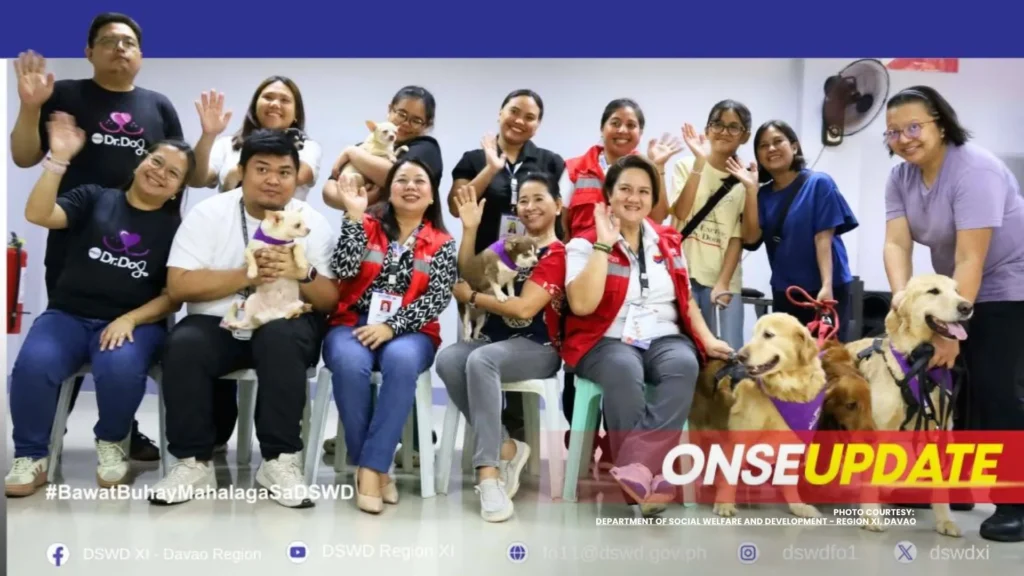
The temperament test was conducted to evaluate the dogs’ behavior and determine their capacity to safely interact with clients under the care of the DSWD, particularly those recovering from trauma or personal crises.
The DSWD said the intervention seeks to support the psychosocial well-being and emotional stability of residents in its care facilities.
The activity was conducted in partnership with the Philippine Animal Welfare Society (PAWS) and the DSWD’s Social Technology Bureau, which provided technical support and guidance during the evaluation.
DSWD spokesperson Assistant Secretary Irene Dumlao said the expansion of the Angel Pets Project reflects the department’s effort to provide innovative and holistic care to vulnerable clients.
“The successful integration of Angel Pets into our residential care facilities is a testament to the DSWD’s dedication to providing holistic and innovative care,” Dumlao said.
“We are highly optimistic that the presence of these Doctor Dogs will greatly aid in the psychosocial recovery of our vulnerable clients,” she added.
Following the assessment, pet owners and volunteers shared how their dogs provide comfort and emotional support to residents.
Dr. Baby Vilela, a veterinarian and companion animal practitioner from Barangay Catalunan Grande in Davao City, said interacting with dogs can bring happiness and calm to children.
“You can find happiness in them just by interacting with them; the love and happiness they bring can greatly help in calming and bringing comfort to the children,” Vilela said.
She said her dogs enjoy attention and are able to share affection with others, adding that animals can sense people’s emotions even without understanding human language.
Rosandrei Ladignon, a speech-language pathologist from Barangay Cabantian, also said dogs can help uplift people who are dealing with difficult situations.
“I am a therapist myself, so I have been working with many people who are in unfortunate situations, and I have always found that dogs are very good at giving positive energy and uplifting people’s demeanor,” Ladignon said.
The DSWD thanked the volunteers and pet owners who shared their time and the healing presence of their dogs to support the rehabilitation of residents.
The Angel Pets Project is a DSWD program that integrates animal-assisted therapy into psychosocial interventions for residents of the department’s centers and residential care facilities.