
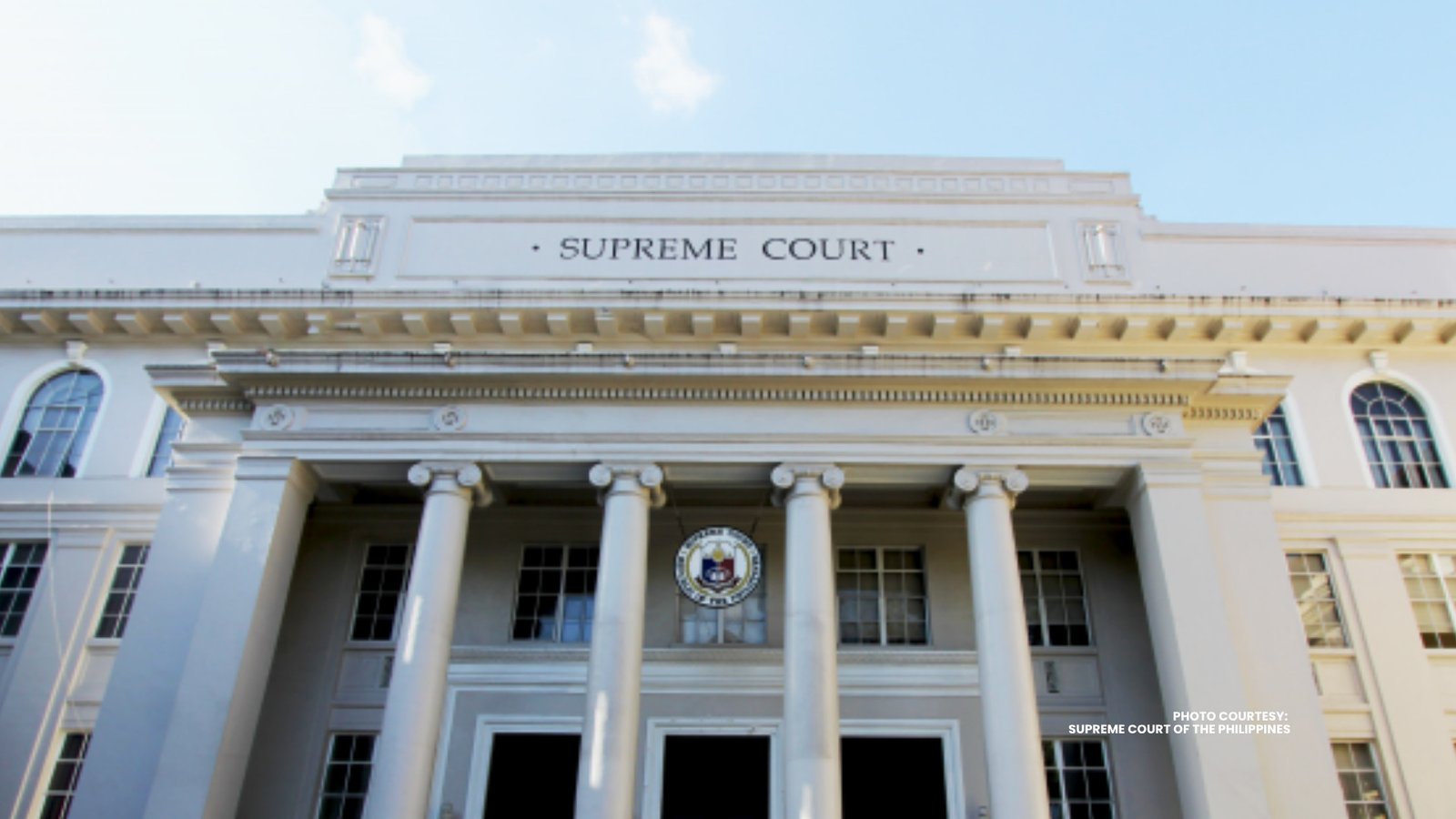
The Supreme Court (SC) has ruled that a spouse who creates a hostile, controlling and intimidating home environment may be sued for legal separation, saying such behavior can amount to grossly abusive conduct under the Family Code.
In a decision penned by Associate Justice Antonio Kho Jr., the SC Second Division granted a man’s petition for legal separation from his wife after finding that her actions created an abusive household for him and their children.
The couple married in 2003 and had two children. Court records showed that the wife sold coffee to help support the family, while the husband studied nursing in the hope of finding work abroad. Their financial situation, however, worsened after the plan did not materialize.
The husband later accused his wife of emotional, financial and psychological abuse. He said she controlled the family’s money, refused to help pay for his urgent dental treatment, isolated him from friends, spread malicious accusations against him and declined to attend marriage counseling.
He also cited an incident during a social gathering where his wife allegedly told their friends that she wanted to cut off his penis.
The Regional Trial Court initially granted the petition after finding sufficient proof of gross abuse, but the Court of Appeals reversed the ruling and treated the conflict as ordinary marital discord.
The Supreme Court disagreed and reinstated the trial court’s decision.
The High Court said courts must assess domestic conflicts based on the totality of circumstances, not as isolated incidents. Taken together, it found that the wife’s actions created a hostile and intimidating environment that affected both the husband and their children.
The tribunal also gave weight to witnesses who testified about the wife’s controlling conduct.
While Philippine law does not allow absolute divorce, the Court said legal separation remains available to spouses who need to live apart safely without dissolving the marriage bond.
The SC said repeated violence or grossly abusive conduct against a spouse or the family may justify legal separation. It added that protecting individuals from abusive homes is consistent with the State’s duty to preserve marriage as a social institution.
With the ruling, the High Court granted the husband’s petition and sent the case back to the trial court for the dissolution and division of the couple’s common properties, as well as the resolution of custody and support for their two children.