
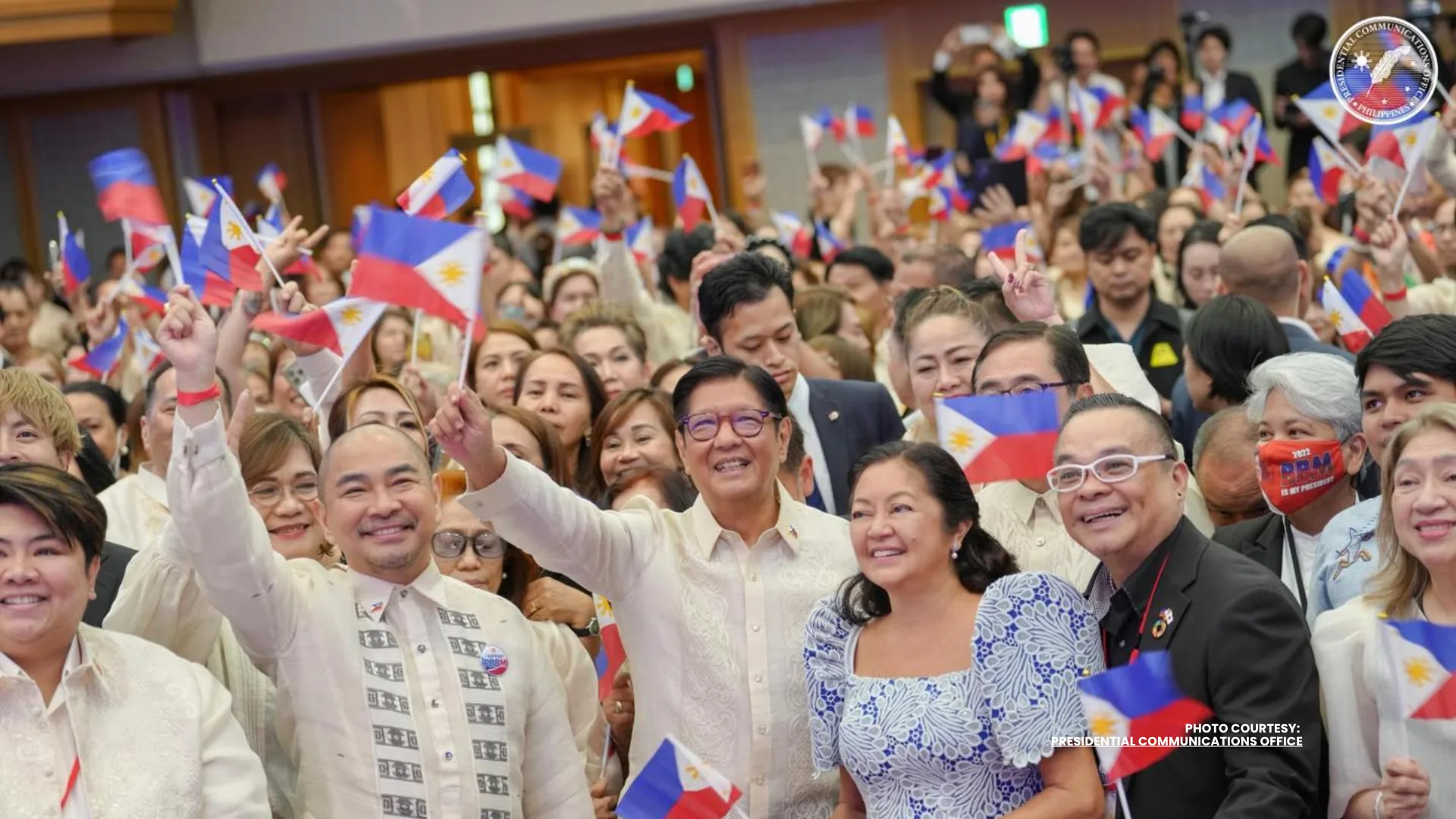
President Ferdinand Marcos Jr. called on Filipinos in Japan to preserve their national identity while respecting Japanese culture, saying the overseas community remains a vital bridge in the deepening relations between Manila and Tokyo.
Speaking before the Filipino community at the Imperial Hotel in Tokyo on May 26, Marcos said Filipinos in Japan have become the “face of the Philippines” through their work, resilience, and role in strengthening people-to-people ties between the two nations.
Marcos met with the community during his state visit to Japan, which coincides with the 70th anniversary of the normalization of diplomatic relations between the Philippines and Japan. He said the visit was aimed at advancing cooperation in labor protection, trade, commerce, defense, regional security, and other areas of mutual concern.
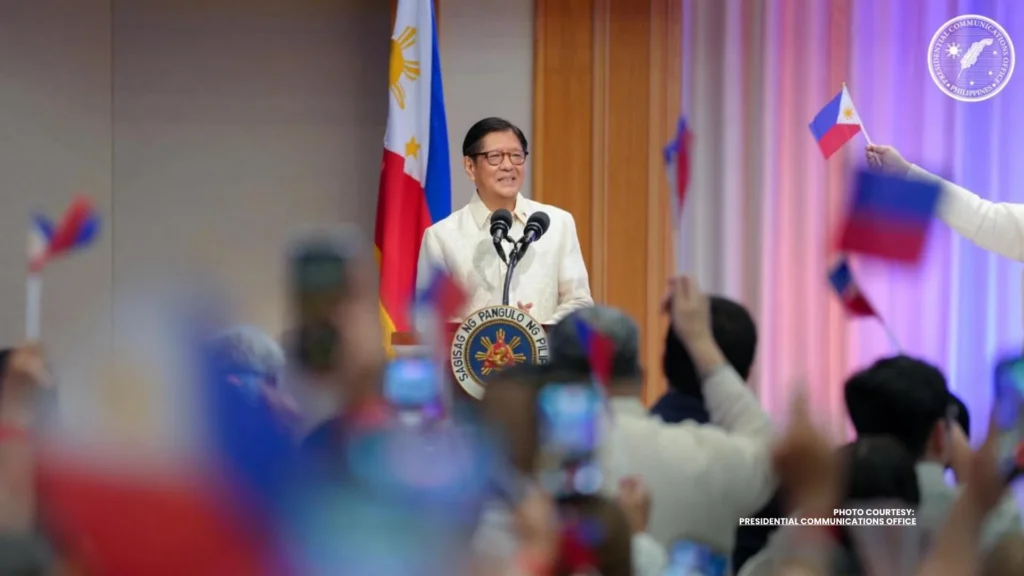
The President said the Filipino community, estimated at 350,000, is the fourth-largest expatriate community in Japan. He praised overseas Filipino workers, Filipino-Japanese families, professionals, and young Filipinos for contributing to Japanese society while continuing to uphold their Filipino heritage.
“To you, our dear young Filipino citizens living here in Japan, I encourage you to take advantage of all the opportunities available to you in this country; and in return, contribute positively to the society that you have taken as your own,” Marcos said.
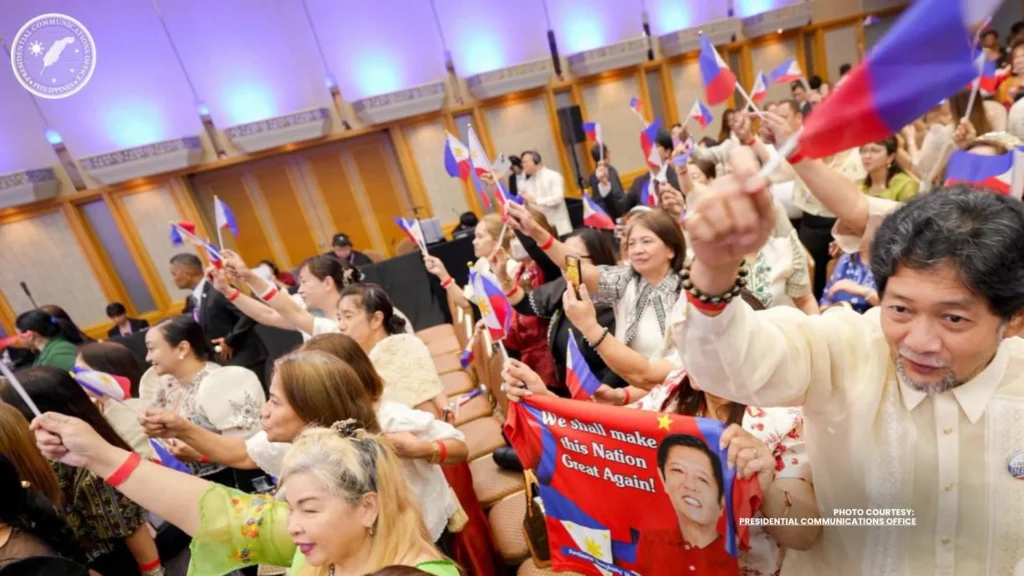
He reminded young Filipinos that integration into Japanese society should not mean abandoning their roots. He urged them to respect local laws, embrace Japanese culture, and learn the language, while remaining proud of their identity as Filipinos.
“You are the torch bearers of the next seventy years of our relations with Japan,” Marcos said, adding that future generations would carry forward the friendship built between the two countries.
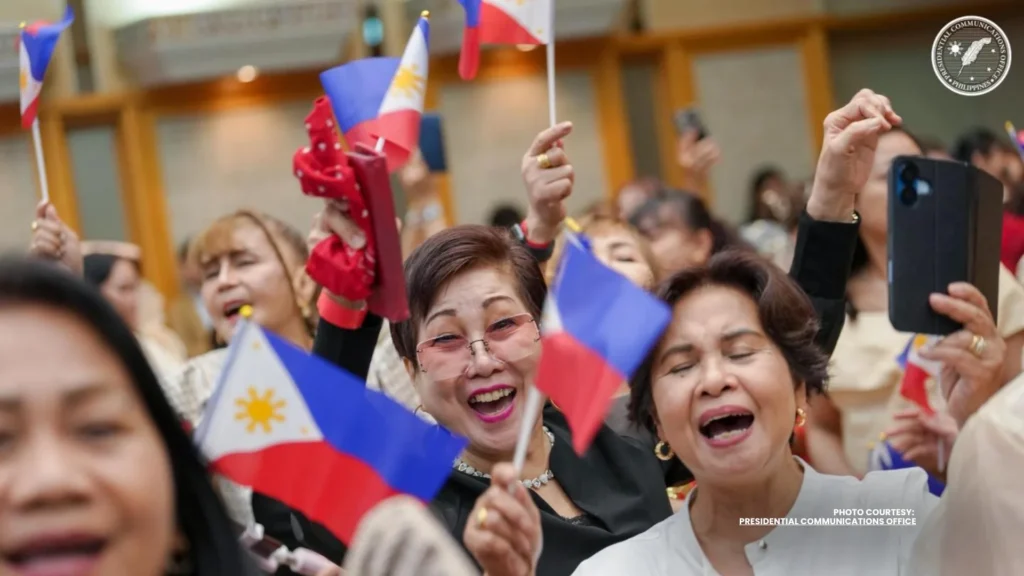
Marcos also thanked the older members of the Filipino community, saying they paved the way for younger generations at a time when life in Japan was more difficult to navigate.
The President also cited the challenges brought by the global energy crisis, saying recent tensions in the Middle East had affected oil prices and the cost of basic goods in the Philippines. He said the government responded by declaring a State of National Energy Emergency and implementing the Unified Package for Livelihoods, Industry, Food, and Transport (UPLIFT) program to address oil hoarding, optimize fuel use, and assist affected workers and sectors.
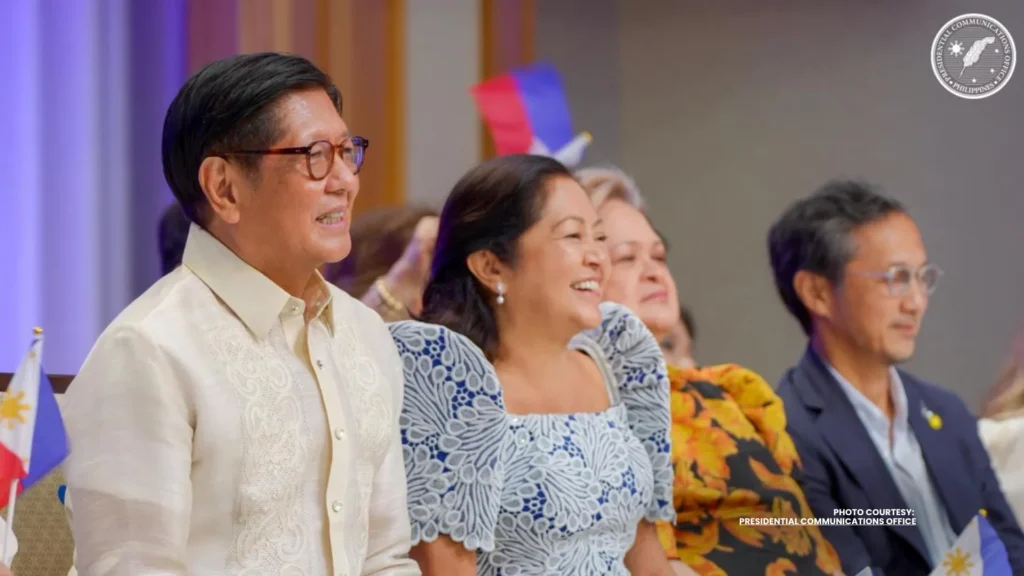
Despite these challenges, Marcos said cooperation between the Philippines and Japan has remained strong, particularly as both countries confront common economic and security concerns.
He said Filipinos in Japan should continue to be good citizens, follow local laws, and serve as partners of Japanese communities in addressing modern challenges, including isolation and the need for stronger human connection.
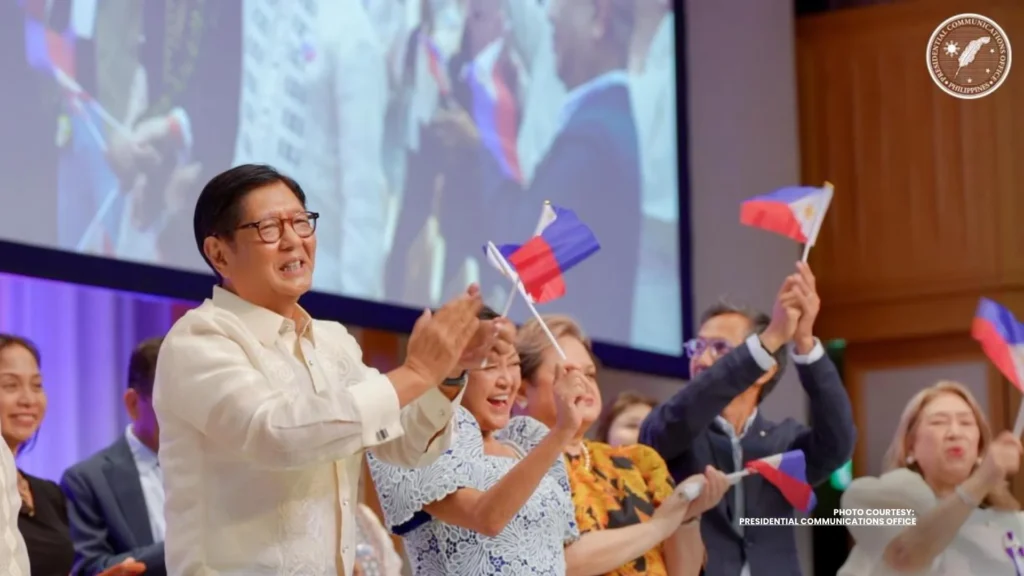
“As our community grows across Japan, from Hokkaido all the way to Okinawa, our strength lies in our firm adherence to our faith and our national identity,” Marcos said.