
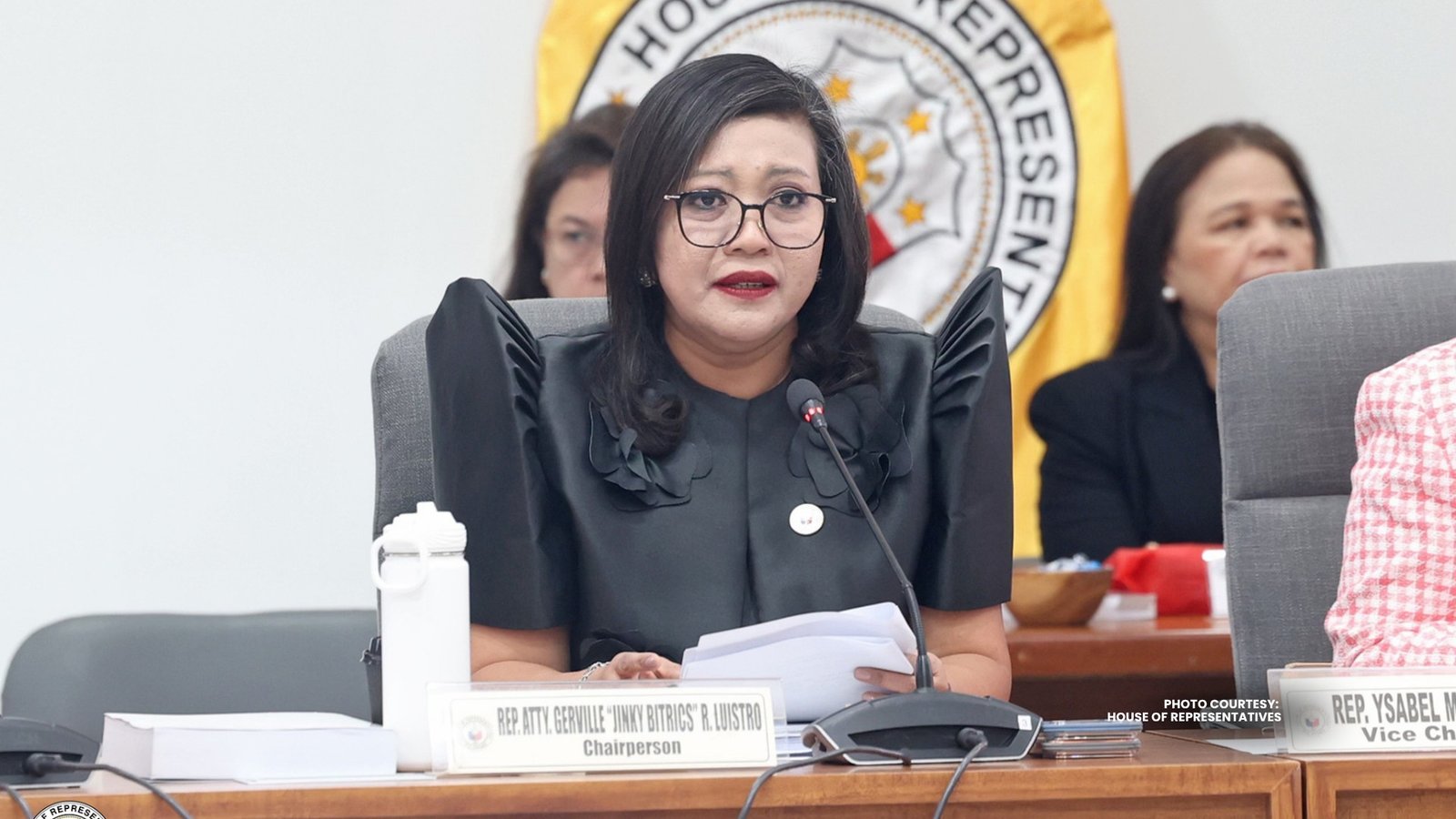
Former Far Eastern University (FEU) law dean Mel Sta. Maria said members of the House Committee on Justice are protected from potential liability under the Anti-Money Laundering Act (AMLA) and the Data Privacy Act in connection with the impeachment proceedings against Vice President Sara Duterte.
Sta. Maria argued that lawmakers engaged in impeachment are performing a constitutional duty that cannot be restricted by ordinary statutes, noting that the House of Representatives has the exclusive power to initiate impeachment cases.
In a social media post on Monday, he outlined legal arguments rejecting the criminal complaint filed by Duterte’s husband, Atty. Manases Carpio, against members of the House panel.
He said the Constitution is the supreme law of the land and prevails over all statutes, including AMLA and data privacy laws, in cases of conflict.
“At the apex of our legal system sits the Constitution,” Sta. Maria said. “All statutes must operate within its framework.”
He described impeachment as a “sui generis” or unique constitutional process designed to hold top public officials accountable, distinct from ordinary legal proceedings.
Sta. Maria also cited Supreme Court rulings recognizing impeachment as a constitutional mechanism with political characteristics aimed at safeguarding public accountability.
He warned that allowing statutory laws to restrict congressional impeachment functions would undermine the hierarchy of laws and weaken constitutional authority.
“When the Committee issues a subpoena for AMLC records, it is performing a sovereign function,” he said.
He added that even if procedural issues arise in handling sensitive data, these may be set aside when actions are taken in pursuit of a higher constitutional purpose, particularly public accountability.
Sta. Maria cited jurisprudence, including Estrada v. Escritor, to support the view that constitutional protections may, in certain cases, override statutory rules.
He said lawmakers should not face criminal liability when acting in good faith within impeachment proceedings.
“An honest error in the pursuit of a constitutional sovereign duty does not constitute a crime,” he said, warning that such suits could discourage legislative oversight and weaken the impeachment process.
Sta. Maria also clarified that AMLA was intended to combat money laundering, not to shield public officials from scrutiny.
“The AMLA was designed to catch criminals; it was never intended to be a shield against accountability proceedings required by the Constitution,” he said.
The issue comes amid findings by the Anti-Money Laundering Council (AMLC), which flagged transactions linked to Duterte and her husband amounting to P6.77 billion in covered and suspicious transactions since 2006, with reported net inflows of P2.88 billion.
Lawmakers noted that these figures do not appear in Duterte’s Statements of Assets, Liabilities, and Net Worth (SALNs), where she declared a net worth of P88.5 million in 2024, prompting further inquiry into possible unexplained wealth as part of the impeachment proceedings.