
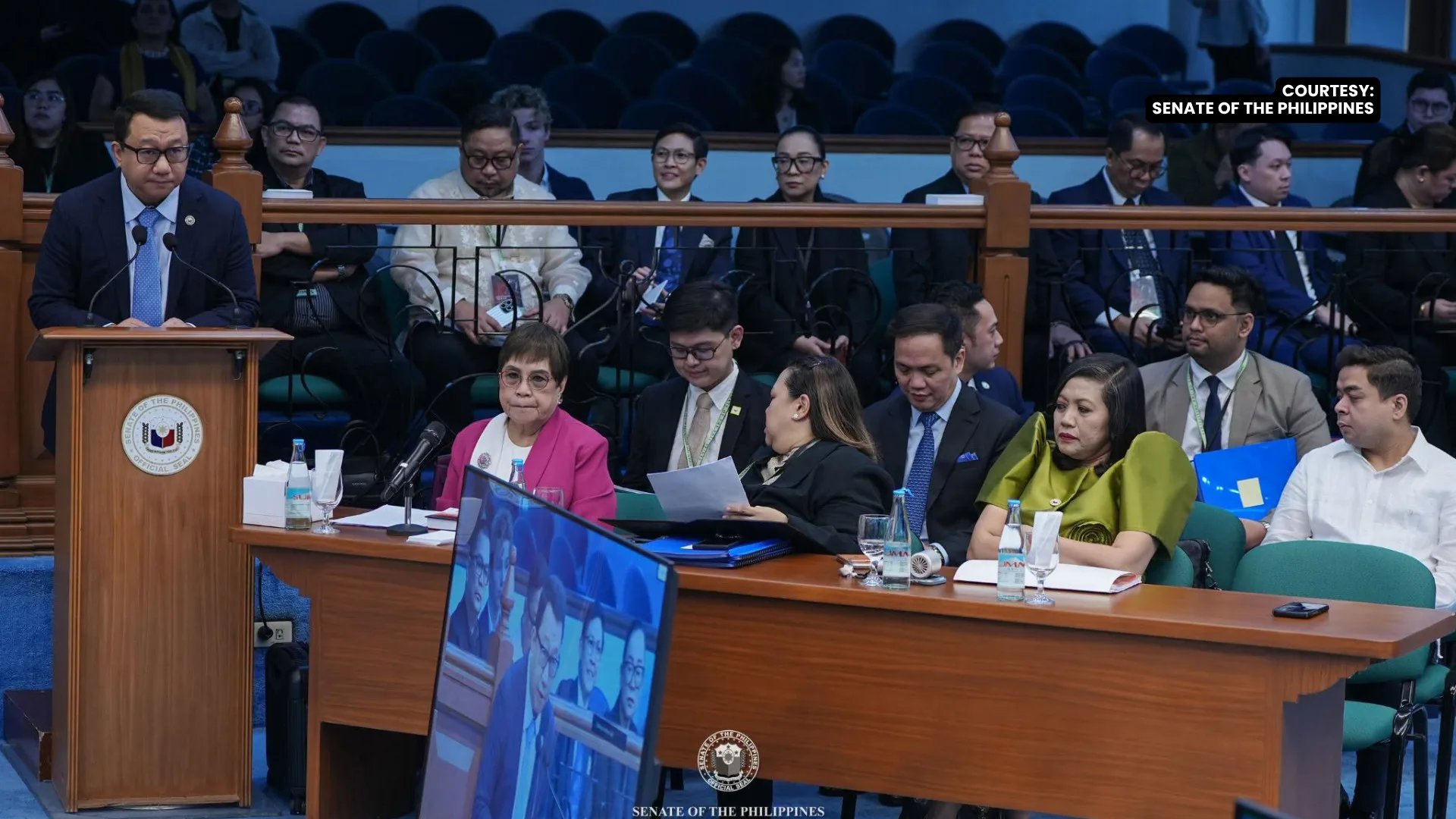
The House prosecution panel is not seeking to change the two-thirds vote required to convict Vice President Sara Duterte, saying its focus remains on building an “airtight case” capable of securing the necessary 16 votes in the Senate impeachment court.
House prosecution legal spokesperson and counsel Benjamin “Jay” Tolosa Jr. said the Constitution requires the concurrence of two-thirds of all Senate members for conviction. With 24 senators, Senate Impeachment Court Presiding Officer Francis “Chiz” Escudero has ruled that at least 16 votes are needed to convict Duterte.
“We’re not giving the impression or the message na gusto na naming palitan nila ang two-thirds vote. We’ve never said that and we’re not saying that now,” Tolosa said during an online press briefing. “And if it’s two-thirds, we respect it. And again, our job is to present evidence to secure that vote.”
Tolosa issued the clarification after some reports interpreted his earlier remarks as suggesting that the continued absence of several senator-judges could prompt the impeachment court to reconsider its ruling on the voting threshold. He said the prosecution has consistently respected Escudero’s ruling and has avoided counting potential votes among senator-judges.
“Our position on this has been consistent from the start. Mula nung ginawa ‘yang desisyon na ‘yan ng presiding officer, we always said we will respect it,” Tolosa said. “And we always said, anyway, that has never been our focus. We don’t engage in vote counting from the start.”
Tolosa said prosecutors are instead concentrating on presenting evidence strong enough to meet the constitutional requirement.
“We’ve always said our focus is to present an airtight case, and sisiguraduhin namin we will be able to back it up with solid evidence para kung anuman ‘yan, ultimately, anong magiging interpretation sa two-thirds vote, we will be able to secure that,” he said.
He clarified that his earlier point concerned whether the impeachment court could revisit the ruling, rather than whether it should do so.
“What I said was, hindi, it’s not unreasonable to think that perhaps this could be a factor that we consider in determining whether there’s a need for them to revisit it,” he said, referring to the absences of some senator-judges.
Tolosa said his comments were misconstrued as an argument that the absences should compel the court to change its position.
“I was saying was that because of the absence, this should cause them to change their stand on the two-thirds vote. These are completely different matters,” Tolosa said.
In his view, the impeachment court could still revisit the issue if a senator moves to do so because Escudero’s ruling is interlocutory, or not yet a final order.
“I think it’s an interlocutory order. At the end of the day, if a senator is so minded to ask the body to revisit it and vote on it, I think, in my personal opinion, is nothing in the rules prevent them from doing that because it’s not a final order,” he said.
Tolosa stressed, however, that he was only discussing what may be procedurally possible and was not asking senator-judges to reconsider the 16-vote requirement.
“I don’t want to give the wrong impression that I’m saying that they should do anything about it or that they would,” he said.