
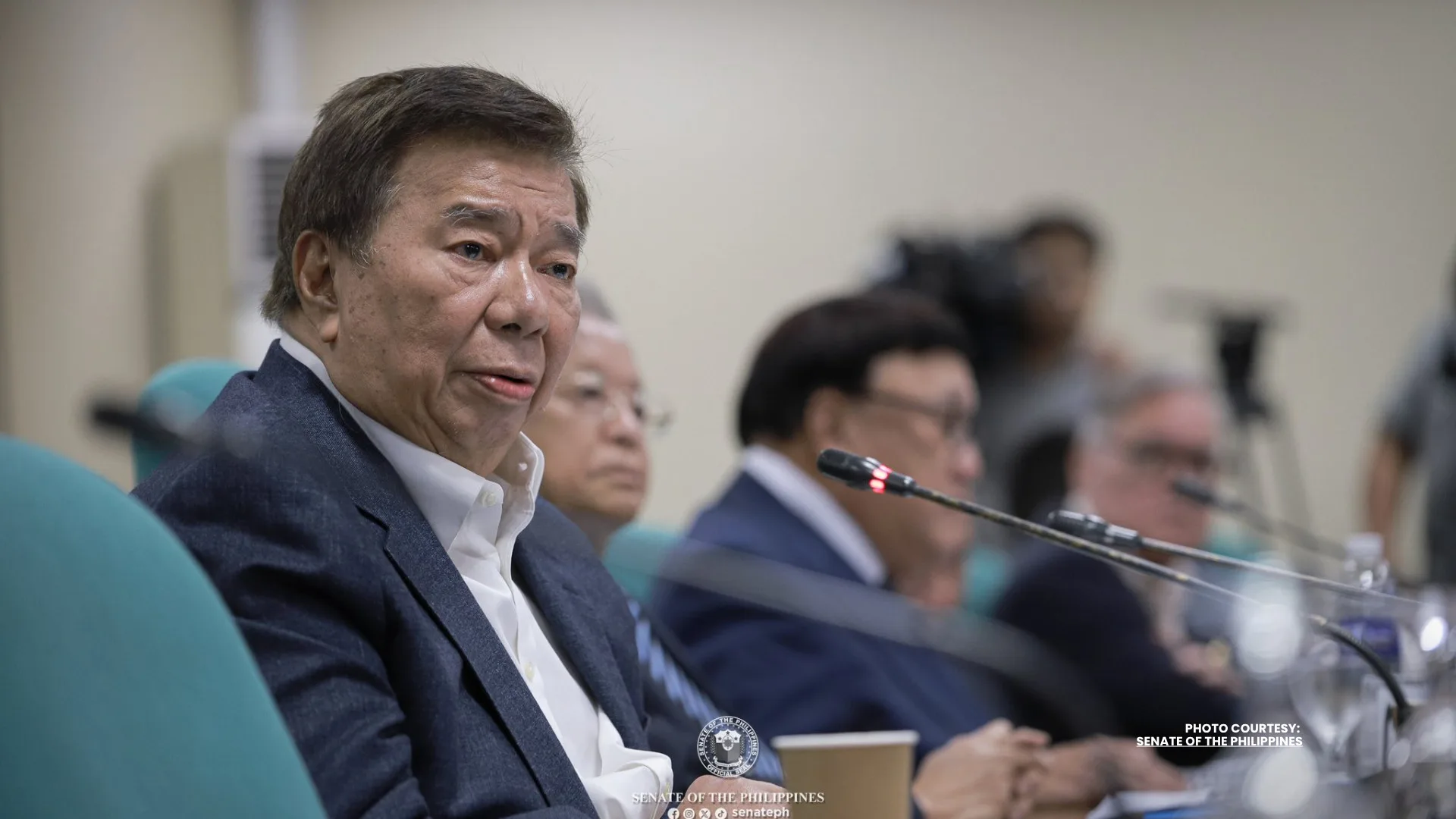
Former Senate president Franklin Drilon warned that the Senate majority’s push to allow virtual attendance in plenary proceedings could amount to “tyranny of the majority,” saying the proposed rule change appears tied to the impeachment trial of Vice President Sara Duterte.
A former justice secretary, he said the move could be challenged before the Supreme Court for alleged grave abuse of discretion, especially after the minority bloc walked out of Tuesday’s session in protest of the majority’s attempt to act on Sen. Rodante Marcoleta’s motion.
“Abuso ng kapangyarihan sa panig ng mayorya na ang tawag natin diyan ay tyranny of the majority,” Drilon said, arguing that Senate rules should not be rushed, particularly when the Committee on Rules has yet to be constituted following the leadership shakeup on May 11.
The controversy centers on Marcoleta’s proposal to allow senators to participate in plenary sessions remotely. Drilon said the Senate, with only 24 members, has traditionally required physical attendance for deliberations and voting, a practice he said should not be casually overturned.
He questioned the urgency of the proposed amendment, saying it may affect how senators vote during Duterte’s impeachment trial. He warned that if remote participation is allowed, detained or absent senators could still take part in proceedings, potentially preserving the voting strength of the majority bloc.
He cited the possible filing of plunder cases against Senators Jinggoy Estrada and Joel Villanueva, as well as the absence of Sen. Ronald “Bato” Dela Rosa, who has reportedly gone into hiding due to an International Criminal Court arrest warrant. Drilon said these circumstances could reduce the number of majority senators physically able to attend the impeachment trial.
“Minamadali na ma-amyendahan ang reglamento dahil hinahabol yung impeachment trial,” Drilon said, adding that the Supreme Court should intervene if the rule change is forced through.
He also recalled that the Senate had previously rejected attempts to allow then-senators Leila de Lima and Antonio Trillanes IV to attend proceedings online, stressing that the chamber should apply its rules consistently.
On the issue of quorum, Drilon said the Senate needs 13 senators physically present to conduct business. If 13 senators are on the floor, a measure may be adopted by a majority vote of those present, or at least seven votes. But without a quorum, he said, the chamber cannot validly approve any matter.
The minority walkout left only 12 majority senators in the session hall, prompting Senate Minority Leader Vicente Sotto III to ask that the proceedings be adjourned due to lack of quorum.
Sotto said the minority may bring the matter to the Supreme Court if it fails to block the proposed amendment. He questioned why the majority would insist on changing the rules, saying the move appeared designed to benefit Dela Rosa and other senators who may face legal constraints.
Drilon lamented what he described as the erosion of Senate decorum, saying the chamber had historically relied on debate, compromise, and consensus rather than sheer numbers.
“Walang ganong tradition sa Senado,” he said.