
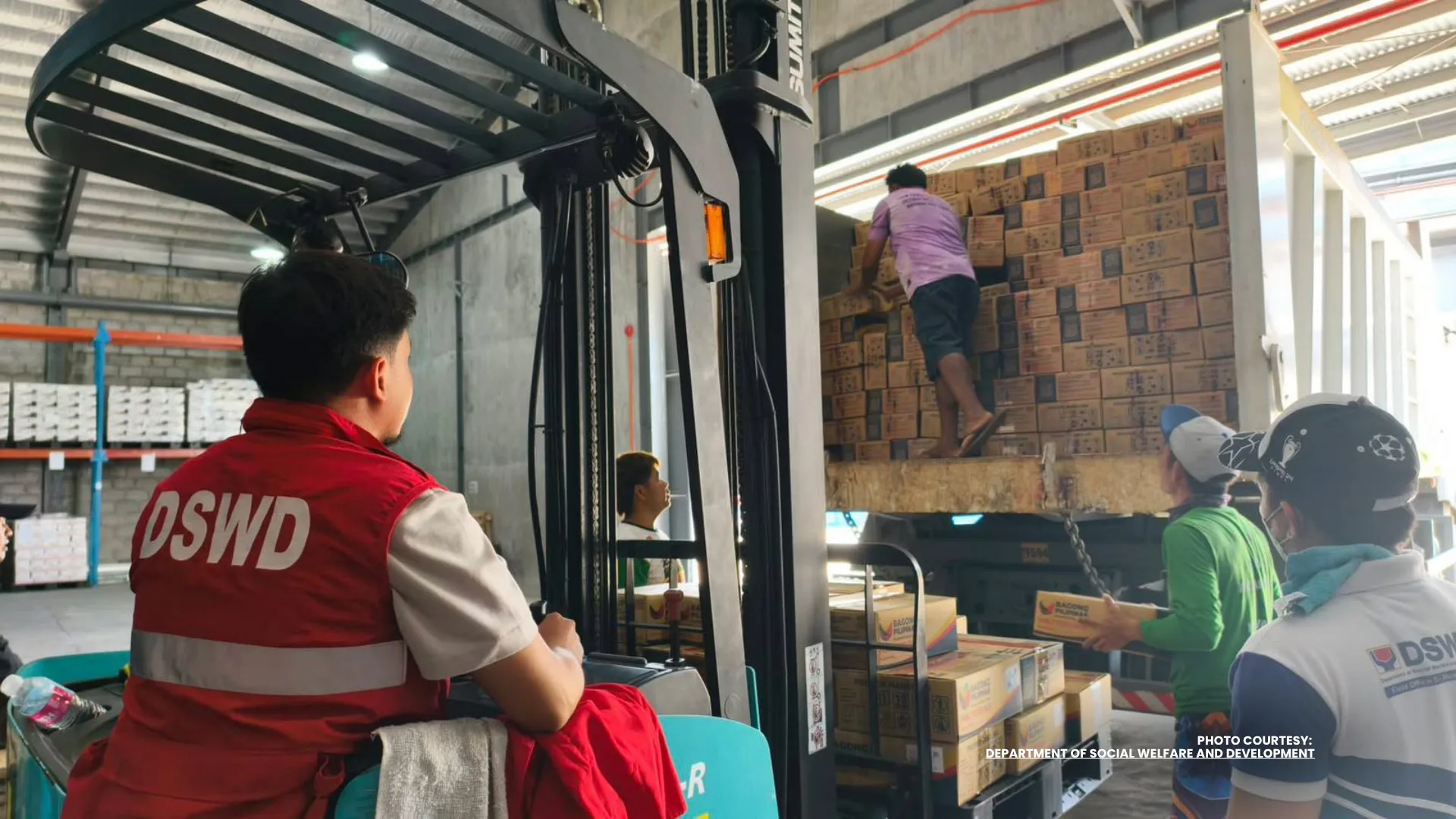
The Department of Social Welfare and Development (DSWD) said international organizations remain vital partners in strengthening the Philippines’ disaster response system, particularly as the country continues to face natural hazards that affect millions of people each year.
DSWD Assistant Secretary and spokesperson Irene Dumlao said disaster response has become both a national duty and a shared humanitarian effort, with foreign partners helping expand the government’s capacity to prepare for and respond to emergencies.
“Yearly, the Philippines faces natural hazards that affect millions of lives. During these difficult times, disaster response becomes not only a national responsibility but also an international humanitarian effort, a proof that the ‘Bayanihan’ spirit does not only apply to us Filipinos, but also extends to the global community,” Dumlao said Friday.
According to Dumlao, international organizations have supported the government through logistics assistance, technology sharing, technical expertise, relief donations, and training programs for local government units and disaster responders.
Among the key initiatives cited by the DSWD is the Mechanized Production System (MPS), a joint project of the department, the United Nations World Food Programme, and the Office of Civil Defense (OCD).
The system was designed to automate and speed up the production of family food packs (FFPs) at the National Resource Operations Center, now known as the Luzon Disaster Resource Center, in Pasay City.
First implemented in 2014 and officially turned over to the DSWD in 2017, the system allowed the agency to produce more food packs for prepositioning and augmentation during disaster operations.
A second mechanized production system was installed in 2016 at the Visayas Disaster Response Center in Mandaue City, Cebu, also with assistance from the World Food Programme, to increase food pack production in the Visayas.
“The MPS is an innovation which significantly improved the country’s capacity to prepare and produce FFPs more efficiently during disaster operations. Through modernized and mechanized processes, relief operations become faster, more organized, and capable of serving a greater number of affected families during emergencies,” Dumlao said.
Under the Marcos administration, the DSWD upgraded the systems at the Luzon and Visayas disaster resource centers with rice vacuum seal applications and bar-coding to improve monitoring, stock management, and dispatch of relief goods.
Dumlao said the new system can produce 18,000 to 20,000 FFPs daily, allowing the department to replenish stocks quickly and maintain readiness even outside emergency periods.
“The new MPS is capable of producing 18,000 to 20,000 FFPs daily. This guarantees that the DSWD can readily replenish stocks and deploy relief goods as needed, maintaining readiness even during non-emergency periods,” she said.
The DSWD said the continued upgrading of its disaster response capability forms part of the Buong Bansa Handa initiative, which seeks to ensure the agency and its regional field offices are ready to respond during calamities.
The department currently has more than 4.7 million family food packs prepositioned in hubs, spokes, and last-mile warehouses nationwide for use in disaster operations.