
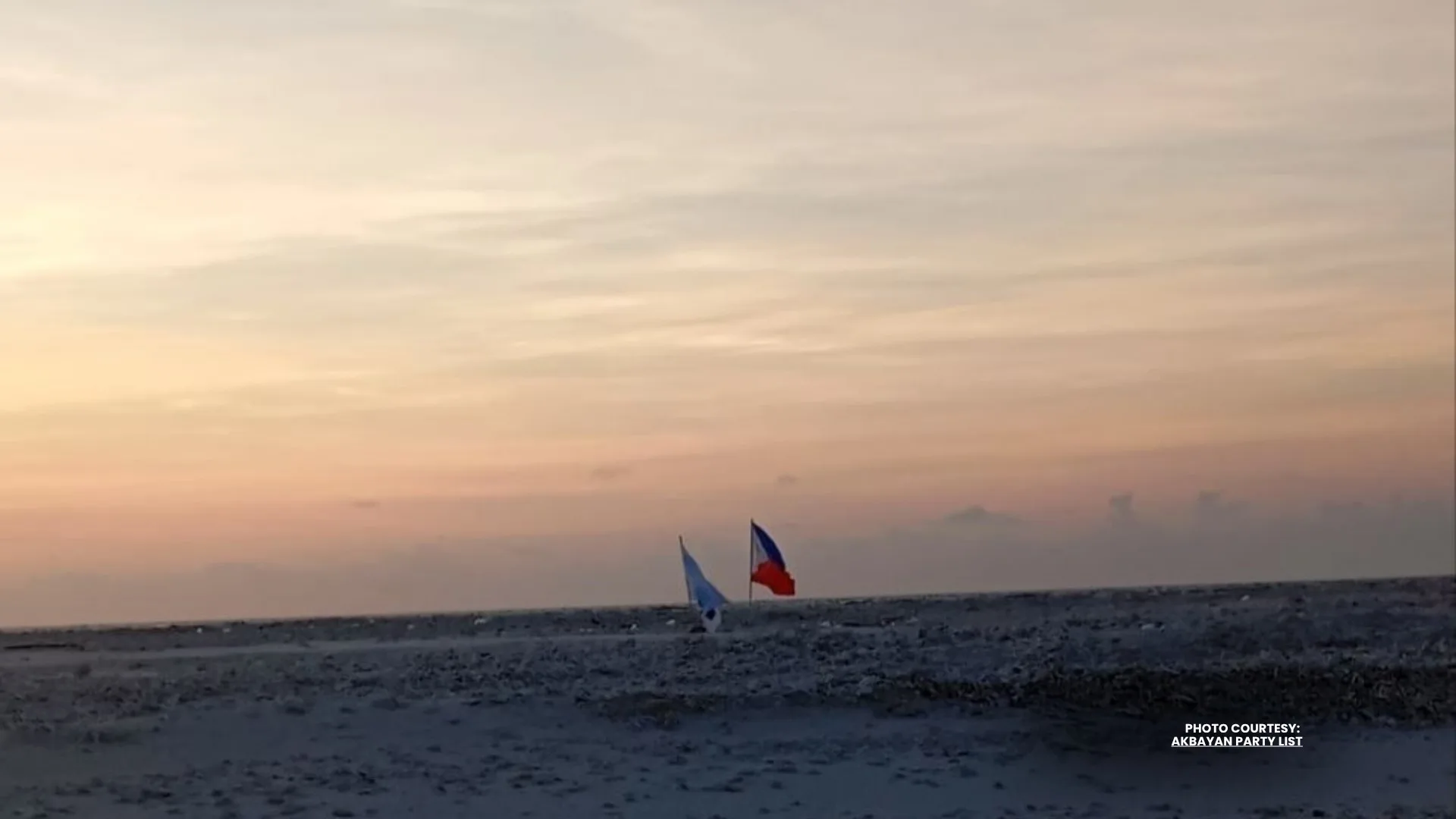
The Philippine Coast Guard (PCG) has rejected China’s protest over the recent landing of Filipino civilians at Pag-asa Cay 2 (Sandy Cay) in the West Philippine Sea, asserting that the activity did not violate any sovereign territory and was consistent with international law.
PCG spokesperson for the West Philippine Sea, Jay Tarriela, said the cays near Pag-asa Island—referred to by China as Tiexian Jiao—have never belonged to Beijing, stressing that claims of a sovereignty breach have no legal basis.
The issue arose after members of the Atin Ito coalition sailed to Pag-asa Island aboard the MV Kapitan Felix Oca last Friday, delivering supplies to Filipino fishermen and staging what organizers described as a symbolic “patriotic jetski flag ride.”
The following day, a smaller group led by Dadah Kiram Ismula traveled to Pag-asa Cay 2 via rubber boat, where they raised the Philippine flag and the Atin Ito banner. Ismula described the move as a peaceful assertion of national rights amid what she called continued Chinese aggression.
China’s embassy in Manila responded by condemning the activity. In a statement, Deputy Spokesperson Guo Wei said the landing constituted an “infringement” of China’s territorial sovereignty and violated the 2002 Declaration on the Conduct of Parties in the South China Sea (DOC). He added that Beijing would take necessary measures to defend its claims.
Tarriela, however, clarified that the landing was carried out by civil society groups and not directed by the Philippine government. He emphasized that the cay lies hundreds of nautical miles from mainland China, making any claim of Chinese sovereignty untenable.
He also dismissed China’s reference to Zamora Reef, noting that the area has been subject to unlawful reclamation activities.
Citing the 2016 South China Sea Arbitral Award under the United Nations Convention on the Law of the Sea, Tarriela said the ruling invalidates China’s sweeping maritime claims and affirms that such features fall outside its lawful jurisdiction.
He further argued that China’s invocation of the DOC is inconsistent with its actions, pointing to large-scale island-building, militarization, and repeated confrontations with Philippine vessels.
Tarriela added that Beijing’s assertion that it would enforce maritime laws in the area lacks legal basis, saying its presence itself violates international law.
“The Philippines continues to act within the bounds of international rules,” he said, “while China’s activities undermine them.”