
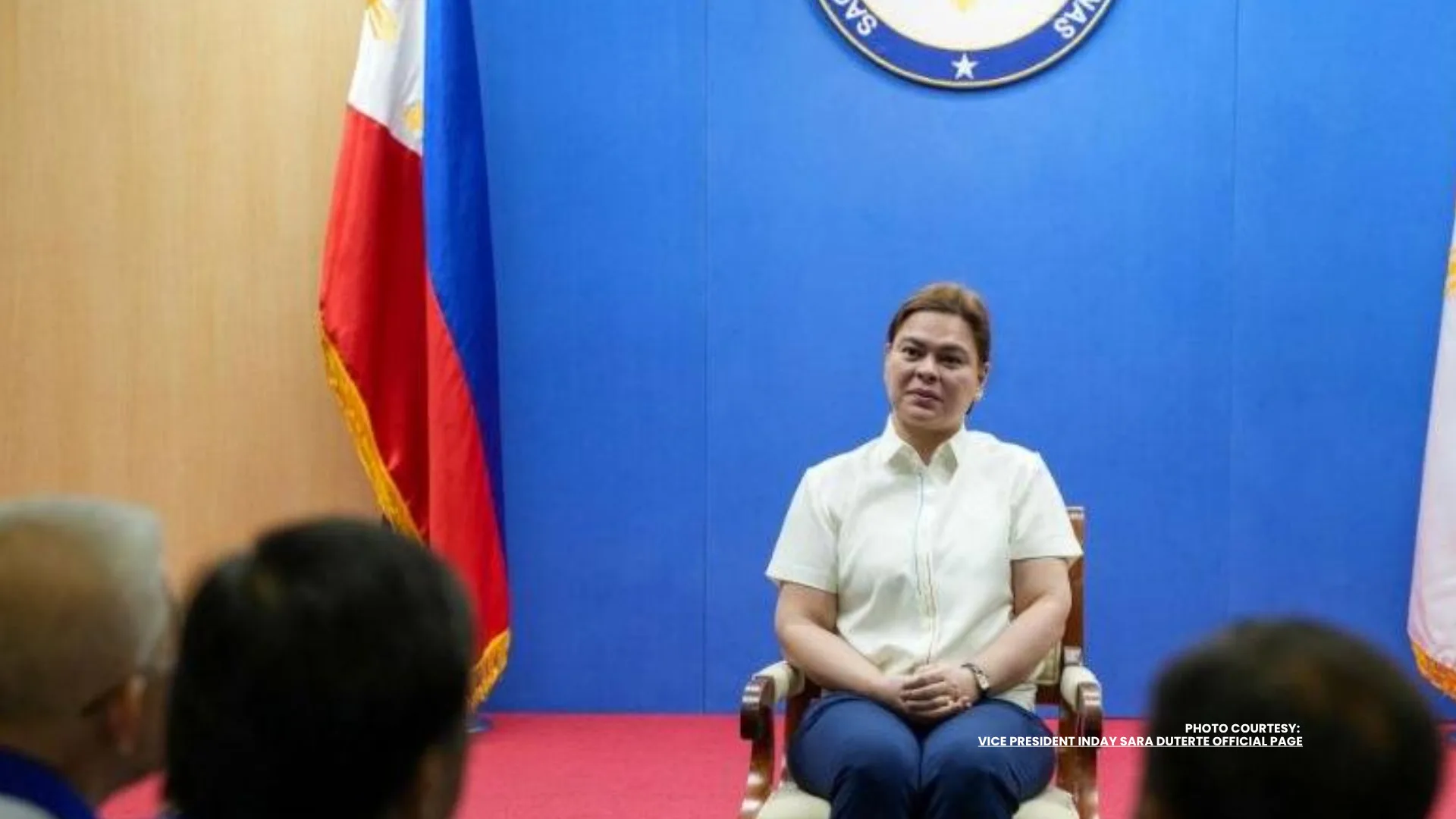
A conviction on even one article of impeachment would be enough to remove Vice President Sara Duterte from office and permanently bar her from holding public office, the House lead prosecutor said.
She said senator-judges are expected to vote on each of the four articles after both sides complete the presentation of evidence before the Senate impeachment court.
“Actually the voting must happen per article but the way I see it, tatapusin muna ang presentation ng apat na articles and then the senator-judges will be asked to vote individually,” House lead prosecutor and chairperson of the House Committe on Justice Rep. Gerville Luistro said in aninterview.
“For example, the first article is confidential funds, on the first article tatawagin sila isa-isa to vote, on the second article, tapos conviction, just one article, ma-convict lang, that should be enough,” she added.
The House of Representatives impeached Duterte in a 257-25-9 vote and transmitted the Articles of Impeachment to the Senate, which convened as an impeachment court on May 18.
The case involves allegations related to confidential funds, bribery, unexplained wealth, and grave threats. Duterte has denied the accusations and criticized the impeachment process as politically driven.
The House lead prosecutor said at least 16 votes, or two-thirds of the 24-member Senate, on any single article would be sufficient to convict the Vice President.
“Kapag naka-16 votes in one article, that should be enough to convict the impeachable official and to impose upon her the penalty of perpetual disqualification,” she said.
Luistro acknowledged differing views on whether perpetual disqualification requires a separate vote, but said her position is that conviction already carries both penalties: removal and permanent disqualification from public office.
“Although I understand during the time of SP Tito Sen, naririnig ko siya during interviews, ang sinasabi niya, parang divided ‘yung school of thought about the perpetual disqualification that there should be a separate voting for perpetual disqualification but for me, there should be one voting only kasi kaya ka magpe-perpetual disqualification kasi kinonvict mo na,” she said.
She said the constitutional wording supports a single vote because the penalty covers “removal and perpetual disqualification.”
“And that is why, that explains the use of the word and, removal and perpetual disqualification from holding public office. So for me, it’s one voting only and it carries already the removal as well as perpetual disqualification,” she emphasized.
She added that a resignation before the end of the trial would make removal moot, but not the issue of perpetual disqualification.
“Ibang scenario ‘yun, pag nag-resign, ahead of the trial, mooted ang removal. Bakit mo pa siya i-remove, nag-resign na nga,” Luistro said.
“So that’s what we call moot and academic na yung issue ng removal kasi she voluntarily left already the position and that is why I said, even in spite of resignation, the trial should continue because there’s another penalty which must be imposed, which is perpetual disqualification,” she added.
The solon said senator-judges still need to examine the evidence to determine whether the penalty of perpetual disqualification should be imposed.
She also clarified that impeachment by the House only means there is probable cause to bring the case to trial, while the power to convict or acquit rests solely with the Senate.
“By impeached it means you found probable cause to remove and to impose perpetual disqualification. But remember, that power does not fall within the House of Representatives,” Luistro said.
“That power is exclusive to the Senate,” she added.
The House prosecution team is now preparing to present its case once the Senate impeachment court begins trial proceedings.