
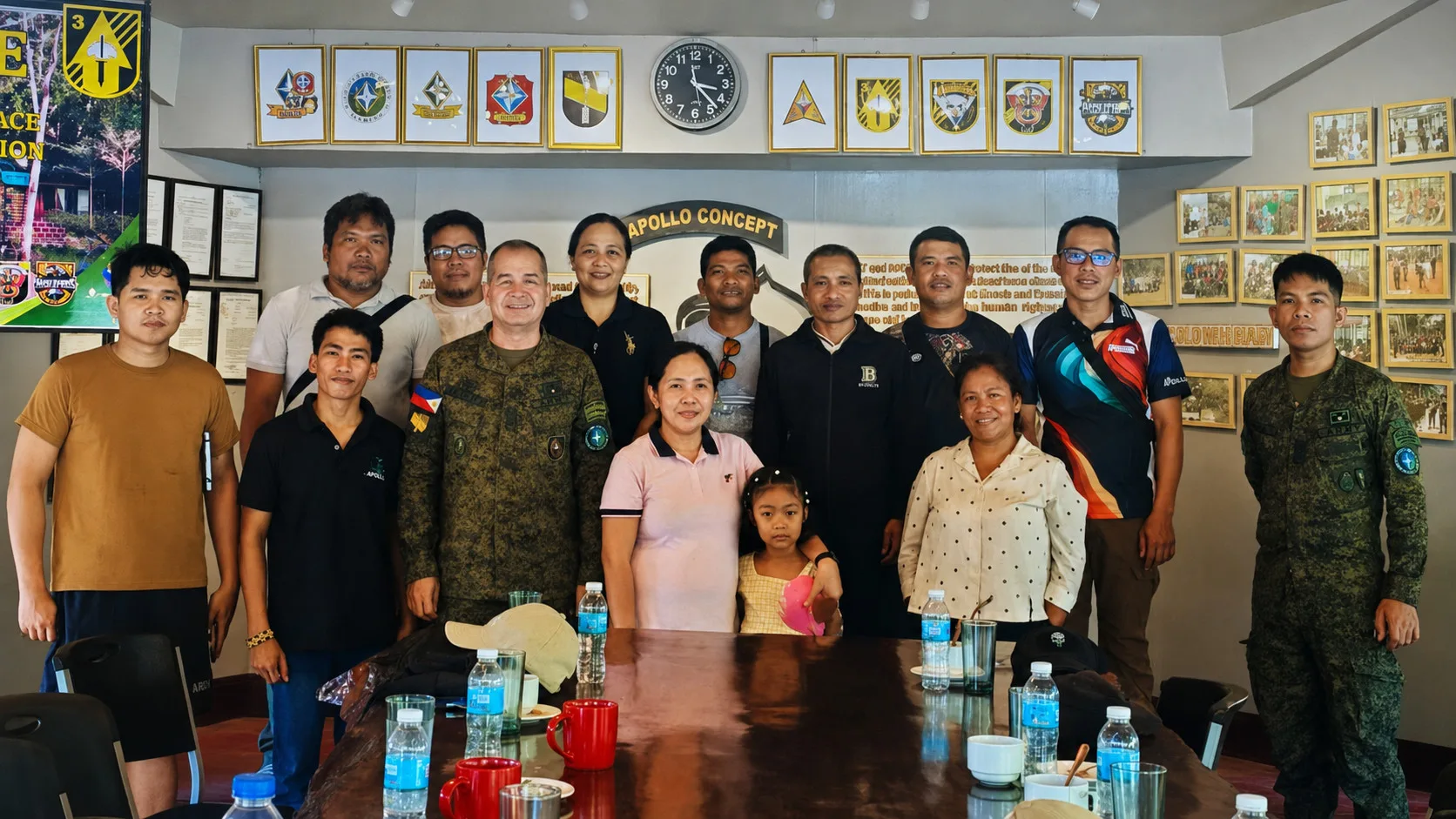
Grassroots leaders and former rebels in Surigao del Sur are being trained as “frontliners of peace” under a new conflict-sensitive development initiative led by the Office of the Presidential Adviser on Peace, Reconciliation and Unity (OPAPRU), as the government strengthens community-based peacebuilding in Mindanao.
The initiative was highlighted during a four-day Conflict Sensitive and Peace Promoting (CSPP) training conducted in Tandag City, in partnership with the Hamugaway Peace and Development Center, bringing together nearly 100 participants from various people’s organizations across the province.
According to OPAPRU, the program aims to equip grassroots leaders, many of them from former rebel-led organizations, with skills in conflict analysis, mediation, and community-based development planning to help prevent local tensions from escalating into violence.
Anna Marie Uytico, head of OPAPRU’s Area Management Unit–Caraga, said the participants play a critical role in sustaining peace efforts at the community level.
“These grassroots leaders are the true frontliners of community-driven peacebuilding. They live among the people, understand local realities, and are often the first to identify emerging tensions,” she said.
The training forms part of OPAPRU’s broader strategy to institutionalize conflict-sensitive approaches in local governance, particularly in conflict-affected and vulnerable areas in Mindanao.
Participants came from organizations under the United Caraganon for Peace and Development Federation, Inc. (UCPDFI), a federation of former rebel-led groups engaged in community development work in the Caraga region.
SurPeace United Farmers’ Association President Joel Mahinay said the training strengthens their role in ensuring that local projects contribute to peacebuilding rather than exacerbate inequalities.
“True peace is built from the ground up. This training empowers us to take ownership of our community’s healing process and ensure our programs promote social cohesion,” Mahinay said.
OPAPRU officials also emphasized that the CSPP framework is intended to embed conflict sensitivity into every stage of development planning, from design to implementation.
Director Atty. Elisa Evangelista, head of the Local Conflict Transformation–Field Implementation Support Office (LCT-FISO), said local development systems must be designed to identify potential sources of tension and prevent unintended harm.
“CSSP transforms development planning into a mechanism that assesses the impact of programs on local dynamics and ensures that interventions do not deepen inequality,” she said.
Evangelista added that institutionalizing conflict-sensitive planning at the provincial level is essential to strengthening long-term stability in vulnerable areas, where perceptions of exclusion can trigger renewed unrest.
OPAPRU Secretary Mel Senen Sarmiento earlier underscored that conflict sensitivity should be treated as a “non-negotiable standard” in development work, stressing that peacebuilding must go beyond the absence of conflict and actively promote inclusion and trust in institutions.
He said development programs must be designed to reinforce cohesion rather than competition over resources, particularly in communities with histories of armed conflict and displacement.
The initiative is part of ongoing efforts to integrate former combatants and grassroots organizations into mainstream governance and disaster-response systems as part of the government’s long-term peace consolidation strategy.