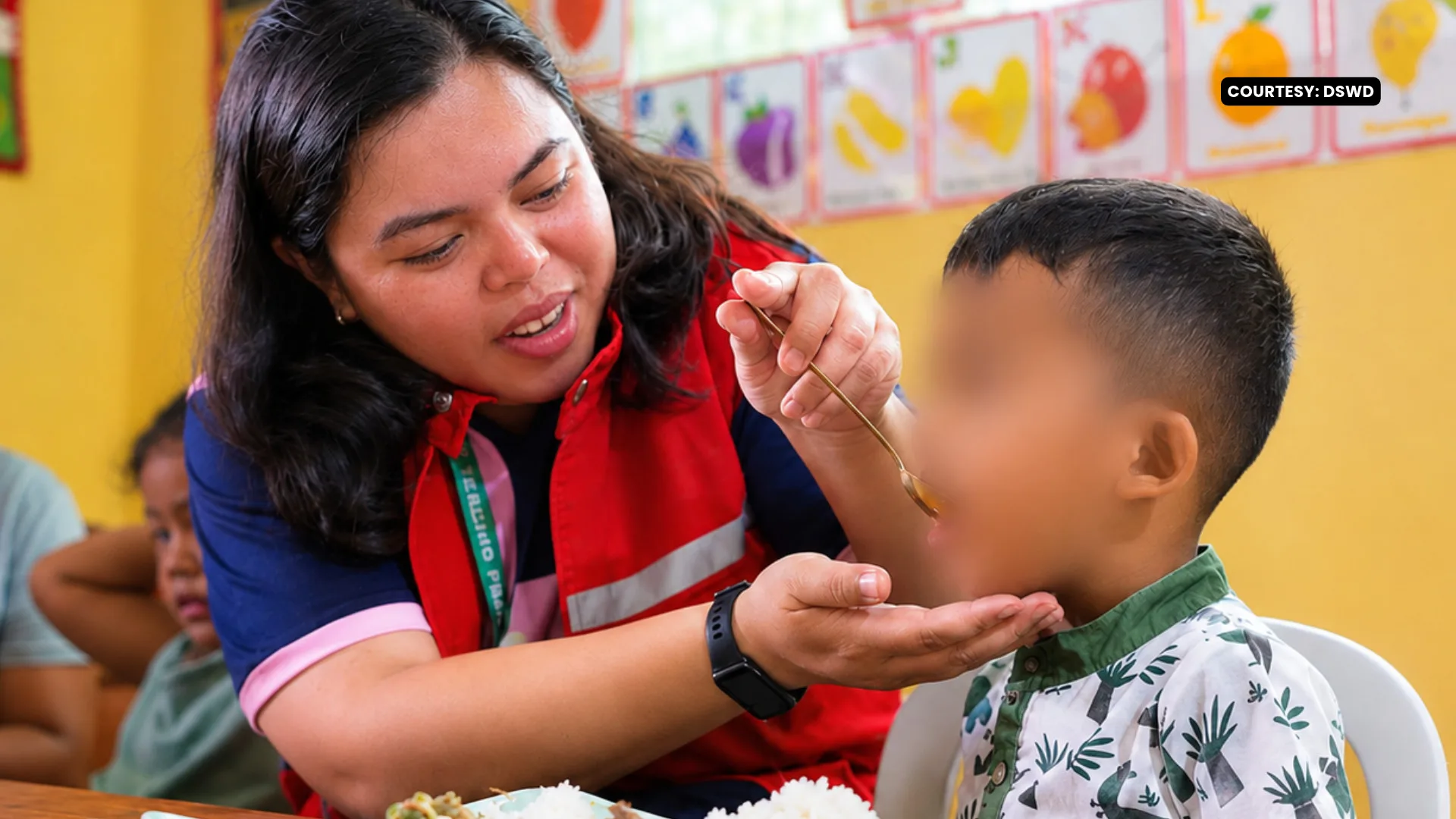
Escalating hunger rates across Filipino households have focused legislative attention on state nutrition interventions, prompting a proposed P17.8 billion funding package for child feeding programs in the 2027 national budget.
House Minority Leader and 4Ps party-list Rep. Marcelino “Nonoy” Libanan highlighted the proposed expenditure as the country marks the start of National Children’s Month.
The proposed allocation comes as independent surveys document rising food insecurity nationwide.
A Social Weather Stations survey revealed that 20.3 percent of families experienced involuntary hunger during the second quarter of 2026.
Concurrently, an OCTA Research survey recorded a jump in self-rated hunger to 21 percent in July, up from 17 percent in March.
Under the proposed 2027 National Expenditure Program (NEP), P11.4 billion is slated for the Department of Education’s School-Based Feeding Program (SBFP), while P6.4 billion will support the Department of Social Welfare and Development’s Supplementary Feeding Program (SFP).
“As members of Congress, we have a duty to ensure that public funds are spent wisely and that people know where their money is going, especially when it comes to programs that directly affect social welfare,” Libanan said.
The SBFP delivers nutritious meals to incoming kindergarten pupils and Grade 1 to 6 students classified as wasted, severely wasted, stunted, or severely stunted, as well as learners at risk of dropping out, indigenous children, and indigent students.
The SFP targets preschool children in public child development centers and supervised neighborhood play programs.
Connective measures under the United Nations Convention on the Rights of the Child frame nutrition as a prerequisite for educational success.
“We must treat proper nutrition as an essential investment in our children’s future. A child who goes to school hungry faces greater difficulty concentrating, participating in class and keeping up with lessons,” Libanan noted.
“By ensuring that nutritious food reaches children who need it most, these feeding programs can help remove hunger as a barrier to learning and give our young people a stronger foundation to grow and develop,” he also said.
Libanan urged implementing agencies to maximize the program’s economic impact by purchasing food supplies directly from local farmers and dairy producers whenever possible.