
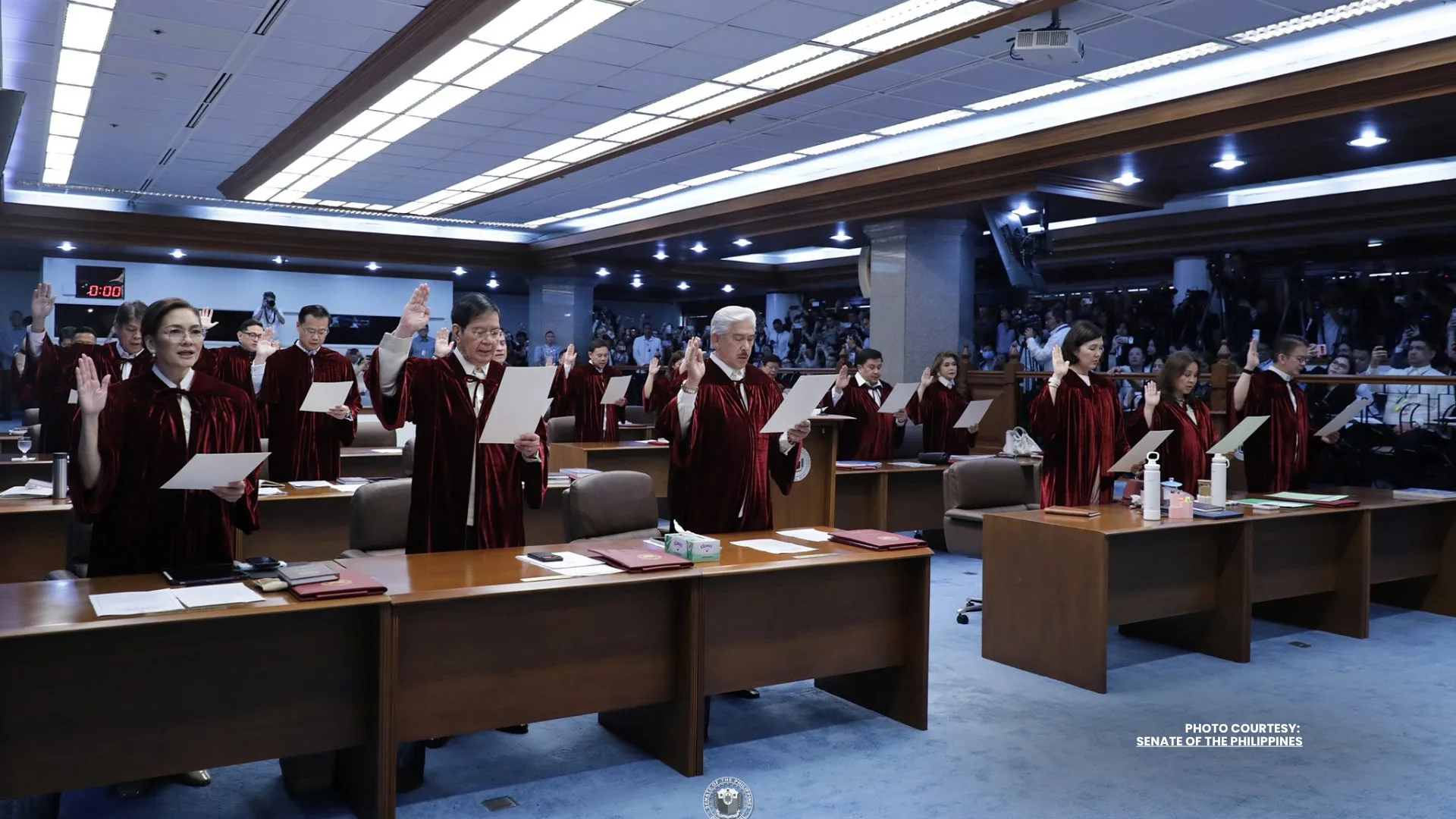
The Senate on Monday formally convened as an impeachment court for the trial of Vice President Sara Duterte, moving the proceedings forward despite earlier concerns that a recent leadership change could delay the case.
Acting Majority Leader Joel Villanueva reported on the floor that the House of Representatives transmitted the Articles of Impeachment against Duterte through House Secretary General Cheloy Garafil on May 13, in accordance with the Constitution and House rules on impeachment proceedings.
“Earlier today, the Articles of Impeachment were referred to the Committee on Rules and consequently to the Senate sitting as an impeachment court,” Villanueva said.
He then formally presented the articles and their annexes to the Senate impeachment court for proper action.
Senate President Alan Peter Cayetano directed senators to wear their robes before taking their oaths as members of the impeachment court.
Cayetano took his oath as presiding officer before Sen. Camille Villar, and then administered the oath to the senators as impeachment senator-judges.
After the court was organized and the articles were presented, Cayetano ordered the issuance of a written summons to Duterte, giving her a non-extendible period of 10 days from receipt to file her answer.
“The court having been organized, and the Articles of Impeachment having been presented, let a writ of summons be issued to the Vice President, Sara Zimmerman Duterte,” Cayetano said.
The summons, along with a copy of the Articles of Impeachment, will be served by the Senate sergeant-at-arms.
The prosecution will have a non-extendible period of five days to file a reply once the court receives Duterte’s answer.
Cayetano also directed Duterte to appear before the Senate session hall upon notice, in line with the impeachment rules.
Parties were allowed to file pleadings and annexes either in person or through electronic mail, with guidelines on electronic filing to be circulated to those concerned.
After issuing the initial orders, Cayetano suspended the session to allow senators to remove their robes and return to their legislative functions.