
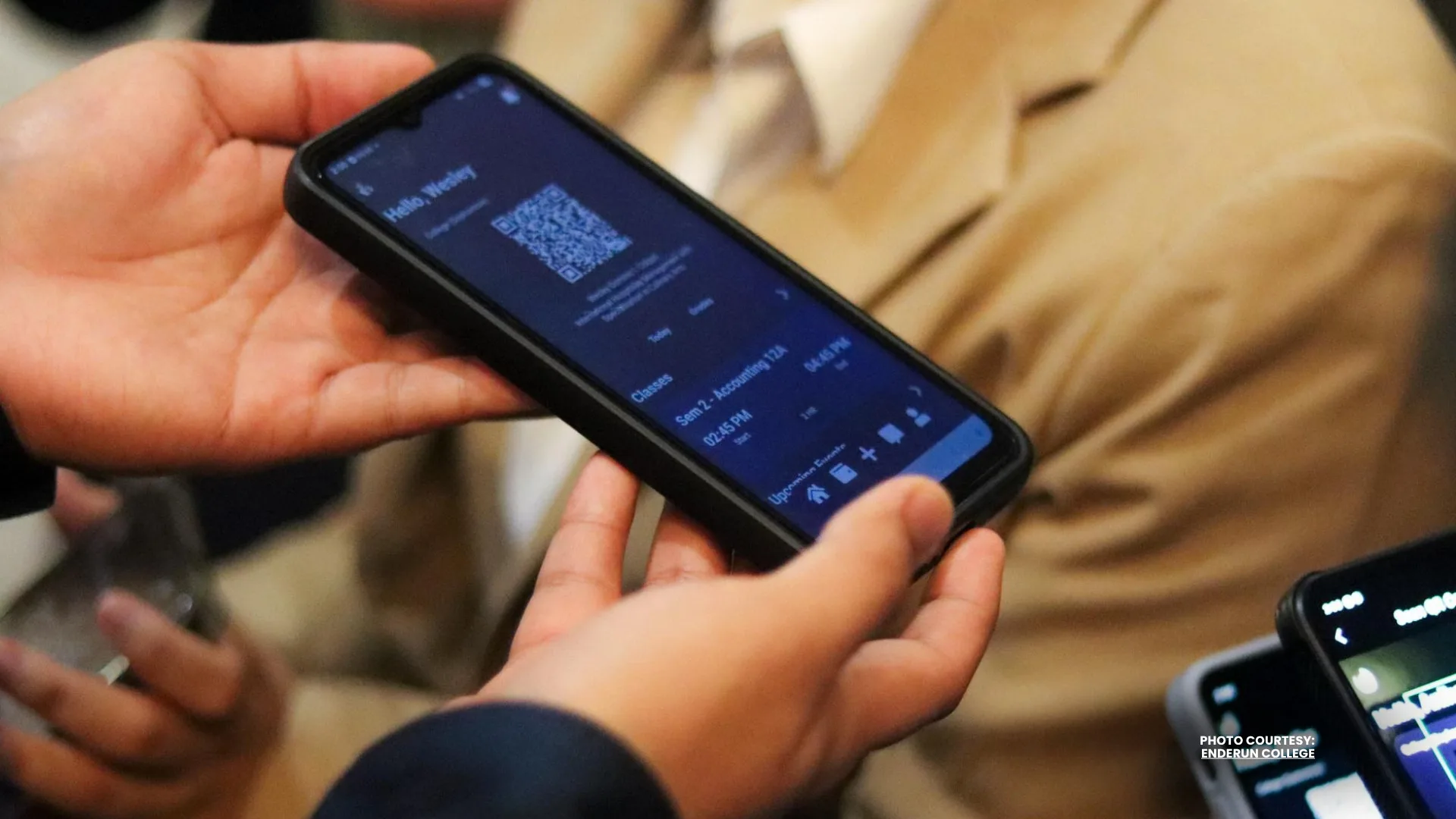
A new app at Enderun Colleges is rewarding students for participation, campus involvement, and connection beyond grades in an effort to rebuild student engagement
Joey Tuason graduated from Enderun Colleges and came back with a question most alumni do not bother asking, “what actually happens between orientation and graduation?”
The answer, for a lot of students, is not much, or at least not much that gets noticed. You go to class. You may join an organization. You eat lunch with the same few people every day. The school marks you present and moves on.
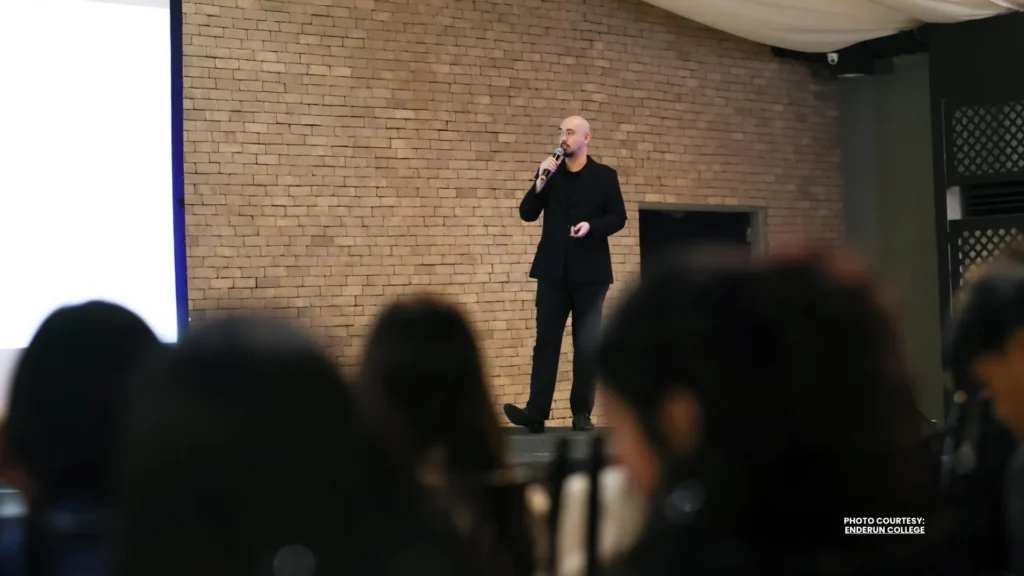
Tuason’s response to that gap is the Enderun App, a platform launched on April 15, 2026 at The Tent in McKinley Hill. At its core, the app is designed to make student engagement more visible by recognizing participation in campus life as something that matters beyond grades alone.
Students earn “Campus Coins” for attending classes, participating in events, joining student-led channels, and performing well academically. Those coins can later be redeemed for cafeteria items, merchandise, or experiences such as hotel stays at Enderun Hotels and other alumni-owned properties.
The rewards are tangible, but the broader focus appears to be on encouraging participation and connection across campus life.
More interesting is what the app actually tracks, and how that information may eventually be used. By mapping engagement levels across the student body, the school can identify students who may be less involved and encourage them to participate more actively in organizations, events, or campus initiatives.
Tuason described it plainly during the launch: “Tap the least engaged students and actually encourage them to start an organization or figure out what their interests are.”
The app also functions as a private social network. Students can scan each other’s digital IDs to build connections, creating what one student described as “a campus-specific LinkedIn.” Previously, students largely relied on classrooms, existing friend groups, or in-person introductions to meet people across campus.
Liana Fiel from the Student Life Office framed another issue the platform is trying to address: fragmented communication.
“Information is very easy to miss when it’s just spread out,” she said.
Campus announcements often disappear across group chats, email threads, and social media pages. The app attempts to consolidate those into a single platform where students can more easily keep track of events, organizations, and campus activities.
Faculty members see it similarly. Ms. Marissa Felix, School Prefect of Discipline, described the app as a kind of “personal assistant” that helps students stay informed about classes and school activities without constantly searching across different channels.
According to the school, it is the first institution in the Philippines to launch a student rewards platform of this kind. That is a notable development in a higher education environment where many schools still rely heavily on a combination of learning management systems, messaging apps, and informal digital communities to manage student life.
The larger idea behind the platform is not simply rewards or networking. It embodies a growing belief among schools that participation, visibility, and connection are just as important to student development as academic performance.
The deeper bet is that engagement itself can become measurable, encouraged, and supported in the same way grades traditionally have been. Whether that changes how students relate to campus life or simply becomes another app to check is still an open question.