
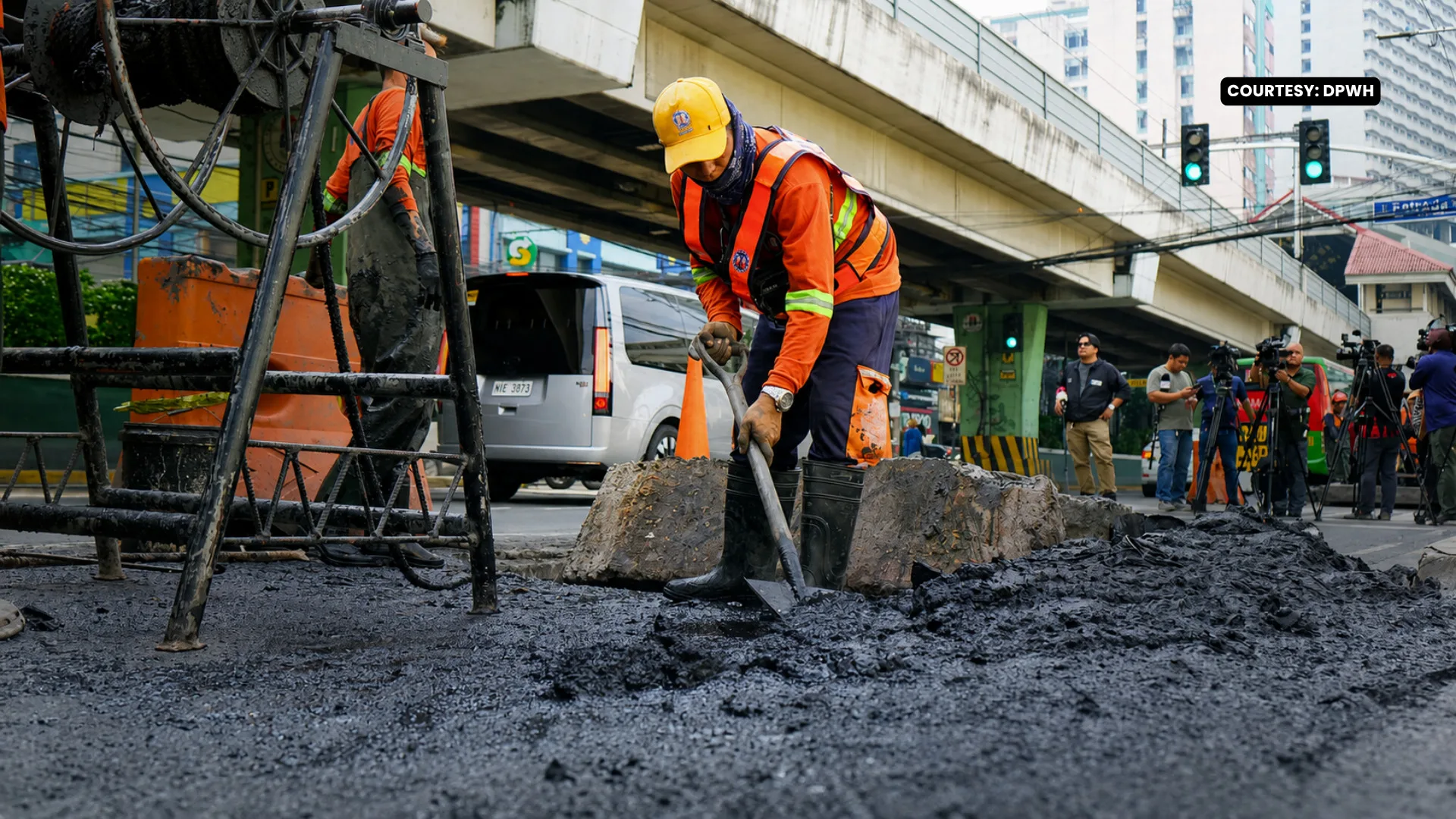
The Department of Budget and Management (DBM) stated that the proposed P643.95-billion allocation for the Department of Public Works and Highways (DPWH) under the 2027 National Expenditure Program (NEP) will sustain economic growth, generate jobs, reduce logistics and travel costs and expand regional connectivity nationwide.
The funding request represents a P113.05-billion, or 21.29-percent, increase from the DPWH’s P530.90-billion budget under the 2026 General Appropriations Act (GAA). DBM noted that the surge is primarily driven by the expanding financial requirements of locally funded and foreign-assisted Infrastructure Flagship Projects.
The DBM emphasized that state infrastructure spending goes beyond constructing physical structures, framing it as a strategic investment to enhance national productivity, stimulate market activity and improve public service delivery.
“For DPWH specifically, its proposed P643.95 billion allocation is 21.29 percent higher than its FY 2026 GAA level, driven in part by ongoing locally funded and Foreign-Assisted Infrastructure Flagship Projects,” Budget Secretary Kim Robert C. De Leon said.
“More than investing in railways, public transport systems, ports, or airports, these also show that investing in shorter travel times, lower logistics costs, stronger regional connectivity and greater access to jobs and economic opportunities for our people are important priorities of this administration,” De Leon added.
Addressing concerns over public fund utilization, the DBM assured that strict safeguards were integrated directly into the budget preparation stage prior to including proposals in the 2027 NEP.
In alignment with the FY 2027 Budget Call and Budget Priorities Framework, proposed infrastructure projects underwent evaluation based on their alignment with national and regional development goals, implementation readiness, project maturity, agency absorptive capacity, historical budget utilization, expected outcomes and public value.
Agencies were mandated to submit complete supporting documentation to demonstrate project necessity and implementation readiness. Required submissions included feasibility studies, detailed engineering plans, procurement timelines, right-of-way acquisition plans, environmental clearances, local government unit (LGU) coordination proofs and formal certifications against project duplication.
Region-specific programs were also subjected to the Regional Development Council (RDC) review process to guarantee alignment with localized development blueprints, with formal RDC endorsements serving as a prerequisite during budget evaluation.