
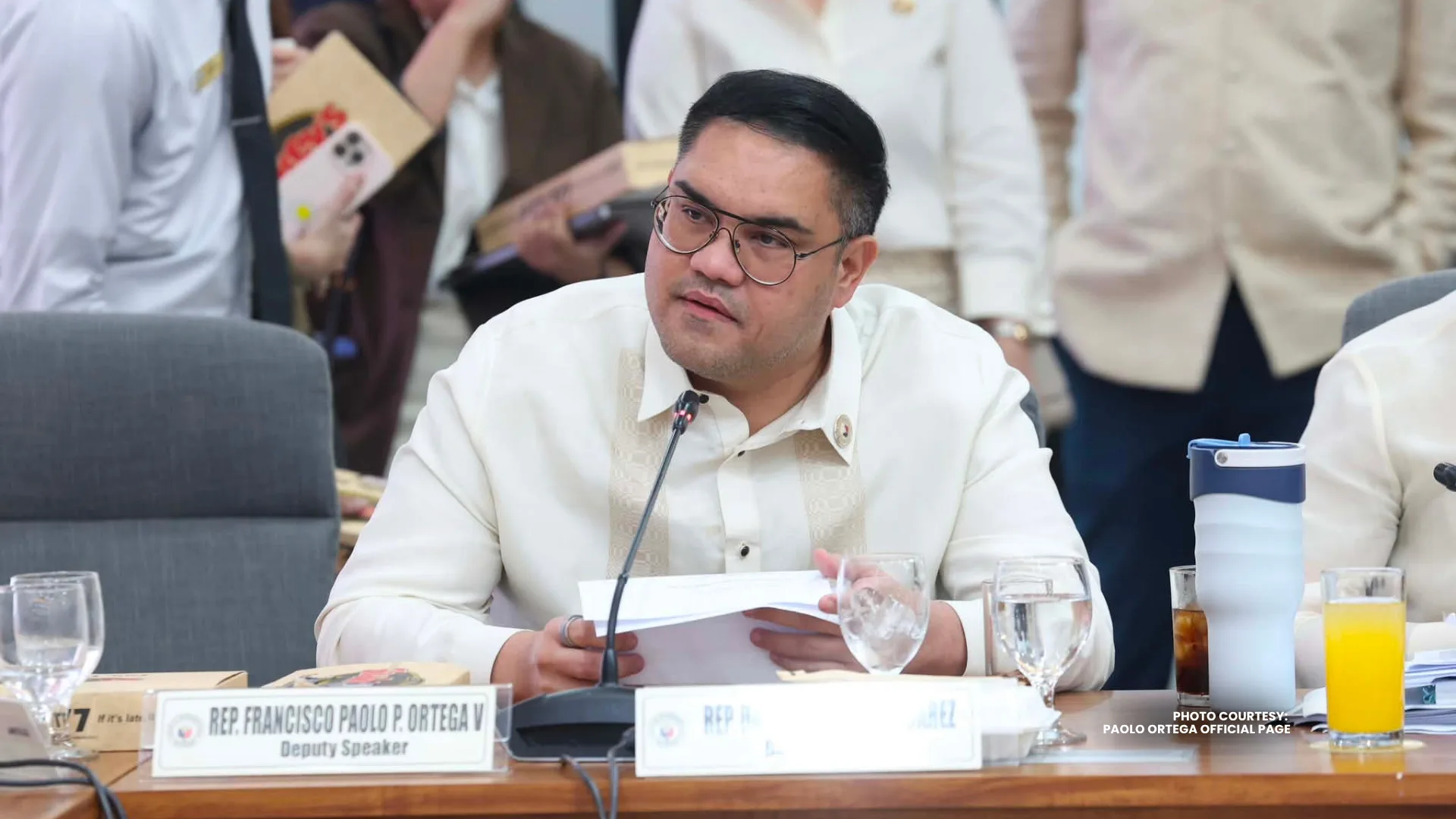
Deputy Speaker and La Union Rep. Paolo Ortega V said the defense must directly confront the sworn testimony and investigative findings presented against Vice President Sara Duterte instead of relying on alleged clerical errors to discredit the evidence.
Ortega acknowledged that scrutinizing the accuracy of official records is a legitimate part of cross-examination. However, he said identifying discrepancies does not replace the need to rebut the substance of the National Bureau of Investigation witness’ testimony.
“The defense has every right to question every date, entry and document presented before the court. But after pointing out those mistakes, it must still answer the testimony and the evidence behind it,” Ortega said.
Former NBI Cybercrime Division chief Atty. Jeremy Lotoc testified that the agency found prima facie evidence, with reasonable certainty of conviction, to recommend filing three counts of grave threats and one count of inciting to sedition against Duterte.
Ortega said the testimony and findings remain before the Impeachment Court unless the defense can show that the questioned discrepancies materially affected the investigation, undermined its conclusions or contradicted the witness’ account.
“Kung may maling entry, dapat itama at ipaliwanag. Pero hindi nawawala ang findings ng NBI dahil lamang may mali sa pag-type ng isang dokumento,” Ortega said.
He explained that a clerical error becomes material only when it changes a relevant fact, weakens the reliability of the evidence or prevents the respondent from properly addressing the allegation.
“A typo is not meaningless, but neither is it automatically fatal to the case. The defense must establish what the error changed and why that change should affect the court’s appreciation of the evidence,” he said.
Ortega also urged the public to distinguish between mistakes made in preparing documents and contradictions that directly affect the substance or credibility of sworn testimony.
“Hindi sapat na sabihing may mali sa papel. Kailangang patunayan kung paano nito pinabagsak ang testimonya, ang findings o ang ebidensiyang sinuri ng mga imbestigador,” he added.
The La Union lawmaker said senator-judges must assess each objection based on its actual effect on the case rather than the attention it receives during the proceedings.
“Correct the paperwork, explain the error and then return to the central question. What evidence has been presented, and what evidence has the defense offered to overcome it?” Ortega said.