
President Ferdinand Marcos Jr. navigated a week marked by both urgent disaster response and sustained governance initiatives, as the administration managed the aftermath of a major earthquake in Mindanao while advancing economic, education, and foreign policy priorities under the Bagong Pilipinas framework.
The week opened with a crisis after a magnitude 7.8 earthquake struck off Sarangani, triggering immediate government mobilization. Marcos ordered all concerned agencies to respond without delay, prioritizing life-saving operations, evacuation support, and rapid restoration of essential services.
The Office of Civil Defense (OCD) and the National Disaster Risk Reduction and Management Council (NDRRMC) coordinated national response efforts, while the Department of Social Welfare and Development (DSWD) pre-positioned relief goods and expanded evacuation support. The Department of Public Works and Highways (DPWH) was likewise directed to assess infrastructure damage and ensure the reopening of critical transport routes.
With a tsunami warning briefly raised across several coastal areas, the President urged the public to follow official advisories. Classes in affected areas were suspended to ensure the safety of learners and school personnel while assessments were conducted.
As response operations intensified, government agencies maintained round-the-clock coordination, including support from telecommunications providers to safeguard emergency communications. DPWH teams immediately conducted field inspections, with key infrastructure such as the Buayan Bridge later cleared and reopened after safety confirmation.
Alongside disaster response, the administration pursued economic reforms, including the designation of additional lands in Balamban, Cebu for expansion of the Cebu Special Economic Zone, aimed at attracting investment and generating employment.
The Bureau of Customs also reported strong fiscal performance, collecting PhP406.3 billion in the first five months of 2026, exceeding targets and reflecting intensified anti-smuggling enforcement and improved revenue collection systems.
In the labor sector, Malacañang reaffirmed its focus on job creation and investment attraction amid concerns over employment data, emphasizing long-term strategies to improve workforce opportunities.
Education and social welfare initiatives also continued, including the distribution of learning materials in San Juan City and the provision of mental health support for students affected by the earthquake, underscoring a broader focus on post-disaster recovery beyond physical aid.
President Marcos also met with Bagong Pilipinas Presidential Scholars, urging them to serve as future nation-builders through academic discipline and civic responsibility.
A moment of reflection marked the week as the President welcomed the Pilgrim Image of Our Lady of Guadalupe in Malacañang, joining prayers for peace, unity, and national healing.
The administration also addressed consumer concerns, with the Department of Agriculture (DA) reviewing the possible extension of the P50 per kilo suggested retail price cap on rice to stabilize food prices.
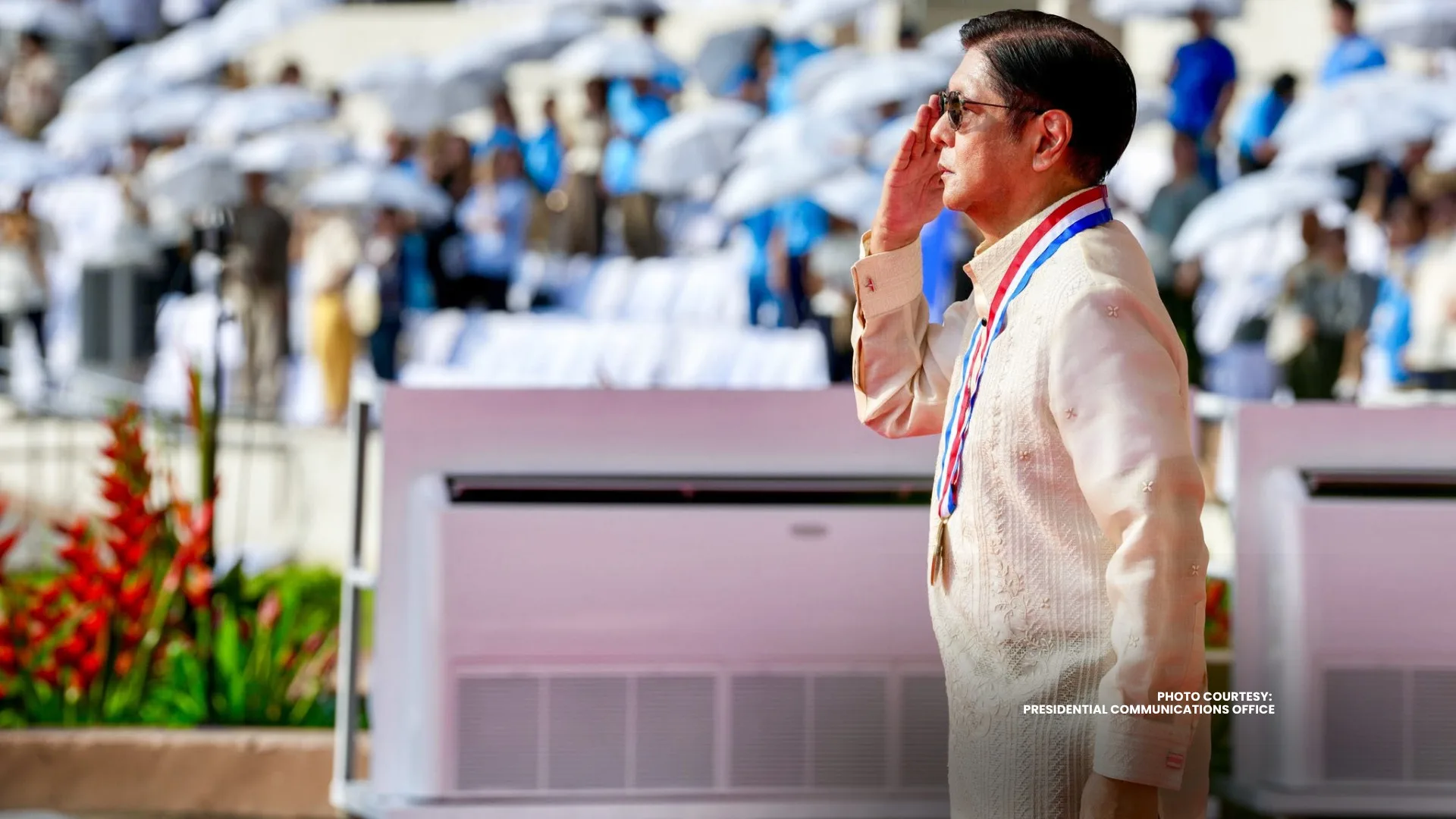
In the diplomatic and civic sphere, the President led Independence Day commemorations at the Quirino Grandstand, calling on Filipinos to defend freedom while confronting modern challenges such as poverty, corruption, and climate change. The event featured cultural performances highlighting national heritage and ASEAN integration themes.
He was joined by top government officials, diplomatic representatives, and security leaders in ceremonies underscoring national unity and continuity of governance.
Capping the week, President Marcos hosted the traditional Vin d’Honneur in Malacañang, reaffirming the Philippines’ commitment to multilateralism and rules-based international cooperation.
He also announced plans to expand the country’s diplomatic presence with new missions in Kazakhstan and Miami, aimed at strengthening consular services for overseas Filipinos while expanding trade and investment links.
Taken together, the week of June 7–13 reflected an administration balancing immediate crisis management with long-term state-building priorities—responding to emergencies, reinforcing economic resilience, strengthening education and social protection, and deepening the Philippines’ global engagement under the Bagong Pilipinas agenda.