
The Department of Social Welfare and Development (DSWD) is preparing to transition from pure relief distribution to emergency cash assistance as it ramps up its response to communities affected by the 7.8-magnitude earthquake in Southern Mindanao.
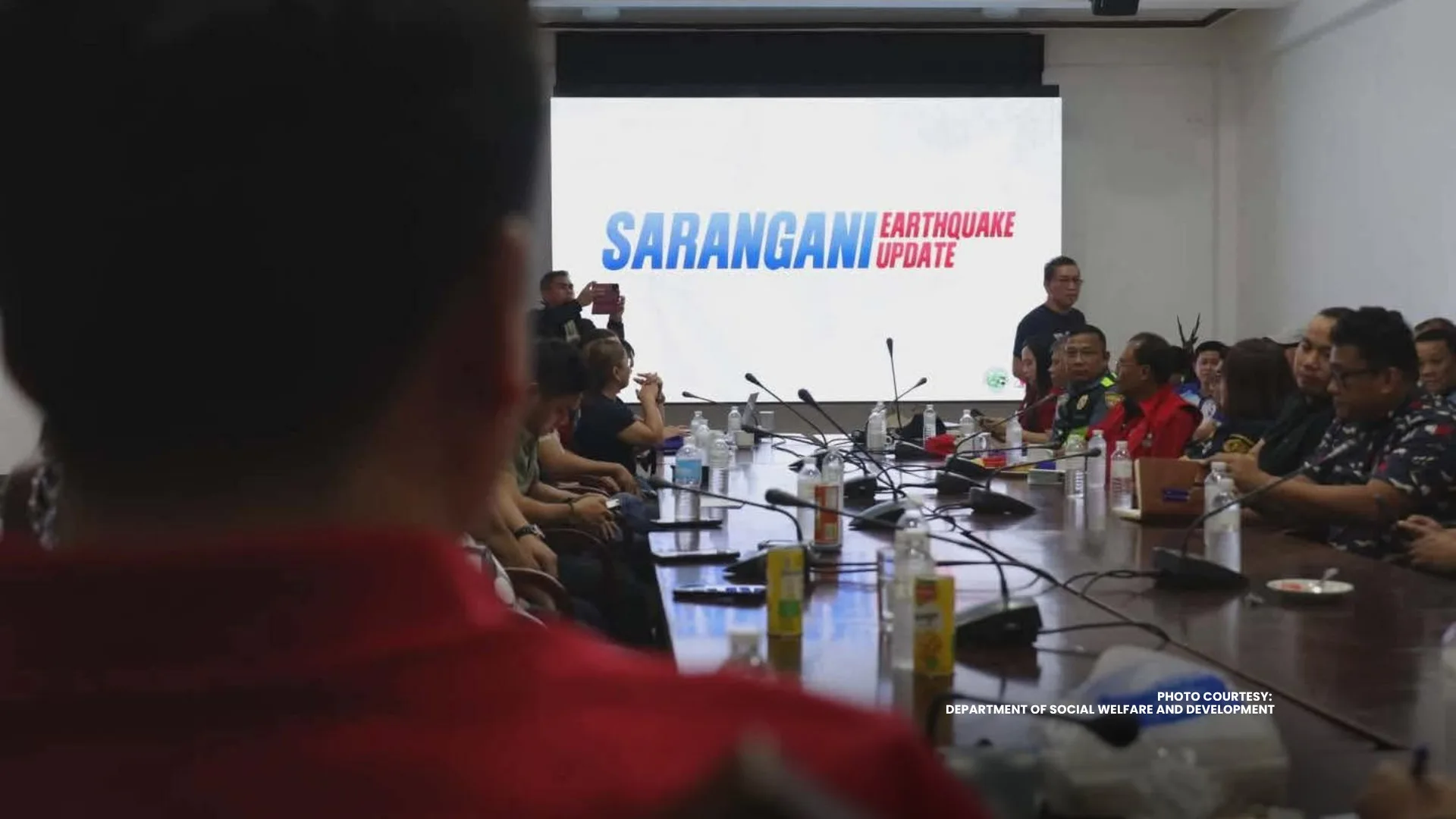
DSWD Secretary Rex Gatchalian made the announcement during an on-site visit in Glan, Sarangani on June 14, where he personally assessed ongoing relief operations and met with local officials to coordinate further assistance for affected families.
Gatchalian said the agency’s initial focus has been the distribution of family food packs (FFPs), which were prepositioned even before the quake struck. However, he noted that the scale of damage—covering an estimated 23,000 affected families in the first wave—quickly exceeded local capacity, requiring sustained augmentation from the national government.
He said food aid distribution will continue for at least two to three weeks, targeting up to 60,000 food packs as part of an ongoing support plan in coordination with local government units (LGUs).
Beyond immediate relief, Gatchalian stressed the need to shift toward emergency cash transfer (ECT) assistance to support early recovery efforts, noting that affected families now require resources beyond food, including shelter repair and essential household needs.
“Hindi naman lahat ng pangangailangan nasa food packs. May mga kailangan sila sa pag-ayos ng bahay at iba pang gastusin,” he said, adding that the transition to cash assistance will be implemented across Sarangani, Davao Occidental, and General Santos City once validated beneficiary lists are submitted by LGUs.
He emphasized that the DSWD’s response is guided by President Ferdinand Marcos Jr.’s directive for a comprehensive and sustained disaster response in Mindanao.
As part of ongoing operations, the DSWD has also deployed mobile kitchens serving hot meals in evacuation areas and positioned a mobile water filtration system to address intermittent water supply issues in affected communities.
Gatchalian said coordination with local governments remains central to the response, noting that LGUs remain the frontline responders while the national government provides augmentation support.
The DSWD is also coordinating with the National Housing Authority as part of broader government efforts toward early recovery and eventual rebuilding in quake-hit areas.