
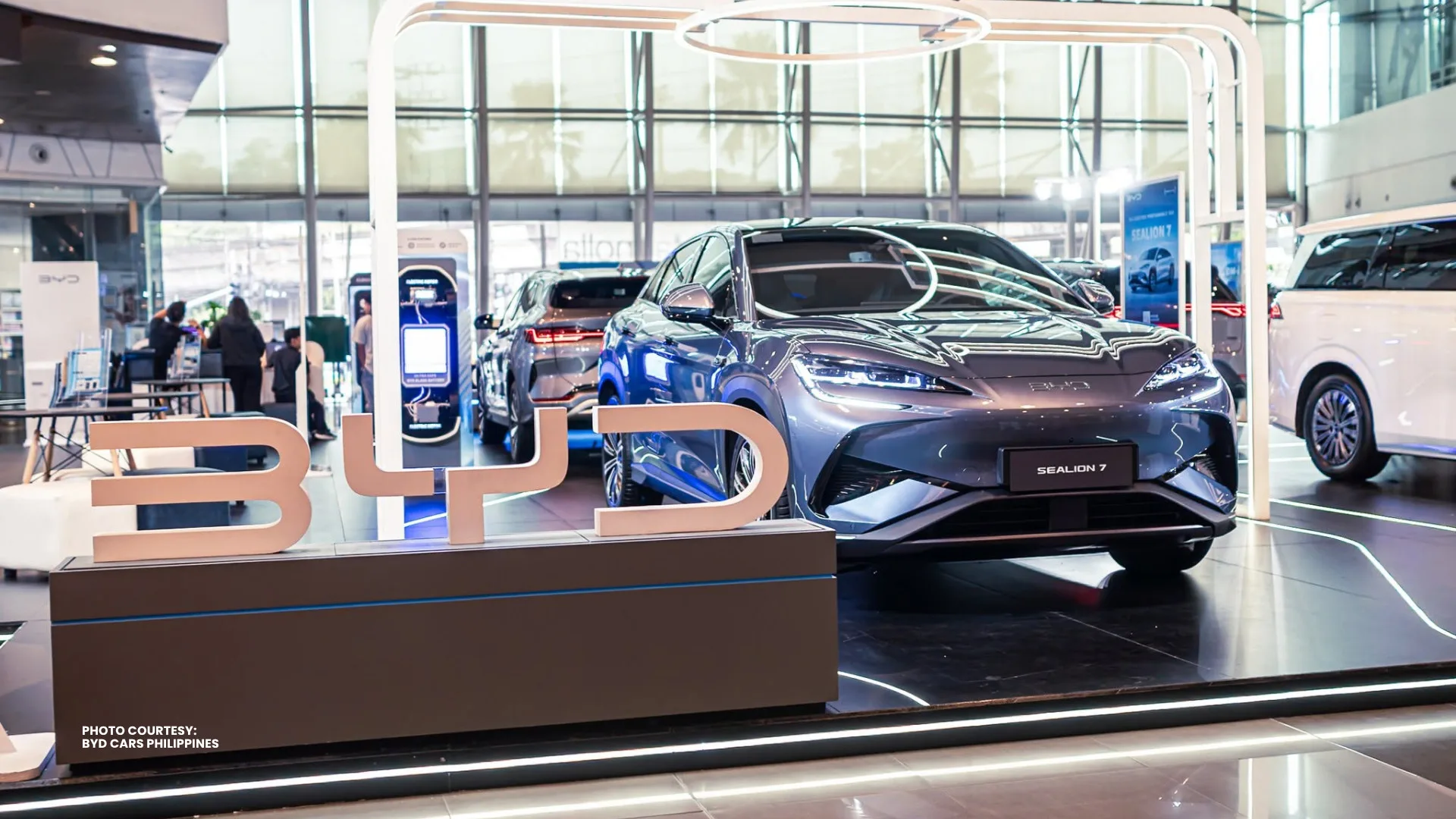
Let’s settle something first. For many Filipinos, an electric SUV still sounds like a compromise: quiet, sensible, responsible, and maybe a little too polite. The BYD Sealion 7 makes a different first impression.
It comes in with dual-motor all-wheel drive, 530 PS, 690 Nm of torque, and a claimed zero to 100 kph run of 4.5 seconds. For a five-seat family crossover priced at P2,588,000, that is a serious number. It places the Sealion 7 in a performance space once reserved for coupes, sport sedans, and cars that made their presence known through exhaust noise.
The Philippine-spec model is offered in a single AWD Performance variant. It uses BYD’s Blade Battery and a rear-biased dual-motor setup, with power distributed roughly 40 percent to the front and 60 percent to the rear. In simpler terms, this is not just an electric SUV built for quiet commutes. It has the hardware to make the drive feel more urgent than expected.
Its size also gives it presence. Measuring 4,830 mm long, 1,925 mm wide, and 1,620 mm tall, with a 2,930 mm wheelbase, the Sealion 7 sits firmly in midsize crossover territory. It is longer than both the Tesla Model Y and Toyota bZ4X, putting it directly in the conversation with more familiar electric crossovers. For BYD, it also becomes more than another model in the showroom. It is a statement product.
Under the floor is an 82.6 kWh Blade Battery with a claimed driving range of 542 kilometers. The figure is based on standard laboratory testing, so actual range will still depend on traffic, speed, weather, load, tires, and driving style. Still, the number matters in a market where range anxiety remains one of the biggest barriers to EV adoption. At the very least, the Sealion 7 makes out-of-town electric driving feel less like a theory and more like a realistic option.
Charging adds to that case. The Sealion 7 supports up to 11 kW AC charging, which can bring the battery from zero to full in around eight hours. With DC fast charging, it can take up to 150 kW and go from 10 to 80 percent in about 35 minutes under ideal conditions. Charger availability, station reliability, battery temperature, and actual output will still affect the experience, but the numbers help push the car beyond simple home-to-mall use.
Inside, the Sealion 7 follows BYD’s familiar playbook: a clean cabin, a large screen, and a long list of features for the money. It gets a 15.6-inch rotating touchscreen with Apple CarPlay and Android Auto, a 10.25-inch digital instrument cluster, a heads-up display, ventilated front seats, a panoramic glass roof, wireless charging, a 12-speaker Dynaudio sound system, and a power tailgate.
There is also a front trunk, which sounds like a novelty until it becomes the place for charging cables, small bags, and the usual family clutter that somehow always comes along for the ride.
Then there is Vehicle-to-Load. Through a V2L adapter, the Sealion 7 can power external devices and appliances, making it useful for road trips, outdoor setups, and emergency situations. In a country where brownouts remain part of everyday planning, that feature feels less like a gimmick and more like practical insurance.
Safety and driver assistance features are also part of the package. The Sealion 7 comes with BYD’s DiPilot suite, including a 360-degree camera with see-through mode, adaptive cruise control, automatic emergency braking, lane departure assistance, blind spot detection, rear cross-traffic alert, and driver attention warning. These systems add confidence, although they still depend on proper calibration, clear road markings, traffic conditions, and responsible use behind the wheel.
The bigger question is value. At nearly three million pesos, the Sealion 7 is clearly positioned as a premium EV. It sits above BYD’s more accessible plug-in hybrid SUVs, including the Sealion 6 DM-i at P1.598 million, but it also offers a different proposition: full-electric driving, all-wheel-drive performance, stronger output, and a more premium equipment list.
BYD includes a six-year or 160,000-kilometer bumper-to-bumper warranty and an eight-year or 160,000-kilometer warranty for the Blade Battery. The company also claims once-a-year periodic maintenance and possible PMS savings of up to 50 percent versus comparable C-segment SUVs. Actual ownership costs will still depend on usage, charging habits, insurance, tire wear, and resale value.
The timing is important, too. BYD is no longer a background player in the global EV race. Reuters reported that the brand’s overseas shipments surged 80.4 percent in May 2026, even as competition in China’s EV market remained intense. That means the Sealion 7 is arriving in the Philippines at a time when BYD is pushing harder overseas, and when electric brands are competing more aggressively on price, technology, and trust.
The BYD flagship still has to answer the usual EV questions. Public charging in the country needs to improve. Its claimed range has to prove itself in local conditions. Long-term EV resale values remain a developing story. For some buyers, hybrids may still feel like the safer bridge.
But as a statement product, the Sealion 7 has impact. It does not frame electrification as sacrifice. It presents the EV as fast, spacious, feature-rich, and genuinely useful. More than just another electric SUV, it shows that the future of the family crossover can be quiet, practical, and still have enough punch to feel like a flex.