
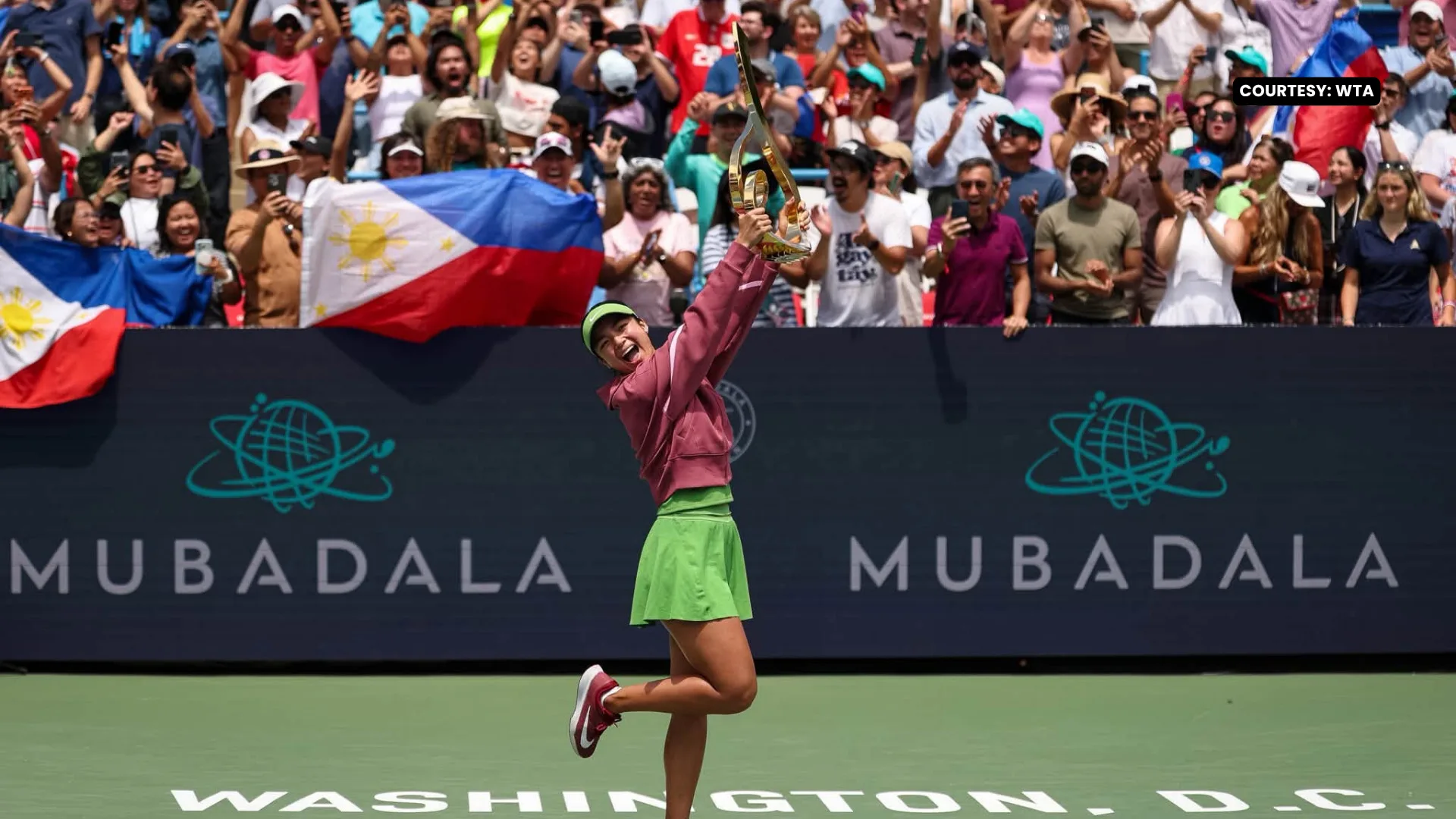
The 21-year-old’s breakthrough championship in Washington was historic. But the making of Alex Eala began years earlier, on quieter courts far from home.
When Alex Eala returned to the court in Washington, D.C., after an overnight rain delay, she was still chasing the biggest victory of her career.
Jessica Pegula had taken the opening set of the Mubadala Citi DC Open final, and the match had been suspended with Eala leading 2-1 in the second. The interruption stretched the occasion across two days, leaving the 21-year-old with more time to think about the title waiting on the other side.
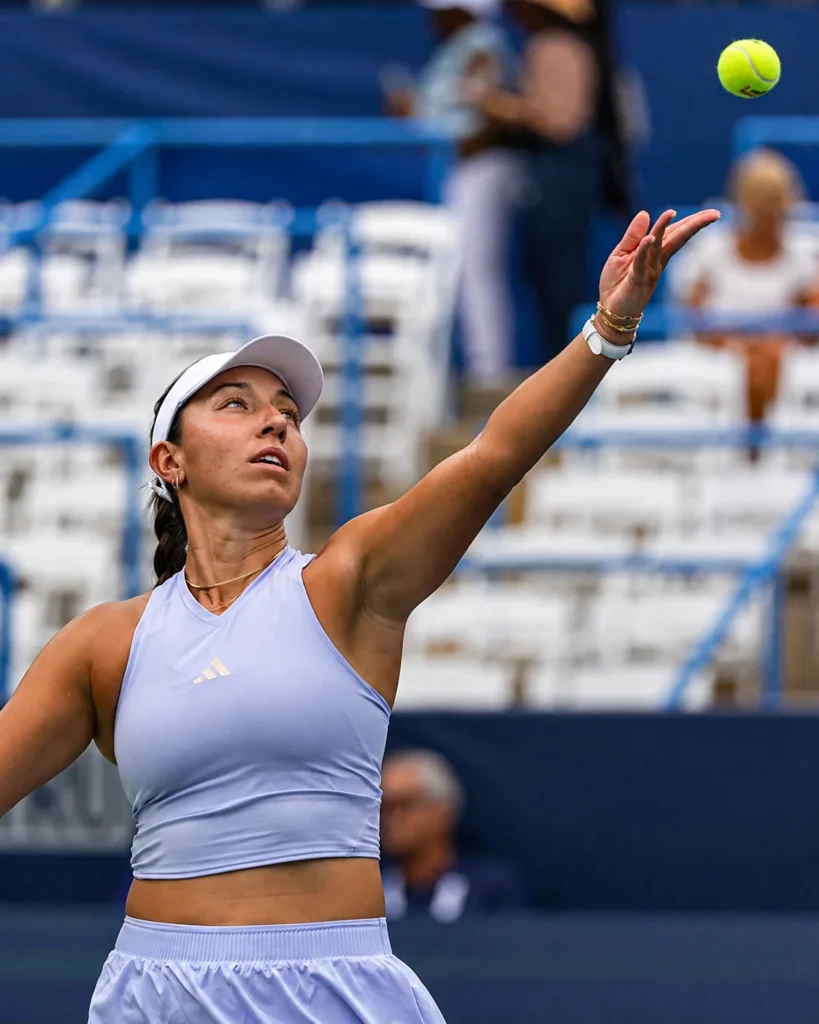
When play resumed, Eala appeared settled rather than overwhelmed. She won the second set, swept the third and completed a 4-6, 6-4, 6-0 comeback to become the first Filipino to win a WTA Tour-level singles championship.
For Philippine tennis, it was a landmark. For Eala, it was the latest chapter in a life shaped by early departures, long-distance family ties and a childhood spent moving steadily toward a goal few Filipinos before her had been able to imagine.
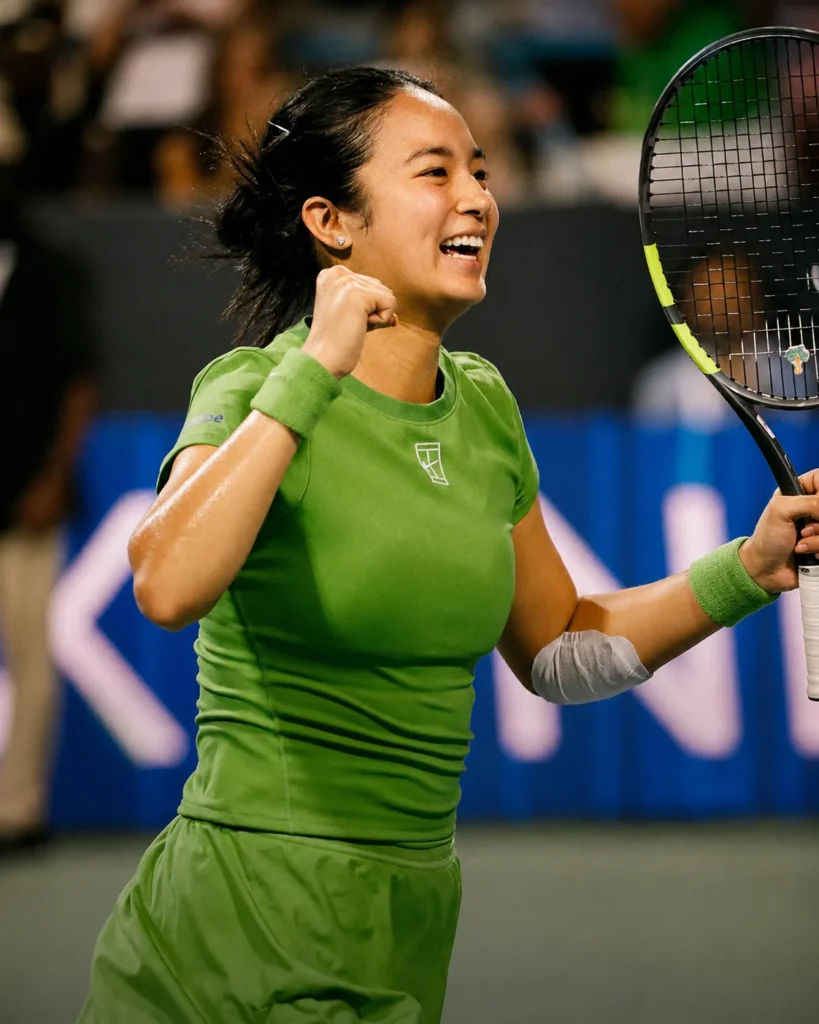
Born in Quezon City on May 23, 2005, Eala grew up in a family familiar with the discipline of competitive sports. Her mother, Rizza Maniego-Eala, represented the Philippines in swimming at the Southeast Asian Games, while her grandfather introduced her to tennis. She began playing at four, initially sharing the court with family before the sport gradually took over the rhythm of her days.
Her talent soon became difficult to ignore, but reaching the international level required more than occasional training and local competition. At 13, Eala left the Philippines for Mallorca, Spain, where she joined the Rafa Nadal Academy.
The move changed nearly every part of her life. While many teenagers her age were adjusting to high school, Eala was learning how to live away from home, manage an increasingly demanding schedule and balance schoolwork with daily training. Family celebrations, familiar food and ordinary afternoons with friends were replaced by fitness sessions, tournaments and the routines of an elite academy.
Mallorca offered the structure she needed, but it also required independence before adulthood. Eala grew up between airports, practice courts and video calls home, becoming accustomed to the idea that pursuing her dream meant missing parts of the life she had left behind.
Her junior career brought early validation. She won girls’ doubles titles at the Australian Open in 2020 and the French Open in 2021. In 2022, she captured the US Open girls’ singles championship, becoming the first Filipino to win a junior Grand Slam singles title.
The victory introduced her to a wider Filipino audience and placed her among the sport’s most promising young players. It also brought expectations that would follow her into the professional tour, where junior trophies no longer guaranteed attention or success.
The transition was quieter. Eala spent the next few seasons competing in lower-tier events, accumulating ranking points and adjusting to stronger, more experienced opponents. Much of that work took place beyond television coverage, in smaller venues where players learn to live with uncertainty and move quickly from one country to the next.
Her public breakthrough came at the 2025 Miami Open. Ranked outside the world’s Top 100, Eala defeated Jelena Ostapenko, Madison Keys and world No. 2 Iga Swiatek before reaching the semifinals. The run changed the way she was viewed on tour and turned her into one of the most closely watched Filipino athletes of her generation.
Even as attention grew, Eala’s public image remained understated. She rarely presented herself as a celebrity, despite endorsement deals, magazine appearances and an expanding international fan base. Her interviews were generally measured, her celebrations controlled and her references to the Philippines consistent without appearing rehearsed.
That sense of composure became part of her appeal. Eala represented a younger generation of Filipino athletes who were comfortable competing internationally without treating participation itself as the achievement. She carried the flag, but she also carried the expectation that she could win.
By the time she arrived in Washington, her career had already included a WTA final in Eastbourne, titles at WTA 125 events and a fourth-round appearance at Wimbledon. Her championship run in the American capital included victories over Zheng Qinwen, defending champion Leylah Fernandez, Elina Svitolina and Naomi Osaka before the final against Pegula.
The names made the title impressive. The years behind it made the moment personal.
For Eala’s family and those who had followed her since childhood, the trophy reflected the cost of leaving home early and building a life around a sport with no established Filipino pathway to the top. For younger athletes, it offered something simpler but perhaps more lasting: a visible example.
A child picking up a racket in the Philippines no longer has to imagine whether a Filipino can win on the WTA Tour. Eala has already done it.
At 21, she remains at the beginning of what could still become a much larger career. Washington will bring a higher ranking, greater attention and expectations that will follow her into every major tournament.
It will also remain the place where years of training, travel and separation from home finally became something tangible.
Alex Eala lifted a trophy in Washington, but the story behind it began in Quezon City, with a young girl, a family that understood sacrifice and a decision made at 13 to see how far a tennis racket could take her.