
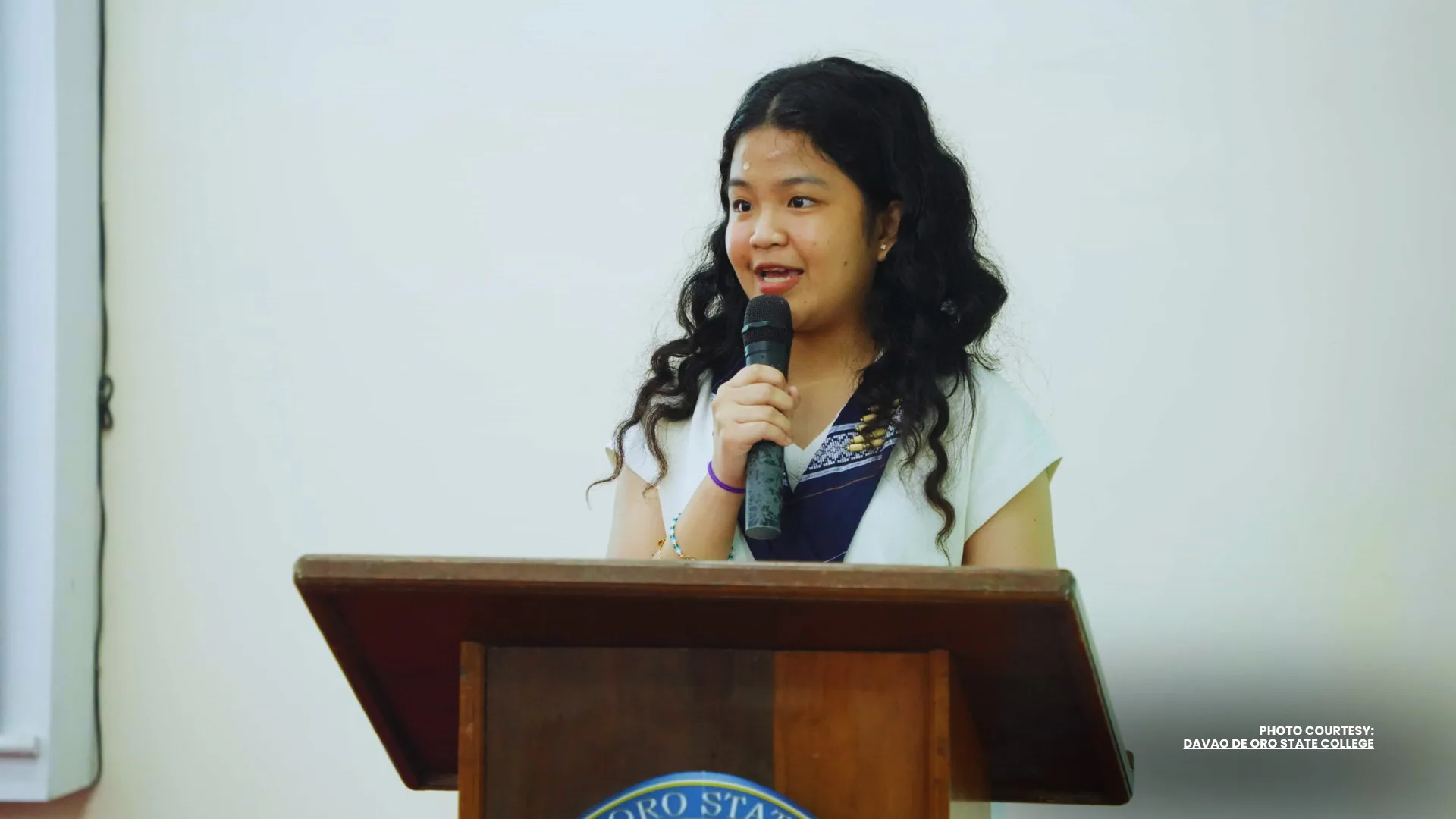
Aryenne Ysabelle Rodrigo grew up selling pastil in Compostela, Davao de Oro. Now, she is studying Environmental Science and Engineering at Harvard, carrying with her a question that has shaped much of her journey: how can knowledge serve the communities that raised her?
Her family home in Compostela became part of that answer in January 2026, when Harvard students visited Davao de Oro as part of a Philippine immersion trip co-organized by Rodrigo through the Harvard Undergraduate Philippine Forum.
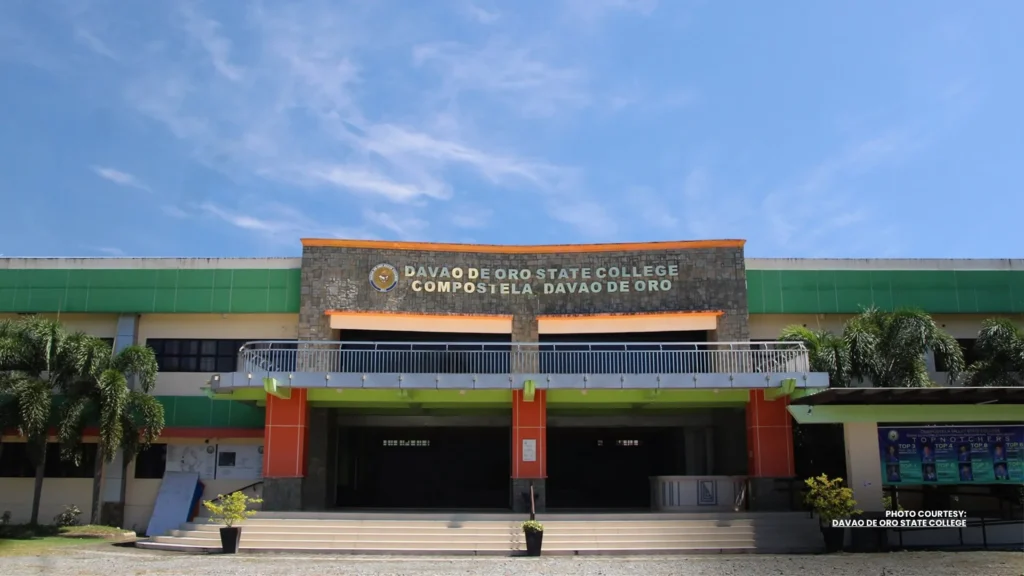
The neighbors were there. Former teachers came. Relatives filled the sala. Food was served, as it often is in Filipino homes where guests are welcomed through a shared meal.
For Rodrigo, the visit brought together the place that shaped her and the university where she is now building the tools to help address problems close to home.
Rodrigo grew up in a family of farmers. Her father also worked as a tricycle driver to help support the household. While studying at Compostela National High School, she sold pastil and chili peppers to classmates to earn allowance and contribute to her family.
By most measures, she was far from the usual path to an Ivy League university. But she had long imagined studying abroad and using that opportunity to help the Philippines.
“I’ve dreamed of studying abroad for as long as I can remember,” she wrote in a Facebook post cited in earlier reports. “I used to read countless news and stories about Filipinos who successfully pursued their studies in the US and wanted to make a positive impact in the Philippines.”
In 2023, Rodrigo was reported to have received full scholarship offers from Harvard University, Princeton University, and Amherst College, along with offers from Columbia University, Dartmouth College, Cornell University, the University of Pennsylvania, and Rice University.
She chose Harvard, where she is now part of the Class of 2027 and is concentrating in Environmental Science and Engineering.
Long before the acceptance letters, Rodrigo had already begun working on ideas rooted in local problems.
During high school, she interned at the Municipal Environment and Natural Resources Office in Compostela, where she was exposed to the challenges of solid waste management. That experience led her to develop “I AM Gina,” an AI-powered mobile application designed to help classify waste through a photo.
The app helps identify whether trash is biodegradable, recyclable, residual, or special waste. Its name honors Gina Lopez, the late Filipino environmental advocate and former environment secretary known for her work on environmental protection.
At Harvard, Rodrigo has continued to connect her studies with her roots.
In January 2026, she helped organize a Harvard Undergraduate Philippine Forum immersion trip to the Philippines, bringing students to Manila, Dumaguete, Davao, and Davao de Oro. The program included visits to rural and Indigenous communities, including the Mandaya people of New Bataan.
The trip also brought the students to Rodrigo’s ancestral home in Compostela, where relatives, neighbors, and former teachers gathered to welcome them.
It was not just a visit. It was a quiet statement about the places students carry with them, even when they reach spaces once thought impossible.
Rodrigo has also spoken about the potential of renewable energy in Davao de Oro, particularly geothermal energy, as part of her hope to help her province move toward more sustainable development.
“No one is harnessing the dormant energy in Davao de Oro,” she said in a previous report. “I’m excited about the potential of geothermal energy to power up the millions of homes in the Philippines.”
The pastil she sold at school helped pay for her daily needs. Her internship gave her a problem to study. Her app showed that even as a student, she was already looking for practical solutions.
Harvard gave Rodrigo a wider platform for the work she had already started. In Compostela, the house is still there.