
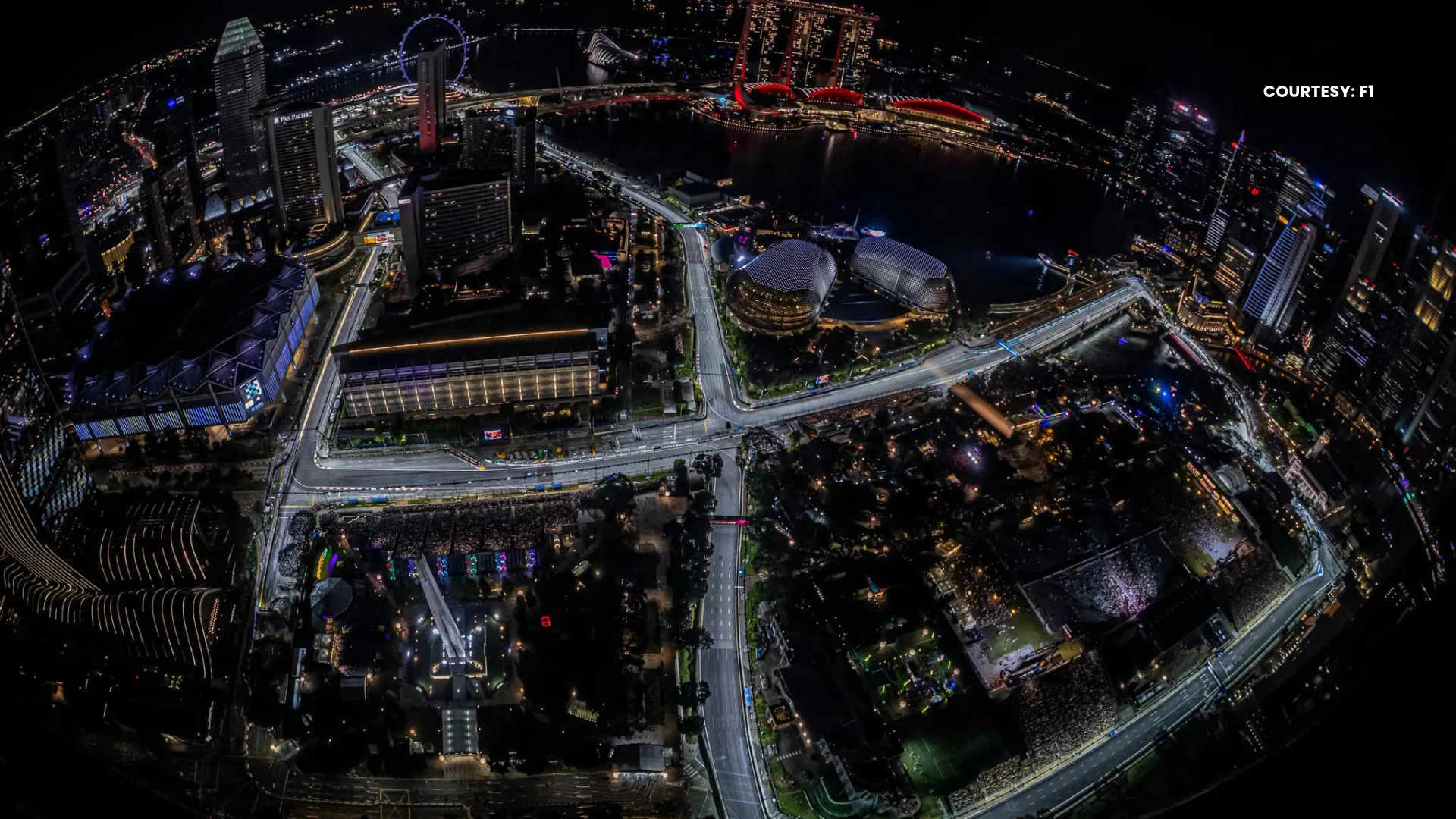
Singapore makes Formula One look glamorous. Driving it is another matter.
Behind the skyline and floodlights, the Marina Bay Street Circuit demands precision through 19 corners, with concrete barriers ready to punish a small mistake. Heat, humidity and a bumpy street surface add to the workload. The sun clocks out; the drivers do not.
The October 9–11 Singapore Grand Prix weekend adds another challenge this year: the circuit’s first F1 Sprint. Teams get one practice session on Friday before Sprint Qualifying, followed by the Sprint and Grand Prix qualifying on Saturday. Sunday brings the main race. That leaves considerably less time to discover that the car’s setup needs work.
For car enthusiasts, Singapore is a lesson in why speed involves more than horsepower. Successive corners demand repeated braking, while the limited opportunities for cooling make heat management a serious engineering concern. A car must remain responsive and consistent through the lap, rather than simply impress at the end of a straight.
The drivers face their own temperature problem. High humidity makes the physical effort particularly demanding, prompting preparation that includes heat training and carefully planned hydration. Even the onboard drinks bottle can be frozen beforehand so its contents thaw as cockpit temperatures rise.
There is fresh machinery to understand, too. F1’s 2026 cars use active front and rear wings, adjusting between configurations for cornering grip and reduced drag on straights. The electrical side of the hybrid power unit also plays a much larger role, with the MGU-K motor-generator’s output increased from 120kW to 350kW.
That makes energy management part of the action. The cars recover energy under braking and in other operating conditions, then deploy it through the drivetrain. For viewers, acceleration out of corners and performance along the straights offer clues to how effectively a driver and team are managing those resources.
Watch the quieter moments as closely as the overtakes: a driver repeatedly correcting the steering, a car struggling to follow another through a corner, or a pit-stop decision that changes track position. Singapore’s close walls leave little room to rescue an error, and its history shows how quickly an interruption can reshape a race.
For Philippine viewers, the headline sessions fall conveniently in the evening: Saturday’s Sprint starts at 5 p.m., qualifying at 9 p.m., and Sunday’s Grand Prix at 8 p.m. Singapore and the Philippines share the same time zone.
Come for the night-race spectacle. Stay to watch drivers and engineers solve a very fast, very hot problem between the walls.