
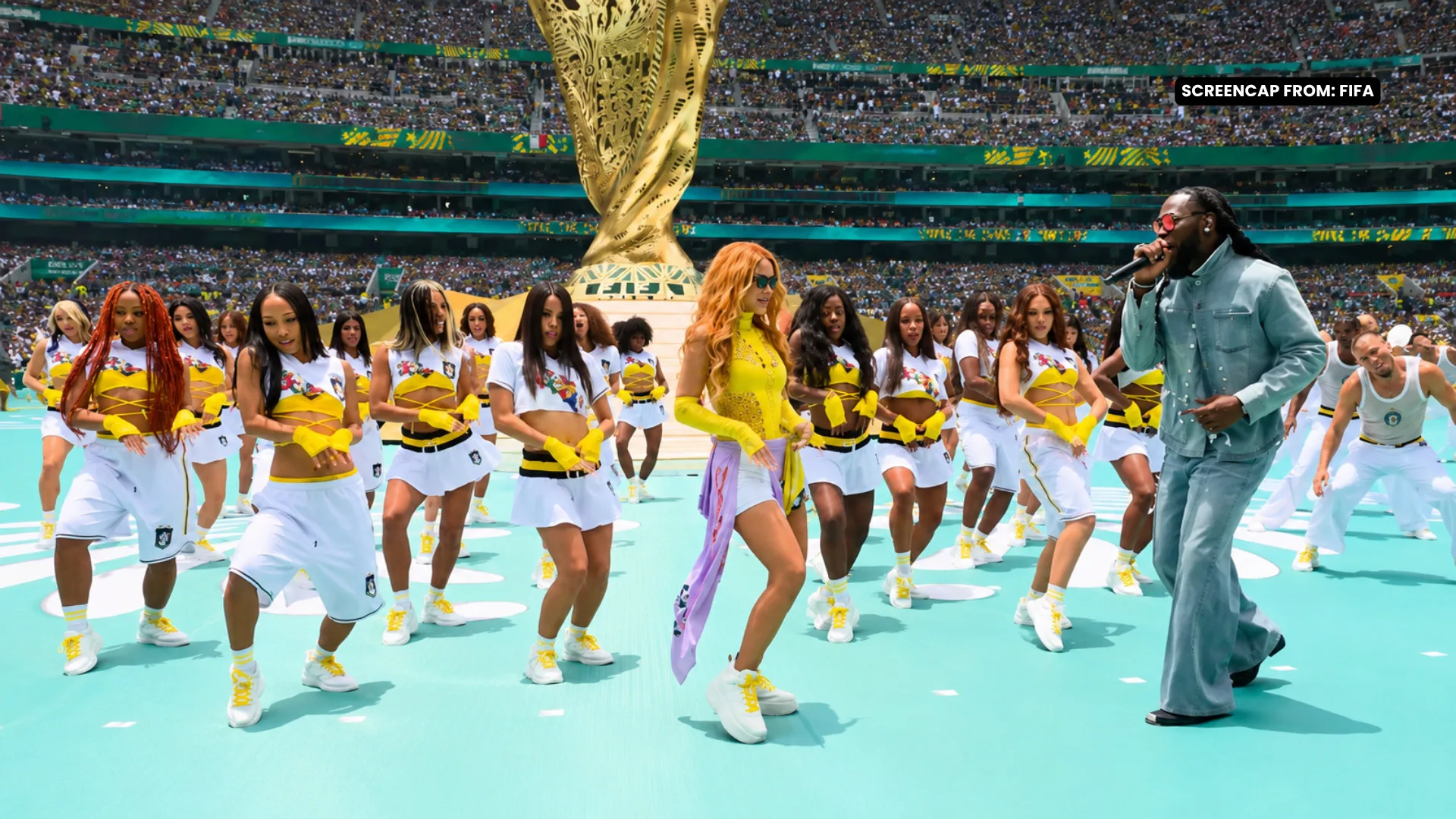
“Dai Dai” is not just a World Cup anthem. It is what happens when one of the planet’s most dominant live performers builds a song for the entire world: five languages, an African icon, half a billion streams, and a global audience already moving to its rhythm.
The title comes from Italian slang. Dai means come on, give it everything, push harder. It is what a coach shouts from the sideline, what a crowd chants in the final minutes, and what you tell yourself before doing something that demands everything you have.
As of this week, “Dai Dai” is the most-streamed song on Spotify globally and the number one single on the Billboard Global Chart. It has 500 million streams across digital platforms, 296 million views on YouTube, and chart placements in 56 countries.
That scale feels almost inevitable when the artists behind it are Shakira and Burna Boy.
Released on May 14 via Sony Music Latin and Ace Entertainment, “Dai Dai” is the official song of the 2026 FIFA World Cup. It is also the official anthem of the FIFA Global Citizen Education Fund, which is raising $100 million to expand access to education and sport for children in underserved communities.
Shakira is donating her royalties from the track to the fund, while Sony Music is matching the first $250,000 raised. The song is doing several things at once: dominating charts, carrying a humanitarian mission, and making both feel effortless.
The Song Itself
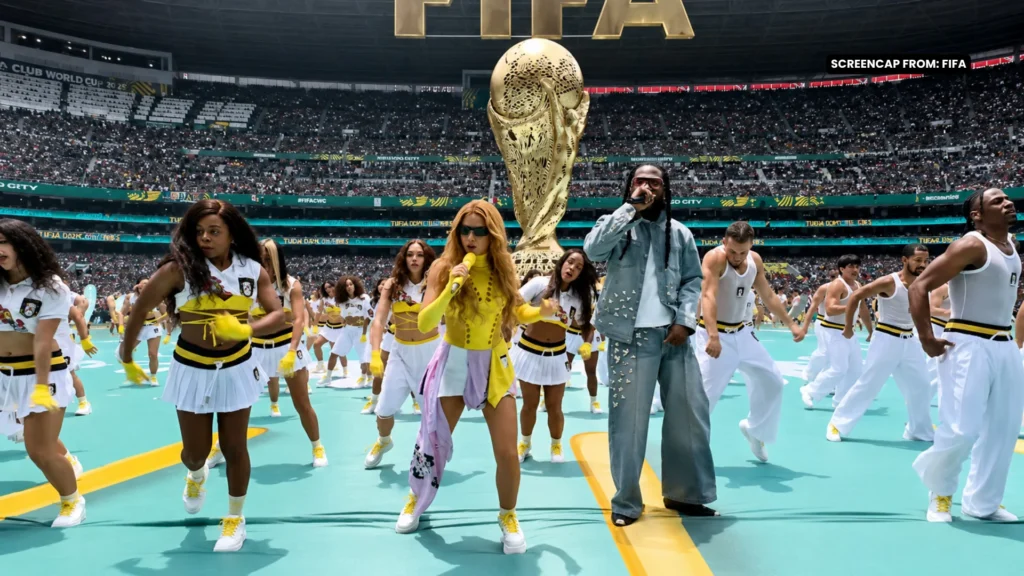
Written by Shakira and Burna Boy alongside Benny Adam, Jon Bellion, Ed Sheeran, and Alexander Castillo, “Dai Dai” moves across English, Spanish, Italian, French, and Japanese.
The track blends Afrobeats, dance-pop, reggaeton, and world music into a multilingual record that feels less like a compromise and more like a discovery. It brings Shakira’s Latin-pop instincts together with Burna Boy’s Afro-fusion language, creating a song built for stadiums, broadcasts, and street celebrations.
In practice, Shakira and Burna Boy trade verses before joining in a duet, calling out football legends and competing nations with the urgency of a crowd that has waited four years for this moment.
The roll call alone is worth noting: Pelé, Maradona, Maldini, Ronaldo, Messi, Mbappé, Salah, Beckham, Kaká, Iniesta, Romário, and Valderrama. Every era of the jogo bonito gets a place in the song. It could have sounded like a corporate checklist. Instead, it lands as a tribute because the record earns the scale it is reaching for.
Billboard listed the song as the third best song for the 2026 FIFA World Cup, saying it “blends the musical worlds” of the two artists, with “the artists sending a motivational and uplifting message to athletes and fans alike.”
Newsweek described it as “a massive, rhythm-driven anthem,” praising “Shakira’s unmistakable flair” and “Burna Boy’s Afrofusion mastery.”
The music video, directed by Hannah Lux Davis and filmed in Miami, opens with cameos from Messi, Mbappé, and Haaland. It features Uganda’s Ghetto Kids NGO and places Shakira atop Mexico City’s Angel de la Independencia, an image so cinematic it almost feels unfair.
Why Shakira, Why Now
This is Shakira’s fourth official FIFA World Cup song, more than any other artist in the tournament’s history.
Her 2010 anthem “Waka Waka (This Time for Africa)” remains one of the most recognizable songs ever attached to a global sporting event. It outlived the tournament and became a cultural artifact. Shakira is not simply another artist attached to a FIFA campaign. She is one of the few performers audiences already associate with the World Cup on a near-mythic level.
What makes “Dai Dai” different is who she brought with her.
For Burna Boy, the collaboration marks another defining global moment in a career that continues to bridge music, sport, and culture. It is his first official FIFA World Cup song, and it brings his sound to an audience larger than any he has previously commanded.
The track leans heavily into Afro-fusion, allowing the Nigerian star to place African rhythms and musical traditions at the center of one of the world’s biggest sporting events. From a representation standpoint, that matters.
Burna Boy framed it simply: “The World Cup is one of the few things the entire world experiences together. Football and music speak the same language. They bring people together no matter where you’re from and being part of this moment through music means a lot to me.”
The Scale Of It
To understand where Shakira is right now, the numbers help.
Billboard crowned her this year as the artist behind the highest-grossing Hispanic tour of all time. Her Las Mujeres Ya No Lloran World Tour posted $421.6 million in gross revenue from 82 stadium shows across the United States and Latin America, with more than 3.3 million people in attendance.
In January 2026, the tour earned the Guinness World Record for the highest-grossing tour in history by a Spanish-language artist.
In early May, Shakira drew more than two million fans to Copacabana Beach for this year’s Todo Mundo No Rio concert, one of the highest-attended concerts of all time. The event generated a projected $800 million in economic benefits for the local economy, including a 123 percent increase in travel bookings.
She has since surpassed 99 million monthly Spotify listeners, setting a new record for any Latin female artist in the platform’s history.
On July 19, at MetLife Stadium in East Rutherford, New Jersey, Shakira will co-headline the first-ever FIFA World Cup Final halftime show alongside Madonna and BTS. She is set to perform “Dai Dai” live for the largest television audience of the year.
After that comes Spain, where Shakira Stadium, a 50,000-capacity venue designed by Bjarke Ingels Group and built specifically for her 11-night residency, has already sold more than half a million tickets.
The Word At The Center Of It All
Dai. Italian. Come on. Give it everything.
“Dai Dai” has a bigger platform than almost any song released this year. Still, its real power may be measured by how quickly it has begun to travel outside football. The song is already being heard beyond World Cup contexts, which is how a tournament anthem becomes something larger than a tournament.
That is the mark of a great sports song. It leaves the stadium. It finds its way into the rest of life. You hear it somewhere unexpected, and for a moment, whatever you are doing feels as urgent as a final.
Shakira has made that kind of song four times now.
Somehow, she keeps getting better at it.
“Dai Dai” by Shakira and Burna Boy is out now on all digital music platforms via Sony Music Latin. The FIFA World Cup 2026 Final Halftime Show takes place on July 19 at MetLife Stadium.