
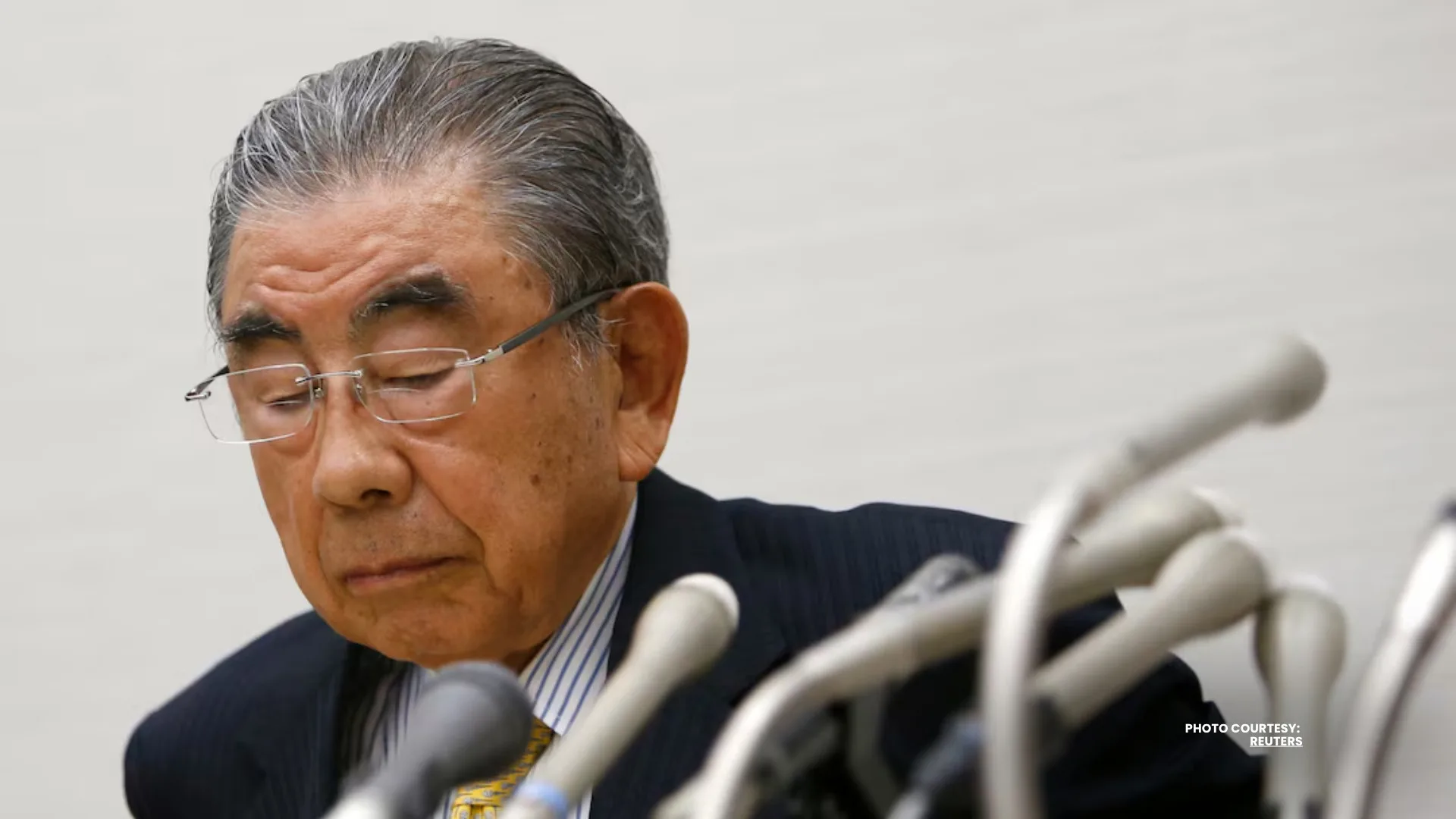
Toshifumi Suzuki, the retail visionary who turned a borrowed American convenience-store concept into one of Japan’s most influential consumer empires, has died at 93, closing the life of a businessman who helped redefine how millions of people eat, shop, pay bills and move through daily life.
Seven & i Holdings said Suzuki, the founder of Seven-Eleven Japan and former chairman of the retail group, died of heart failure on May 18. His death was announced on Monday, May 25, 2026.
Suzuki’s legacy is not merely that he brought 7-Eleven to Japan. It is that he changed what a convenience store could be. Under his watch, the “konbini” became more than a place for snacks and cigarettes, becoming a tightly engineered urban utility: part food counter, part logistics machine, part neighborhood lifeline, and part financial-service hub.
Born in Nagano Prefecture in 1932, Suzuki worked at a book wholesaler before joining Ito-Yokado in 1963. A decade later, while many executives doubted whether a US convenience-store format could survive Japan’s dense retail culture, Suzuki pushed ahead with a licensing agreement with Southland Corp., then the American operator of 7-Eleven. Seven-Eleven Japan’s first store opened in May 1974 in Toyosu, Koto Ward, Tokyo.
The first store was not yet the 24-hour fixture Japan would come to know. According to Seven-Eleven Japan’s own corporate history, 24-hour operations began the following year at the Toramaru store in Koriyama, Fukushima Prefecture. By 1976, the chain had reached 100 stores. By 1980, it had hit 1,000.
What made Suzuki different was his obsession with precision. He pushed stores to read local demand almost block by block, rather than treating convenience retail as a generic business of shelves and foot traffic. Seven-Eleven Japan introduced point-of-sale systems and electronic ordering in 1982, followed by graphic-data computers and interactive registers in the mid-1980s. These systems gave store operators a clearer picture of what customers bought, when they bought it and how rapidly products should be replenished.
That discipline changed the economics of convenience retail. Suzuki’s model relied on short supply chains, frequent deliveries, fast inventory turnover and prepared meals matched to neighborhood behavior. By 1987, Seven-Eleven Japan had begun three-times-a-day delivery of cooked rice items, a logistical move that helped make fresh meals, lunch boxes and ready-to-eat food central to the konbini experience.
In Japan, the effect was cultural as much as commercial. The convenience store became a daily stop for office workers, students, commuters, shift workers and travelers. It sold meals, coffee, tickets and household essentials. It also became a place where customers could pay bills, withdraw cash and, later, access multilingual ATM services through Seven Bank. Seven & i says the predecessor of Seven Bank was established in 2001 to support cash access at 7-Eleven stores, with ATMs later evolving to include a 12-language interface and international remittance services.
Suzuki’s sharpest reversal of fortune came in the United States, where the Japanese licensee eventually helped rescue the American parent. Southland, burdened by debt after a leveraged buyout, filed for bankruptcy protection in 1990. Japanese interests connected to Ito-Yokado and Seven-Eleven Japan later took majority control, and the Japanese side eventually completed full ownership of 7-Eleven Inc. in 2005.
That twist became one of modern retail’s most striking ironies: a US brand exported to Japan was reinvented so successfully that its Japanese operator ultimately took control of the original American business.
Suzuki went on to create Seven & i Holdings in 2005, turning the company into a broader retail conglomerate with convenience stores at its strategic core. By the time he stepped down in 2016 after a management dispute, the 7-Eleven network had grown into a global giant. Recent company and industry figures place the worldwide network at more than 80,000 stores, with Japan accounting for one of the chain’s largest and most mature markets.
Yet Suzuki’s final years also underscored the tension inside the empire he built. Seven & i has faced pressure to sharpen its focus, rethink underperforming assets and strengthen its food-driven convenience-store model. In North America, the company has moved to close hundreds of stores in fiscal 2026 while investing in newer formats, fresh food and delivery, a sign that the chain Suzuki transformed is still trying to adapt to shifting consumer behavior.
That makes Suzuki’s death more than a corporate obituary. It lands at a moment when the convenience-store model he perfected is again being tested by inflation, changing work patterns, digital delivery, labor pressures and investor demands.
His achievement was to prove that retail could be both intimate and industrial. He made the corner store behave like a data company before that language became fashionable. He showed that a rice ball, a lunch box or a cup of coffee could be the visible end of a sophisticated system of forecasting, procurement, delivery and neighborhood-level intelligence.
Suzuki was often described as the father of Japan’s convenience-store industry. The title fits, but it may understate his influence. He did not simply build stores. He built a rhythm of consumption that became embedded in Japanese life, then exported that discipline back to the world.