
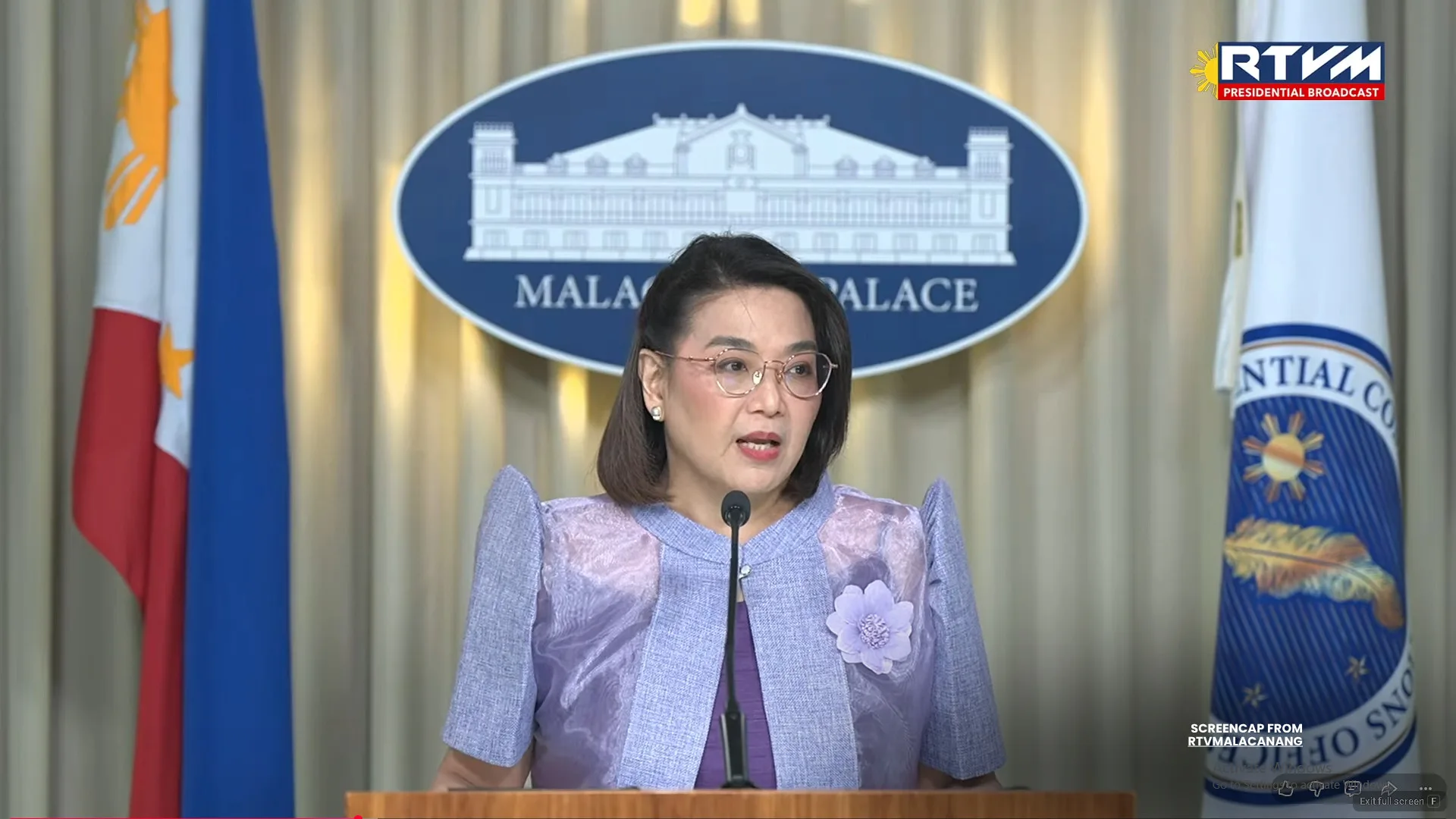
Malacañang said Thursday that political tensions in the country, including the leadership row in the Senate, may have affected the Philippines’ image abroad and contributed to its failed bid for a non-permanent seat in the United Nations Security Council.
Palace Press Officer Claire Castro made the statement after the Philippines lost to Kyrgyzstan for the lone Asia-Pacific seat in the UNSC for the 2027 to 2028 term.
“Yes, lahat ng political noise, lahat ng political tensions nakakaapekto ito at ito ang nakikita ng buong bayan at buong mundo sa impresyon dito sa Pilipinas,” Castro said when asked if the recent developments in the Senate affected the country’s UN bid.
“So, nagiging negatibo dahil sa mga ingay na ito na karamihan naman ay mga obstructionist katulad ng pag-describe ng Pangulo, sa huling Kapihan with the media,” she added.
Kyrgyzstan secured the seat after four rounds of voting, winning 142 votes against the Philippines’ 49.
Both countries needed 128 votes, or two-thirds of the total votes, to win the seat. Kyrgyzstan led from the first round, with 105 votes against the Philippines’ 85, followed by 110-81 in the second round, 123-68 in the third and 142-49 in the fourth.
Despite the loss, Foreign Affairs Secretary Ma. Theresa Lazaro said the Philippines respects the decision of UN member states and congratulated the Kyrgyz Republic on its election.
“We thank the international community for the support and goodwill extended to the Philippines throughout our candidacy. Our campaign was anchored on our longstanding commitment to peace, dialogue, international law, and cooperation among nations. These remain principles that the Philippines will continue to uphold and advance in the global community,” Lazaro said.
“The Philippines remains committed to working with all nations in pursuing peace, stability, sustainable development, and a rules-based international order. Mabuhay ang Pilipinas,” she added.
The Philippines, under President Ferdinand Marcos Jr., had campaigned for the UNSC seat over the past year as part of its push to strengthen its role in global peace, security and rules-based international cooperation.