
As the global maritime industry pushes for greener shipping and greater opportunities for women at sea, the Philippines is strengthening its role in shaping the future of the sector.
The Philippine government has contributed an additional US$60,000 to the International Maritime Organization (IMO) to support climate-related maritime programs, women’s participation in the industry, and international cooperation initiatives.
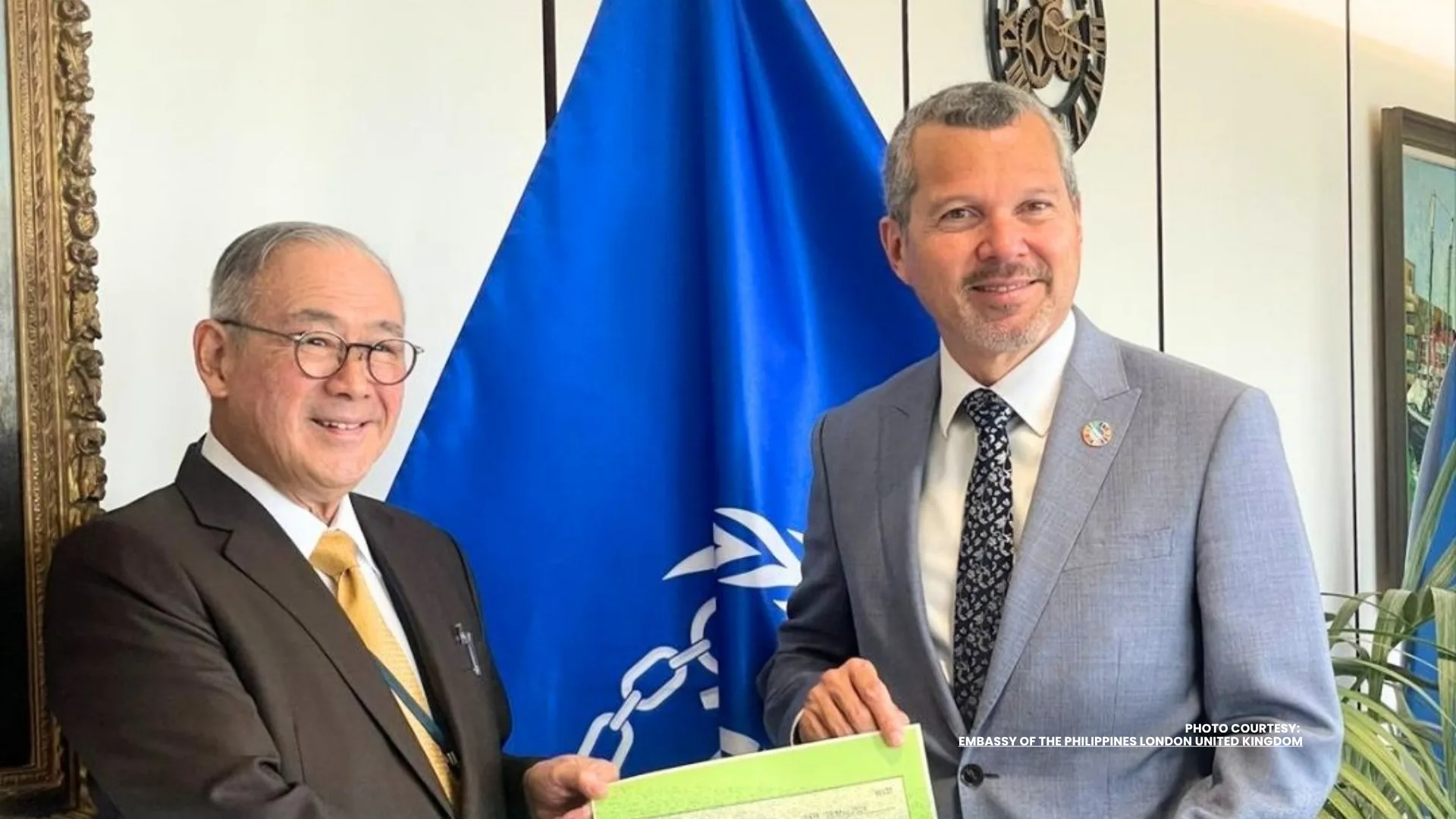
Philippine Permanent Representative to the IMO Teodoro Locsin Jr. formally turned over the contribution to IMO Secretary-General Arsenio Dominguez during a ceremony held on May 18 at the IMO headquarters in London.
The funding, coursed through the IMO’s Integrated Technical Cooperation Program, will support global efforts to reduce greenhouse gas emissions from shipping and strengthen maritime capacity-building programs, particularly for Small Island Developing States and Least Developed Countries.
Part of the contribution will also support the IMO’s Women in Maritime Program, which seeks to create more opportunities for women in the maritime industry, including the growing number of Filipina seafarers entering the profession.
“The Philippine Government remains steadfast in championing the welfare and protection of all seafarers, especially Filipinos who make up a significant number of the profession,” Locsin said.
He added that the Philippines, as one of the countries most vulnerable to climate change, continues to support international efforts aimed at reducing greenhouse gas emissions and strengthening sustainable shipping practices.
“By helping the IMO, we are helping not only ourselves, but the entire global community in addressing the devastating effects of climate change,” he said.
The Philippines remains one of the world’s leading providers of seafarers, with Filipino maritime workers playing a major role in the global shipping industry.
Officials said the latest contribution reflects the country’s continued commitment to maritime safety, environmental protection, sustainable shipping, and inclusive opportunities within the global maritime workforce.