
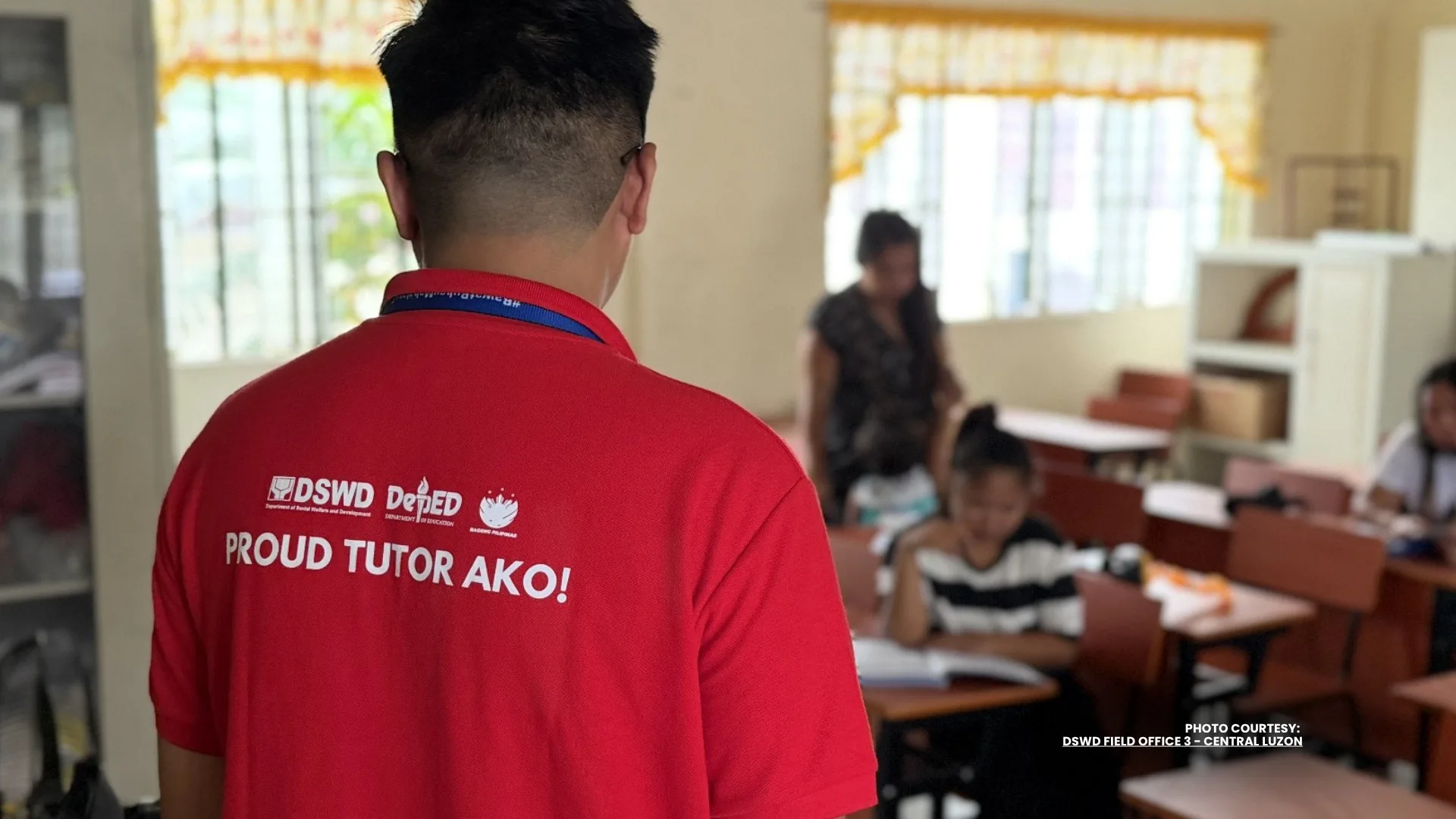
More than 133,000 children, parents, tutors, and youth volunteers across the country are now benefiting from the Department of Social Welfare and Development’s (DSWD) Tara, Basa! Tutoring Program following the start of tutorial and parenting sessions earlier this month.
The DSWD said the 20-day learning sessions officially began on May 4 and have so far reached 133,620 beneficiaries nationwide.
According to DSWD spokesperson and Assistant Secretary Irene Dumlao, participating regions reported a smooth rollout of the program, with positive feedback coming from both families and youth volunteers involved in the initiative.
Of the total beneficiaries, 57,291 are child learners and parents or guardians, while 11,468 tutors and 7,570 Youth Development Workers (YDWs) are currently participating in the program.
Regional field offices also shared updates on the implementation of the sessions in their respective areas.
In Region 12 or SOCCSKSARGEN, around 15,000 beneficiaries joined the opening day of activities. The region recorded 6,607 parents and child learners, along with 1,321 tutors and 661 YDWs taking part in the program.
Meanwhile, the DSWD Field Office in Central Luzon said 1,368 tutors and youth workers have begun applying the skills they acquired during capability-building training to assist more than 4,000 beneficiaries.
In MIMAROPA, officials reported an additional 600 enrollees after the first sessions were conducted. The region previously listed 5,888 beneficiaries composed of parents, children, tutors, and YDWs.
The agency said the Tara, Basa! program continues to strengthen low-income families and student volunteers through a community-based cash-for-work initiative that promotes literacy, youth participation, and community development.
To support the implementation of the sessions, the DSWD partnered with 122 higher education institutions, 2,612 elementary schools, and 196 local government units nationwide.
Parents and youth volunteers also expressed appreciation for the program.
Melody Mendoza, a parent from Nueva Vizcaya, said the initiative has been a significant help for her child, who has developmental challenges and is still learning how to read and communicate.
Youth volunteers likewise described the program as a meaningful experience that allows them to develop leadership and teaching skills while helping communities.
The tutorial and parenting sessions are scheduled to run from May to September, depending on the timetable arranged in each participating region. The period also covers the cash-for-work payouts for tutors and YDWs.