
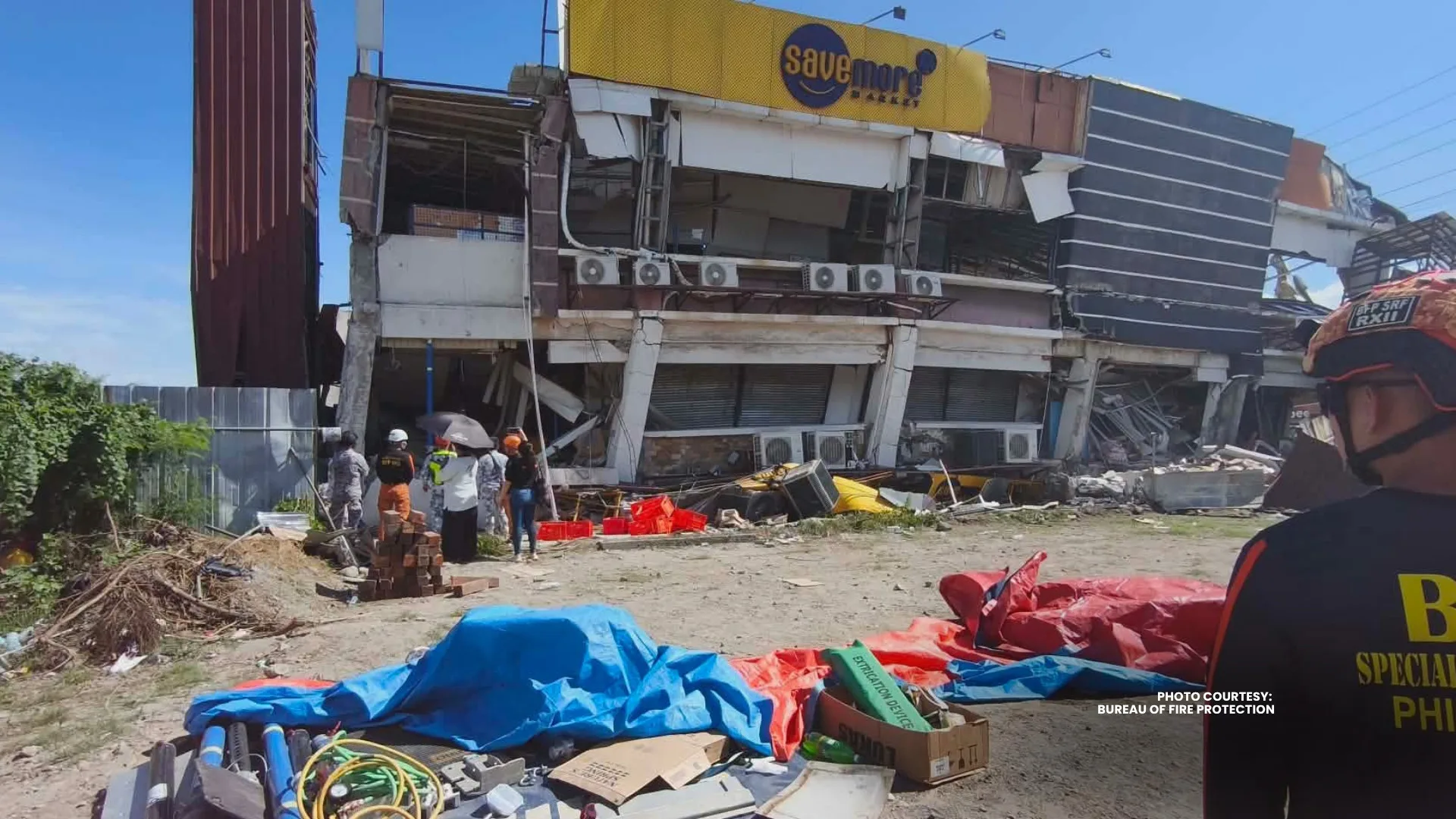
AKBAYAN party-list Rep. Chel Diokno has filed a resolution seeking a congressional inquiry into the government’s preparedness, emergency response, and post-disaster recovery efforts following a strong earthquake that struck parts of Mindanao.
House Resolution No. 1127 directs the House Committee on Disaster Resilience to conduct an inquiry, in aid of legislation, into the circumstances, impact, and government response to the magnitude 7.8 earthquake that hit offshore near Maasim, Sarangani on June 8, 2026, which caused widespread destruction across Mindanao.
Diokno submitted the measure together with fellow Akbayan Party-list Reps. Percival Cendaña and Dadah Kiram Ismula, as well as Dinagat Islands Rep. Kaka Bag-ao.
In the resolution, Diokno stressed the need to review existing laws and policies on earthquake preparedness and response following what he described as one of the deadliest earthquakes in recent years.
“As a country situated along the Pacific Ring of Fire, the Philippines remains highly vulnerable to major seismic events. The recent Mindanao earthquake underscored this vulnerability and highlighted the urgent need to strengthen disaster risk reduction, resilient infrastructure, emergency preparedness, and post-disaster recovery systems,” Diokno said.
Diokno has also been pushing legislative measures to strengthen the country’s disaster resilience and emergency response capabilities.
He co-authored House Bill No. 6615, which seeks to establish a New Philippine Building Act regulating the planning, design, construction, occupancy, maintenance, and demolition of buildings to ensure resilience against earthquakes, fires, floods, and other hazards. The measure has been approved on third and final reading and transmitted to the Senate.
He also co-authored House Bill No. 8417, which seeks to institutionalize a national Emergency Medical Services System to standardize and strengthen emergency response nationwide.
Latest figures show that the earthquake has killed 68 people and caused extensive damage to homes, public infrastructure, schools, hospitals, and transportation networks.
Initial assessments indicated that more than 400 homes were destroyed, over 2,000 residential structures were damaged, and at least 117 government facilities and around 20 bridges were affected.
The earthquake also disrupted classes for around 4.9 million learners and more than 156,000 school personnel across several regions in Mindanao. Hospitals in affected areas were forced to transfer patients to temporary treatment areas due to structural concerns and power interruptions.