
The House of Representatives has advanced two key measures seeking stronger protection for women and children against violence, harassment, and abuse in both physical and digital spaces.
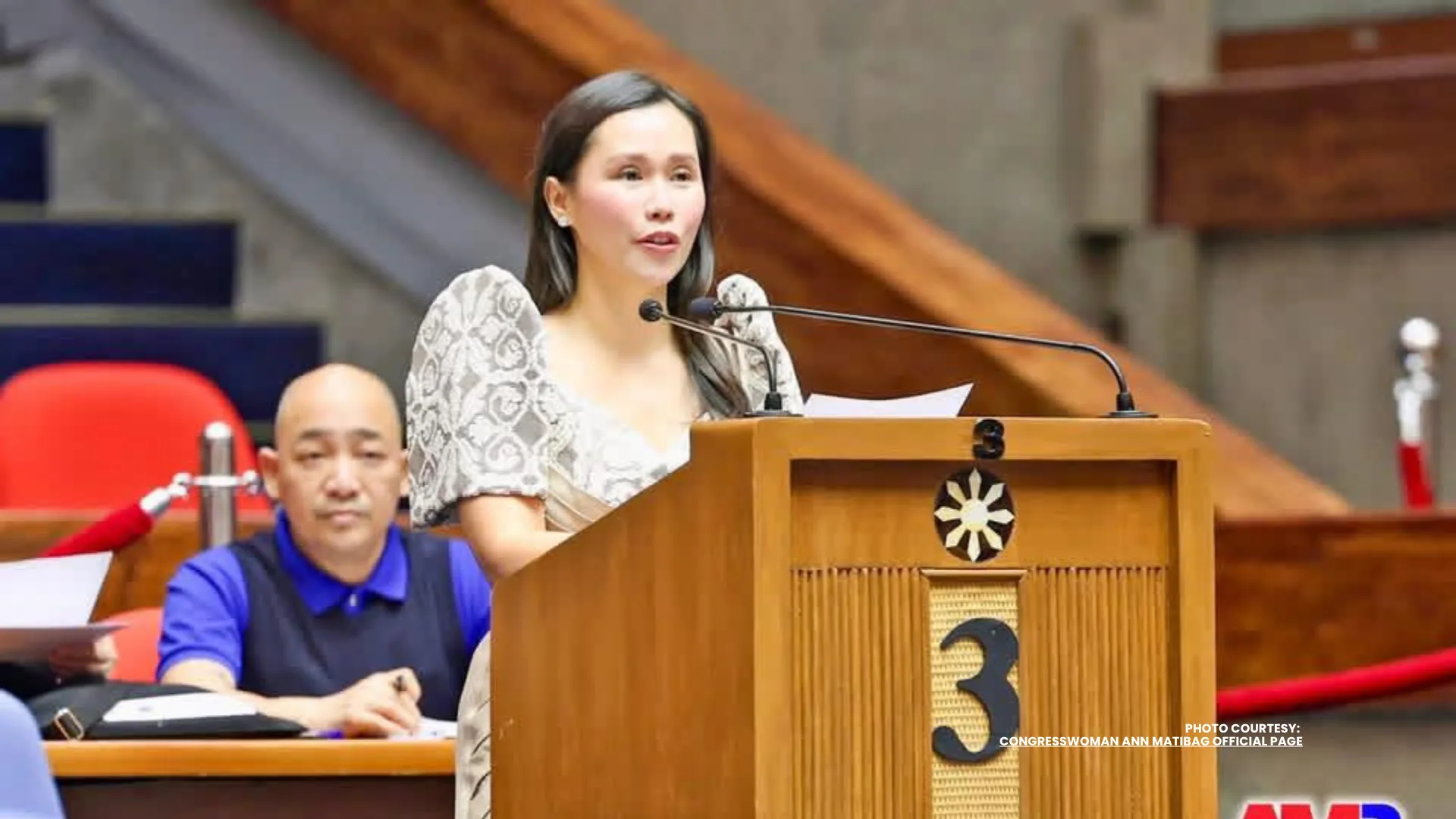
House Bill No. 8420, or the proposed Expanded Anti-Violence Against Women and Their Children Act, was approved on second reading following sponsorship by House Committee on Women and Gender Equality chairperson Rep. Ann Matibag.
The measure also drew sponsorship speeches from Reps. Kaka Bag-ao, Renee Louise Co, and Sarah Jane Elago, as well as a manifestation of support from Rep. Leila de Lima. It received broad backing from committee members, including male lawmakers.
The bill seeks to update Republic Act No. 9262, or the Anti-Violence Against Women and Their Children Act, by recognizing and penalizing technology-facilitated abuse.
Covered offenses include cyber harassment, cyberstalking, hacking of personal accounts, malicious use of digital identity, deepfakes, fake social media accounts, non-consensual sharing of intimate images, and other forms of online exploitation.
The proposed law also seeks to expand protection orders for victim-survivors, strengthen jurisdictional rules for online offenses, improve confidentiality safeguards, enhance inter-agency coordination, and provide additional workplace leave benefits and support services.
In a separate action, the Committee on Women and Gender Equality approved the substitute bill and committee report seeking to strengthen Republic Act No. 11313, or the Safe Spaces Act.
The consolidated measure covers House Bills Nos. 768, 1047, 3118, 5198, 5464, 5564, 8217, and 8717. It was approved without objection, with all committee members present adopted as co-authors.
She said existing laws must keep pace with new forms of abuse enabled by digital platforms, artificial intelligence, and online communication tools.
“These legislative measures recognize that violence against women and children continues to evolve alongside technology, digital platforms, and changing social realities,” the lady solon said.
“Our laws must evolve as well to ensure that women and children are protected, offenders are held accountable, and victim-survivors are given accessible, meaningful, and survivor-centered remedies,” she added.
The committee also emphasized the need for stronger safeguards during emergencies, disasters, pandemics, and public health crises, as it began deliberations and approved in principle four measures institutionalizing gender-responsive and inclusive protocols in such situations.
Matibag said the proposals are aimed at ensuring that abuse and exploitation are addressed wherever they occur, whether at home, in workplaces, schools, communities, or online platforms.
“These are not just policy reforms. They are concrete steps toward ensuring that violence, harassment, abuse, and exploitation have no place in our society,” she said.
The committee reaffirmed its commitment to advancing gender-responsive legislation, strengthening accountability, and promoting safe, inclusive, and dignified spaces for all Filipinos.