
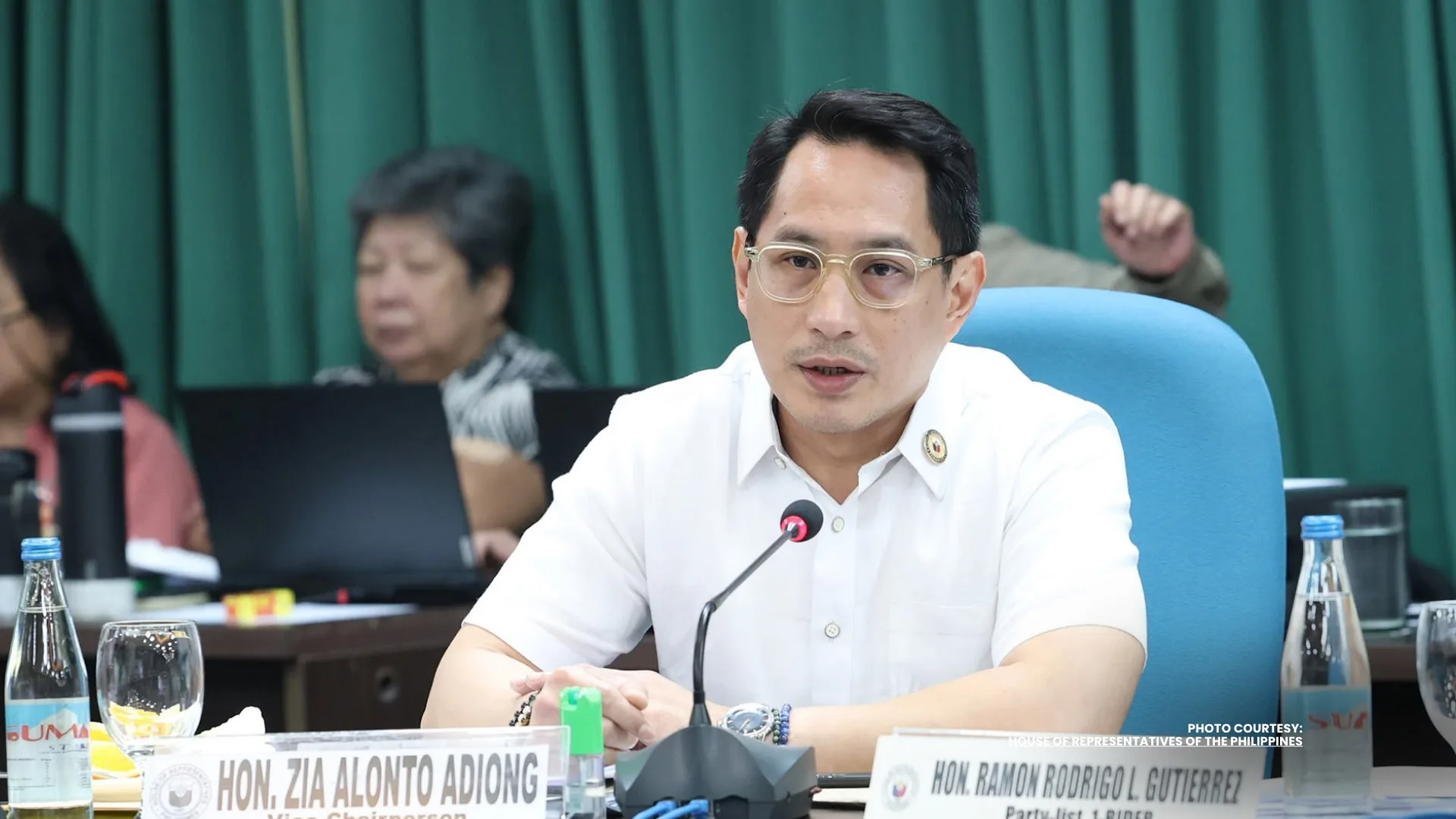
House impeachment prosecutors urged the Senate impeachment court to reject Vice President Sara Duterte’s bid to dismiss the impeachment case outright, saying the proceedings must move to trial so evidence and witnesses can be tested before the senator-judges and the public.
House impeachment trial spokesperson and Lanao del Sur Rep. Zia Alonto Adiong said the Constitution gives the Senate a clear mandate once the articles of impeachment are transmitted: to try and decide the case.
“Well, it’s already an established fact that under the Constitution, the Senate’s mandate is to try and decide, meaning to say there has to be a time for the proper trial to be conducted and for the evaluation of the evidence and the testimony of the witnesses for both panels to cross-examine,” Adiong said in an interview.
The House voted 257-25, with nine abstentions, to impeach Duterte on May 11 over allegations that include unexplained wealth and threats against President Ferdinand R. Marcos Jr. The case was later elevated to the Senate for trial.
Under the 1987 Constitution, the Senate has the “sole power to try and decide all cases of impeachment,” with conviction requiring the concurrence of two-thirds of all senators.
Adiong said the constitutional provision does not support terminating the case before evidence is presented.
“Di po talagang sakto doon sa sinasabi ng Constitution na maaaring i-dismiss outright ng Senado ang kaso or articles of impeachment,” he said.
The Senate impeachment court completed pre-trial proceedings from June 18 to June 25, with thousands of documentary pieces of evidence pre-marked. Trial proper is set to begin on July 6.
Adiong said Duterte’s camp had already recognized the Senate’s jurisdiction by filing pleadings before the impeachment court. He said the defense should directly answer the articles of impeachment, particularly those involving confidential funds and alleged irregularities in names listed in acknowledgment receipts, instead of relying mainly on procedural objections.
Duterte’s camp filed its answer on June 1, asking the Senate impeachment court to dismiss the case. Her lawyers invoked freedom of expression, the confidentiality of bank records and Anti-Money Laundering Council reports, and the alleged lack of sufficient evidence in responding to the four articles of impeachment.
Adiong said the defense filing did not provide the substantive response the prosecution had expected.
“There’s no other way to describe it but to say it’s just a recycled narrative,” he said.
On the alleged assassination threat, Adiong rejected the argument that the statement should be treated as protected political expression.
“…I don’t think opinion and threat are the same,” he said, adding that criticism of government policy is constitutionally protected, while a threat of violence stands on a different legal and moral footing.
Adiong said the prosecution is prepared to address technical motions, but maintained that such issues should be resolved during trial rather than through outright dismissal.
He also stressed that conviction on even one article of impeachment would be enough to remove the Vice President from office.
“One conviction in one article is sufficient enough for the vice president to be automatically removed from office,” Adiong said.
He said the central issue is accountability and whether the Senate will allow Filipinos to see the evidence tested in the proper constitutional forum.