
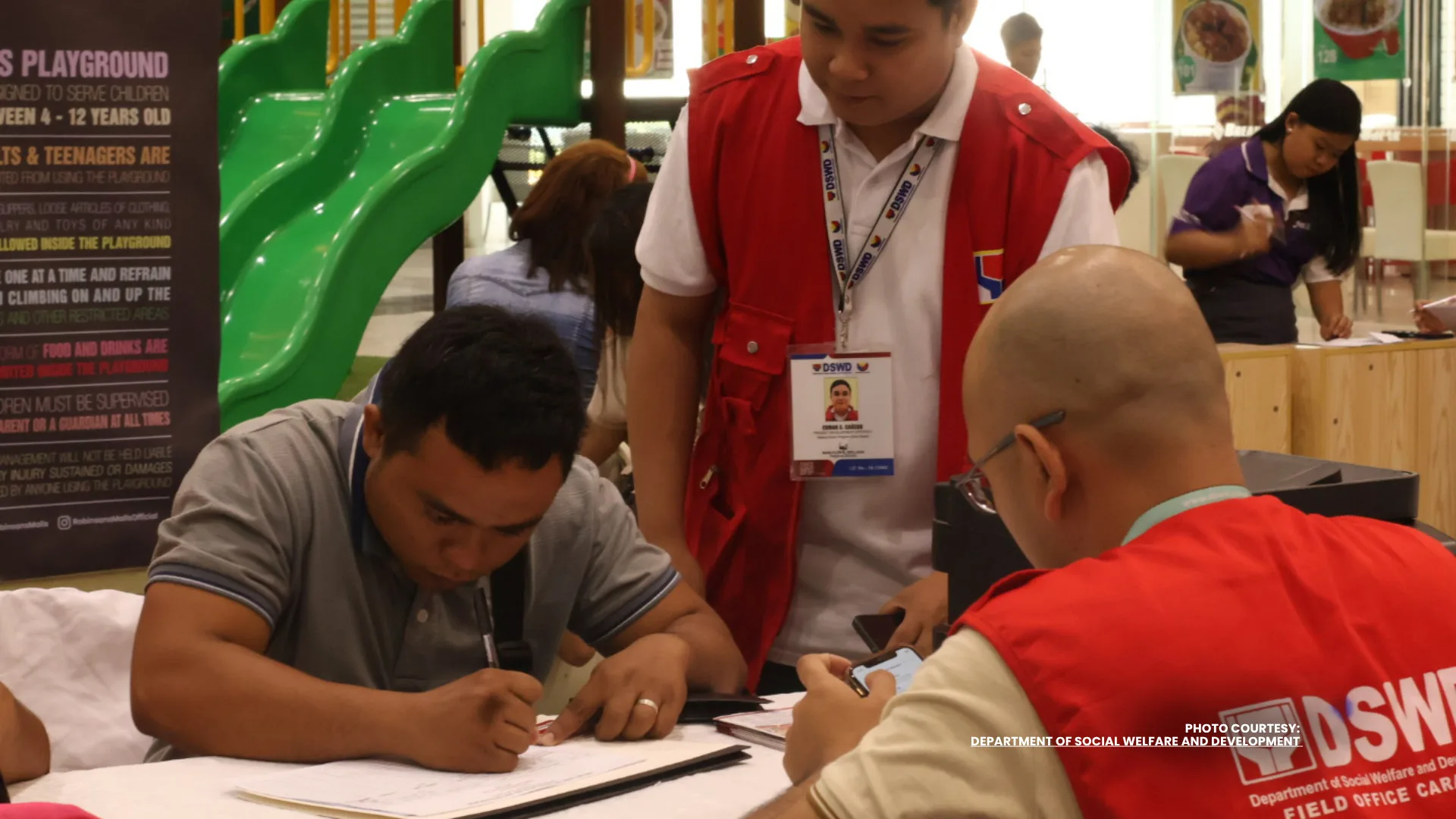
The Department of Social Welfare and Development (DSWD) has strengthened its collaboration with the Department of Labor and Employment (DOLE) to help beneficiaries of the Walang Gutom Program (WGP) secure employment, marking a shift toward long-term livelihood support alongside food assistance.
The initiative was highlighted during the nationwide Labor Day job fair on May 1, where several WGP beneficiaries were given access to employment opportunities. At least four applicants were hired on the spot, reflecting what officials described as early gains from the partnership.
DSWD Undersecretary Edu Punay said the agency’s participation in the job fair is part of a broader strategy to help families transition from food support to self-sufficiency.
Under the WGP, enrolled households receive monthly food commodities while also being required to attend Kalusugan, Kakayahan, at Kabuhayan (3K) sessions, which are capacity-building activities designed to equip participants with practical skills and livelihood knowledge. The program works closely with partner-agencies such as DOLE and the Technical Education and Skills Development Authority (TESDA) to expand opportunities for employment and training.
Among those who benefited from the job fair was a 43-year-old resident of Albay who secured a position as a massage therapist. In Caraga, another beneficiary was hired as a promodiser in a local mall, while two others from the Zamboanga Peninsula were employed as production workers.
Punay said these outcomes demonstrate how government support, combined with individual determination, can help families move toward economic stability.
Launched in 2023 and institutionalized the following year through Executive Order No. 44, the Walang Gutom Program is the national government’s flagship anti-hunger initiative. It forms part of the broader goal of the administration of President Ferdinand Marcos Jr. to reduce food insecurity and improve the quality of life for vulnerable communities.
The DSWD said it will continue expanding partnerships with government and private sector stakeholders to provide more employment pathways for beneficiaries, reinforcing efforts to address both hunger and poverty at their roots.