
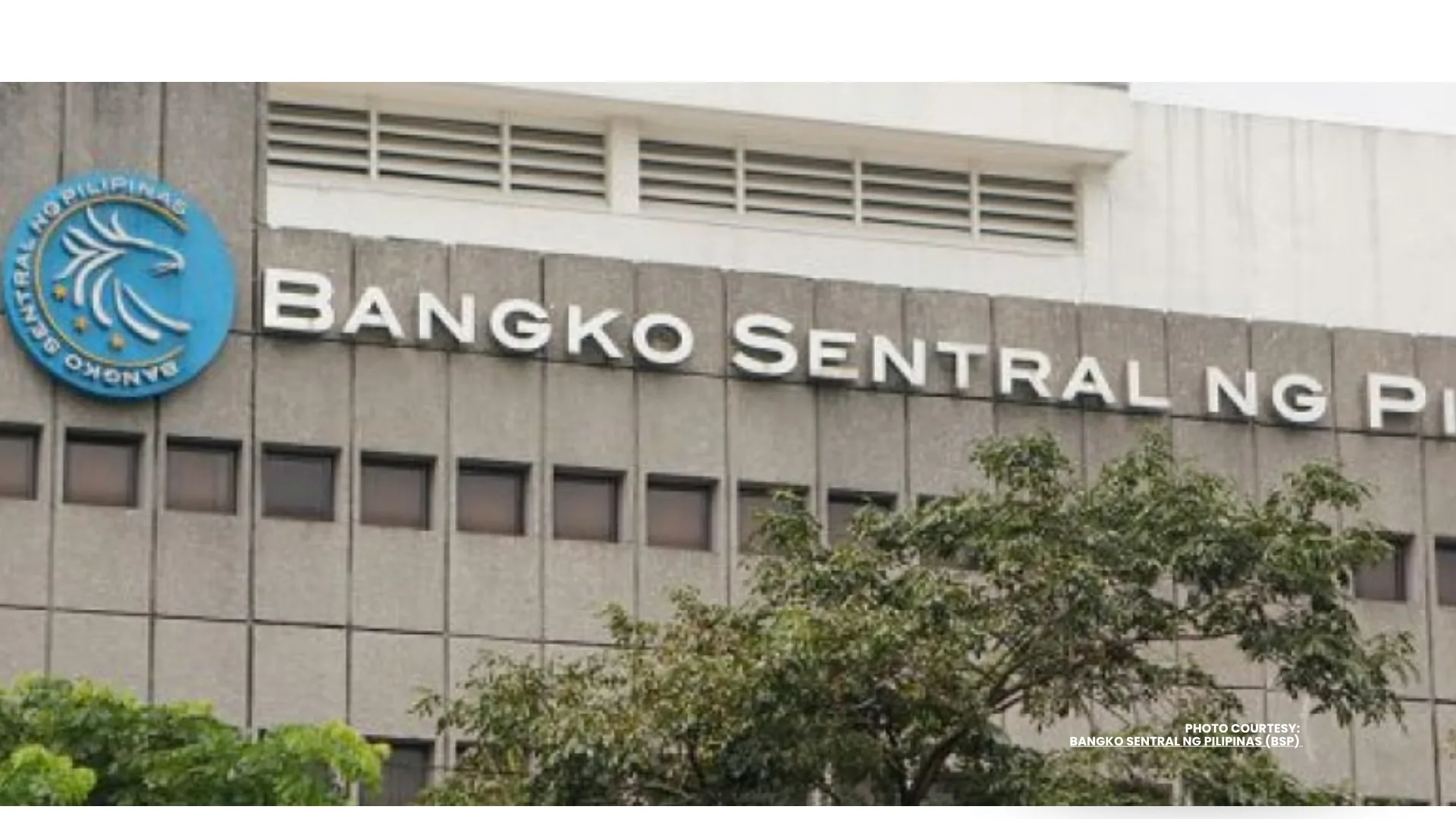
The Philippine banking industry remained stable and resilient in 2025, with total bank assets rising to P29.9 trillion, according to the Bangko Sentral ng Pilipinas (BSP).
Data released by the BSP showed that the banking sector’s assets expanded by 8.9 percent as of December 2025, slightly slower than the 9-percent growth recorded the previous year. Despite the modest slowdown, the central bank noted that bank asset growth continued to outpace the country’s overall economic expansion.
BSP Governor Eli Remolona Jr. said banks and non-bank financial institutions continue to play a crucial role in supporting economic activity by channeling funds into different sectors.
“The BSP remains committed to maintaining a regulatory environment that promotes the growth and resilience of financial institutions while protecting the interests of Filipino financial consumers,” Remolona said.
Public confidence in the banking system also remained strong, with deposits climbing by 7.4 percent year-on-year to reach P21.9 trillion by the end of 2025.
Meanwhile, bank lending increased by 11.7 percent to P17.1 trillion, reflecting continued support for household spending, business expansion, and financing for priority sectors.
The BSP also reported that banks maintained manageable asset quality levels. The non-performing loan (NPL) ratio stood at 3.1 percent as of end-December 2025, while the loan-loss coverage ratio reached 97.2 percent, indicating that banks remained adequately provisioned against potential credit losses.
Capital and liquidity levels likewise stayed well above regulatory standards.
As of December 2025, banks posted a solo capital adequacy ratio (CAR) of 15.8 percent and a consolidated CAR of 16.2 percent, both exceeding the BSP’s minimum requirement of 10 percent.
Liquidity indicators also remained healthy, with universal and commercial banks registering a liquidity coverage ratio of 172.3 percent and a net stable funding ratio of 132.7 percent, both comfortably above the required 100-percent threshold.
The BSP added that non-bank financial institutions under its supervision also continued expanding access to financial services, particularly through trust operations and foreign currency deposit units that support credit and asset management activities.