
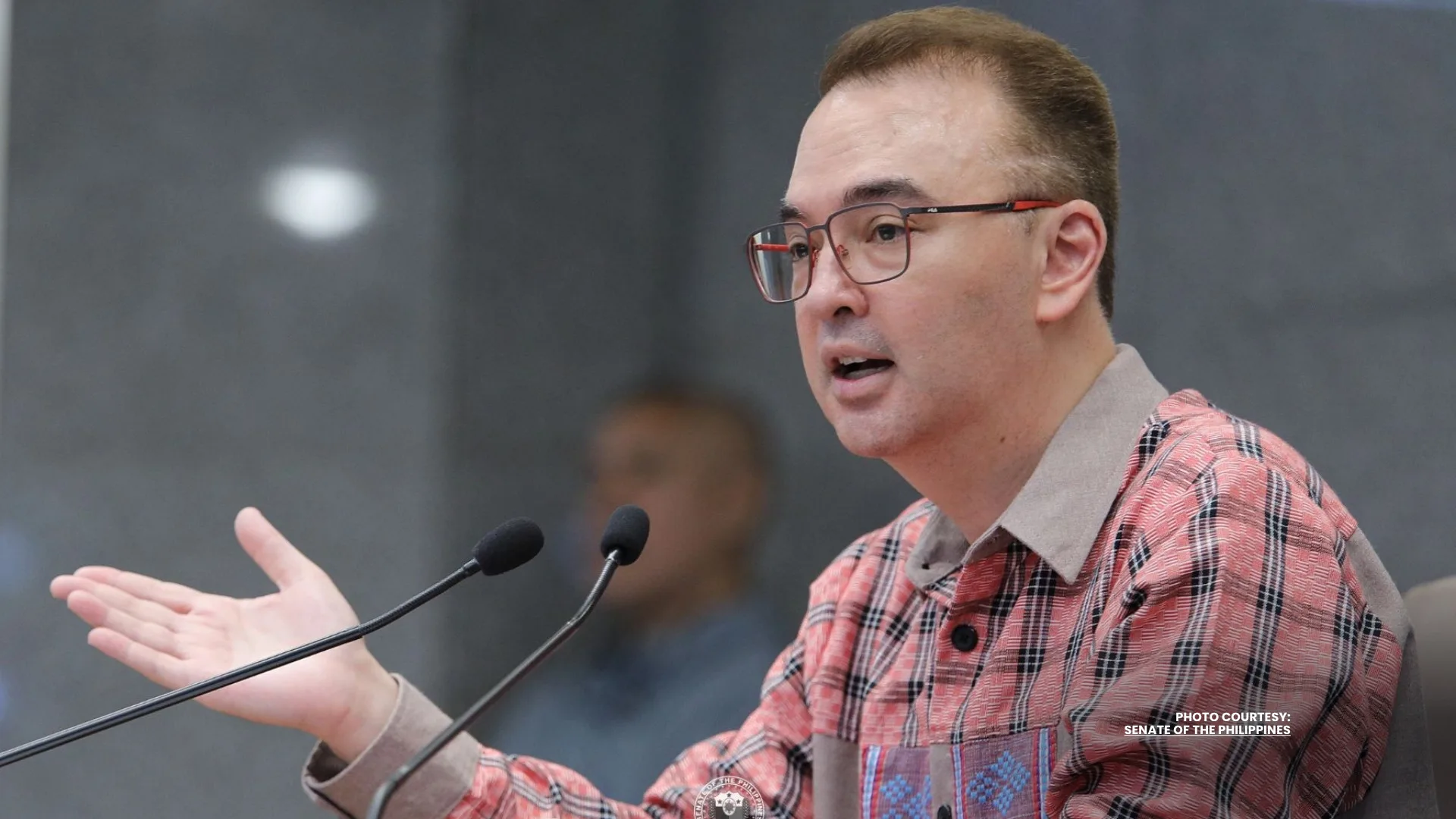
Senate President Alan Peter Cayetano on Monday urged energy officials and stakeholders to view the country’s power crisis not merely through statistics, but through its direct impact on Filipino families and communities.
Speaking during the Senate Committee on Ways and Means public hearing on the country’s energy situation, Cayetano said the ongoing crisis should push both government agencies and the private sector to act with greater urgency and explore solutions beyond conventional approaches.
“Hindi totoo na may delays ang ating administration. Given the present crisis, it’s actually an opportunity because there are things that we wouldn’t have thought of,” he said.
Cayetano, who filed Senate Resolution No. 343 in March urging the Executive Branch to establish a National Contingency Framework, said the country’s energy concerns reflect broader structural problems also seen in sectors such as education and agriculture.
He stressed that long-standing gaps continue to persist despite years of reforms and government spending.
The Senate President also encouraged policymakers and industry stakeholders to think beyond traditional solutions as the country deals with mounting energy challenges.
“I know gasgas na ‘yung ‘think out of the box,’ pero kapag may crisis, pati ‘yung box mawawala kapag hindi tayo kumilos nang doble, triple,” he said.
Cayetano emphasized that discussions on power and energy should always consider the effect of outages on ordinary Filipinos, particularly vulnerable sectors dependent on stable electricity for healthcare and daily survival.
He cited a recent case involving a patient who reportedly died after being unable to use a nebulizer during a power interruption, underscoring what he described as the human cost of unreliable electricity.
“Numbers remain statistics until you put a human face to them. Kaya noong may hindi nakapag-nebulize dahil walang kuryente at namatay, I hope we put a human face to our problem sa energy,” he said.
As the country continues to face power supply concerns and grid instability, Cayetano said the crisis should serve as a call for faster action and more responsive policymaking.
“[We’re in] crisis, so let’s find a way to get something done,” he added.