
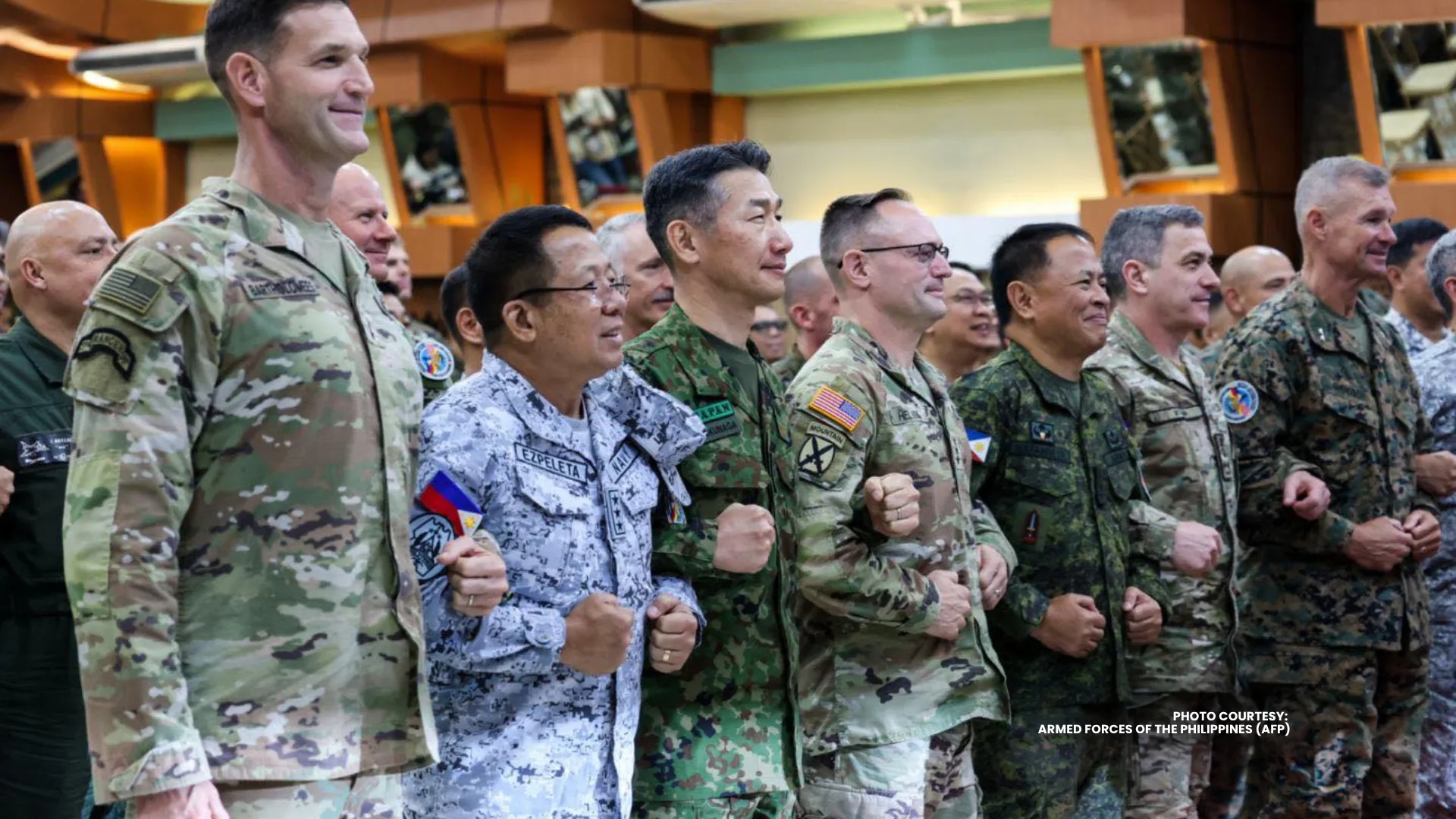
The Armed Forces of the Philippines on Thursday declared this year’s Balikatan exercises a success, saying participating forces achieved all major operational objectives set for the annual war games, which formally began on April 20 and will officially conclude on Friday.
Balikatan 2026 concluded with one of the largest displays of allied military coordination and firepower in recent years, as Philippine and partner forces capped the annual exercises with large-scale live-fire drills, maritime strike operations, and expanded multinational participation.
AFP spokesperson for Balikatan 2026 Dennis Hernandez said the exercises strengthened alliance coordination, improved interoperability among partner forces, and reinforced regional deterrence capabilities amid evolving security challenges in the Indo-Pacific.
“We achieved all our objectives,” Hernandez said. “These exercises demonstrated the growing ability of allied forces to operate together in complex scenarios.”
Around 17,000 military personnel from the Philippines, the United States, Japan, Canada, Australia, New Zealand, and France participated in this year’s Balikatan, making it the largest iteration of the exercises since they began in the 1990s.
Among the most closely watched events was Wednesday’s maritime strike exercise off the coast of Ilocos Norte, where allied forces conducted coordinated live-fire operations that culminated in the sinking of the decommissioned Philippine Navy vessel BRP Quezon.
President Ferdinand Marcos Jr. and senior AFP officials monitored the drills from Camp Aguinaldo, while Defense Secretary Gilberto Teodoro Jr. and Japanese Defense Minister Shinjirō Koizumi traveled to Ilocos Norte to personally observe the exercises.
The BRP Quezon sank roughly 17 minutes after being struck by missiles launched from a Type 88 surface-to-ship missile system operated by the Japan Ground Self-Defense Force, following earlier coordinated strikes involving allied assets.
The exercises also featured joint maritime surveillance operations, integrated air and missile defense drills, amphibious training, cyber defense activities, and humanitarian assistance simulations aimed at improving combined operational readiness among participating nations.
Hernandez said Balikatan 2026 demonstrated how military cooperation among allied nations contributes to regional stability and deterrence.
“Some may think deterrence is just a textbook concept, but we are seeing it in action through exercises like Balikatan,” he said.
The AFP official acknowledged that minor issues surfaced during some activities but clarified that these did not affect major tactical or strategic operations.
When asked whether troop participation could further expand in next year’s exercises, Hernandez said future involvement would depend on the evolving security environment, although interest and participation from allied nations continue to grow.