
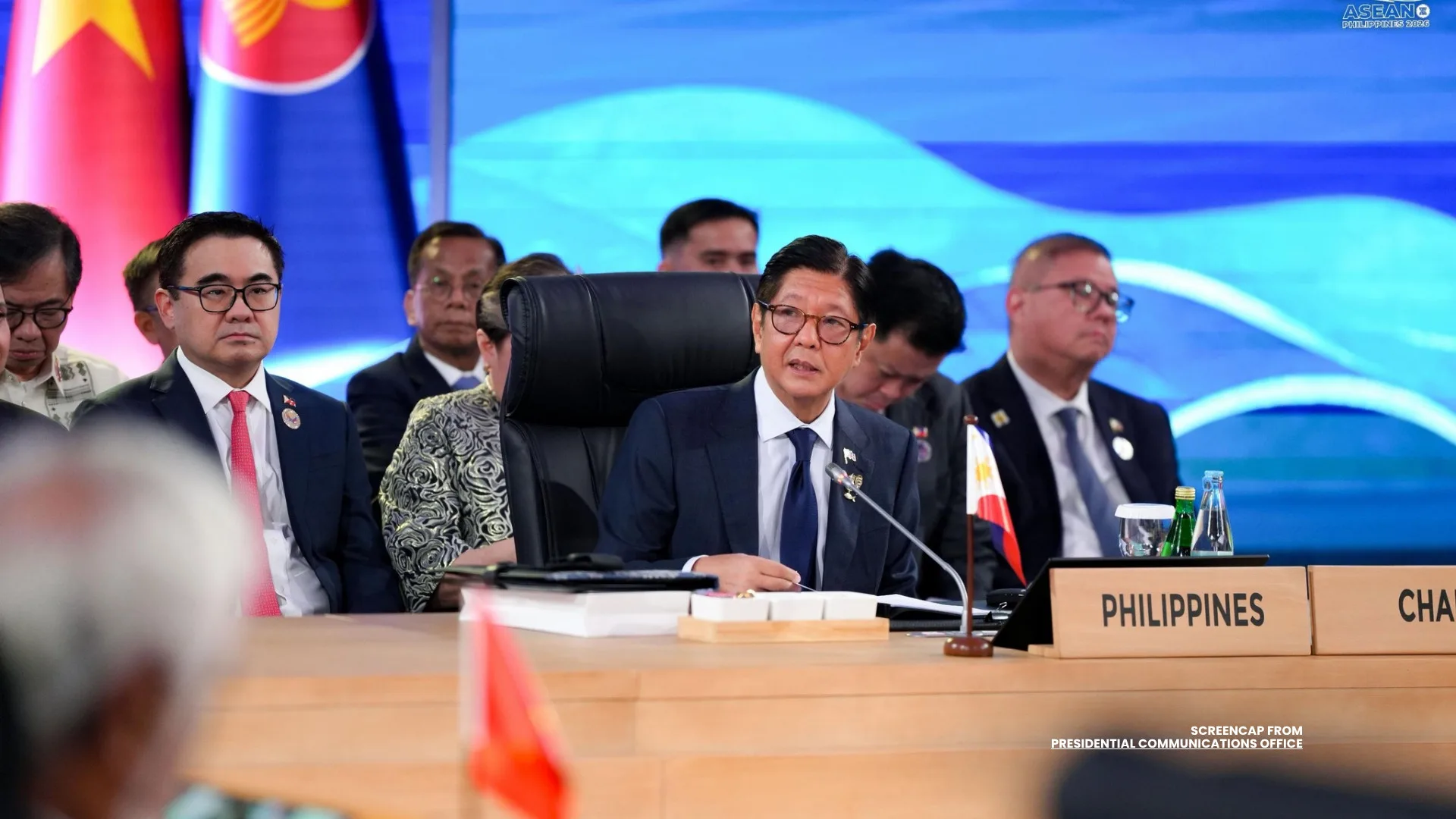
President Ferdinand Marcos Jr. capped another busy week marked by major infrastructure projects, expanded social protection programs, disaster response efforts, and high-level regional diplomacy as the Philippines hosted the 48th ASEAN Summit in Cebu.
One of the administration’s major initiatives this week was the rollout of the “Bawat Bayan Makikinabang” program across Metro Manila. The President personally visited Muntinlupa, Las Piñas, Parañaque, and Pasay to launch the social protection initiative aimed at providing food and financial assistance to vulnerable families.
In Muntinlupa alone, around 31,000 families are expected to benefit from the program, which provides 10 kilos of rice every two months to indigent households. During the launch, nearly 2,000 families immediately received rice assistance, while dozens of scholars were granted educational aid worth P20,000 each.
The administration also continued to push major infrastructure and healthcare projects. On May 4, Marcos inaugurated the newly completed 7.88-kilometer subsection of the Cavite-Laguna Expressway extending to the Governor’s Drive Interchange in General Trias, Cavite. The President announced that the new segment would remain toll-free for one month to allow motorists to immediately benefit from the project.
Marcos likewise announced the scheduled groundbreaking of a new 200-bed branch of the Philippine General Hospital in Carmona, Cavite later this month to improve healthcare access in Cavite and nearby provinces.
Meanwhile, the government intensified disaster response operations following unrest at Mayon Volcano. The President directed concerned agencies to assist affected residents in Albay through ash-clearing operations, relief distribution, medical support, water delivery, camp management, and the installation of Starlink internet connectivity in affected communities. Marcos also personally led a situation briefing on May 6 to assess the impact of the volcanic activity and ensure coordinated government response efforts.
On the economic front, the administration stepped up measures to shield Filipinos from rising global economic pressures. The Asian Development Bank cited the Philippines as one of the region’s most active responders to global economic shocks linked to the Middle East conflict, particularly through fuel subsidies, targeted aid, energy diversification, and supply-side interventions.
The President also ordered the Department of Agriculture to intensify efforts to stabilize rice prices and crack down on hoarding and profiteering. Malacañang assured the public that rice supply remains stable and that price increases are unjustified.
To strengthen social protection efforts, the Department of Budget and Management released over P43 billion for financial assistance, food support, pensions, feeding programs, and livelihood aid for vulnerable sectors, including indigent families, children, and senior citizens.
The administration also highlighted governance reforms this week, with the Anti-Red Tape Authority reporting continued progress in reducing bureaucratic delays and resolving more than 90 percent of complaints filed before the agency. Malacañang likewise warned against the spread of fake news, stressing its harmful impact on public trust and the economy.
The week concluded with Marcos leading the 48th ASEAN Summit in Cebu as ASEAN Chair for 2026. During the summit, the President facilitated trilateral discussions between Cambodia and Thailand regarding border concerns, resulting in agreements focused on peaceful dialogue and restraint.
Marcos described the talks as a reflection of ASEAN solidarity and stressed that “it is the time for peace and no longer the time for war.” Cambodian Prime Minister Hun Manet and Thai Prime Minister Anutin Charnvirakul both expressed appreciation for the Philippines’ role in promoting regional stability and cooperation.