
Policy analysts are urging the Philippines to fast-track its participation in the Japan-led Asia Zero Emission Community (AZEC) while avoiding energy partnerships with “coercive states” that could undermine national sovereignty.
The Stratbase Institute said Manila should prioritize alliances that promote transparency, sustainability, and respect for international law as it charts its long-term energy strategy.
Stratbase Institute President Victor Andres Manhit called on the administration of President Ferdinand Marcos Jr. to accelerate energy initiatives under AZEC, a platform led by Japan to advance clean energy transition, energy security, and decarbonization across the region.
He said cooperation with Japan and other like-minded partners offers a more stable and forward-looking framework compared to deals that may expose the country to geopolitical pressure.
The recommendation comes amid ongoing discussions on potential joint energy exploration with China in the West Philippine Sea, despite a 2016 arbitral ruling that invalidated Beijing’s sweeping claims in the South China Sea.
Manhit warned that agreements involving implicit or explicit concessions in contested areas could weaken the Philippines’ sovereign position.
“Energy partnerships must deliver real and sustainable gains without compromising sovereignty,” the institute said, stressing the importance of aligning with partners that uphold a rules-based international order.
The Philippines’ engagement in AZEC comes as countries reassess energy strategies amid global supply disruptions and the shift toward cleaner, more resilient systems. Manhit described AZEC as a “credible and forward-looking framework” that addresses energy security, economic growth, and environmental goals.
He also welcomed plans for the Philippines and Japan to co-host the 4th AZEC Leaders’ Meeting in November, calling it a sign of Manila’s growing strategic importance in the Indo-Pacific.
The think tank cited continued tensions in the West Philippine Sea, including reported harassment of Philippine vessels and disregard for international rulings, as reasons to avoid reliance on countries that could use economic ties for political leverage.
In contrast, Japan was cited as a model partner, with cooperation anchored on transparency, adherence to international law, and capacity-building support.
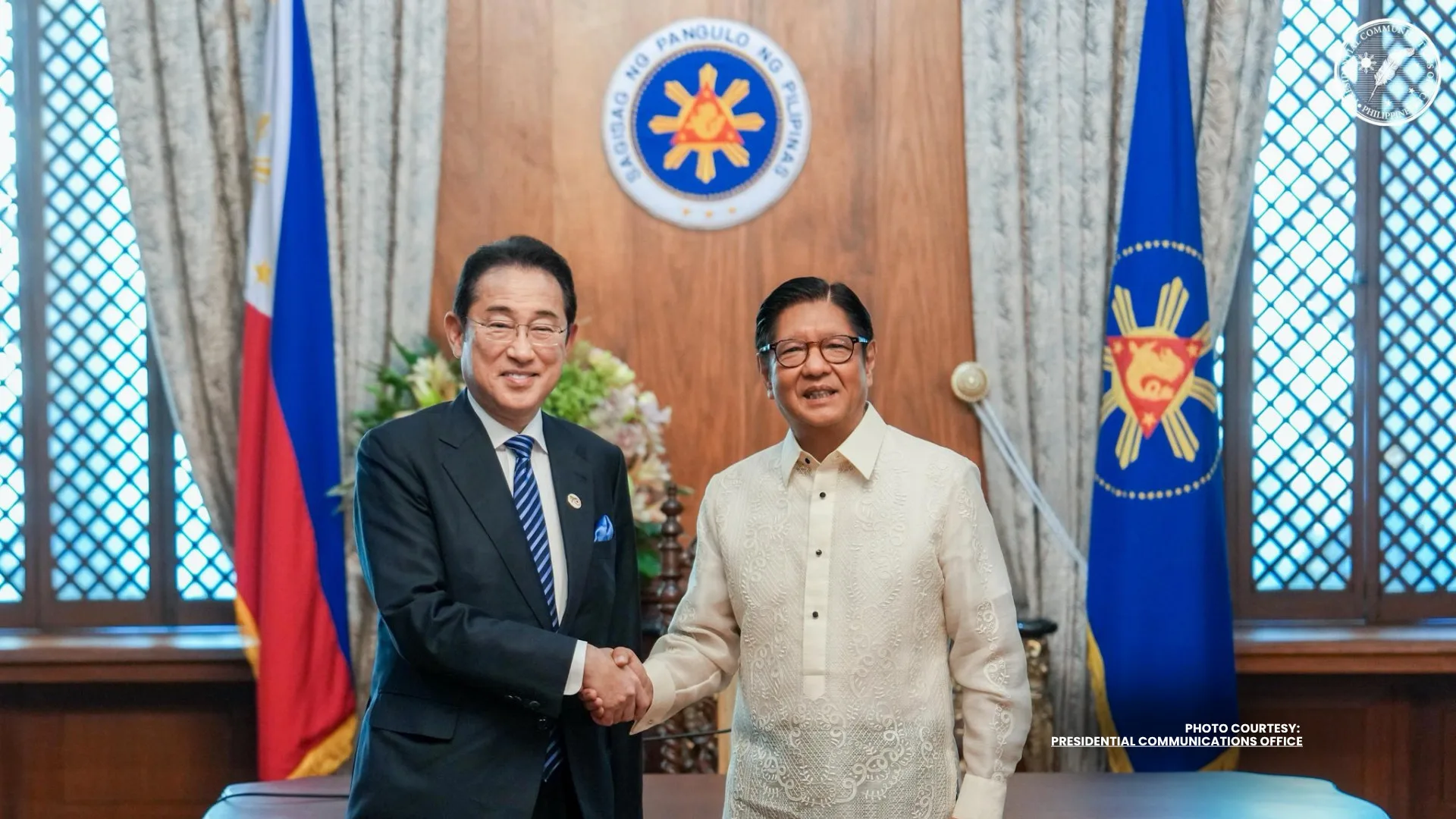
Last week, Kishida Fumio, special envoy of Japanese Prime Minister Takaichi Sanae and Supreme Adviser to the Parliamentary Association of AZEC, met with President Marcos and Energy Secretary Sharon Garin to discuss expanding cooperation under the initiative. The meeting coincided with the 70th anniversary of diplomatic relations between the Philippines and Japan, highlighting deepening ties between the two countries.