
As people grow older, many begin to long for peace, security, and a comfortable life, a time to rest and revisit the memories of their youth. For some, however, this desire is surpassed by a deeper calling, the need to continue, to grow, to learn, and to find new purpose.
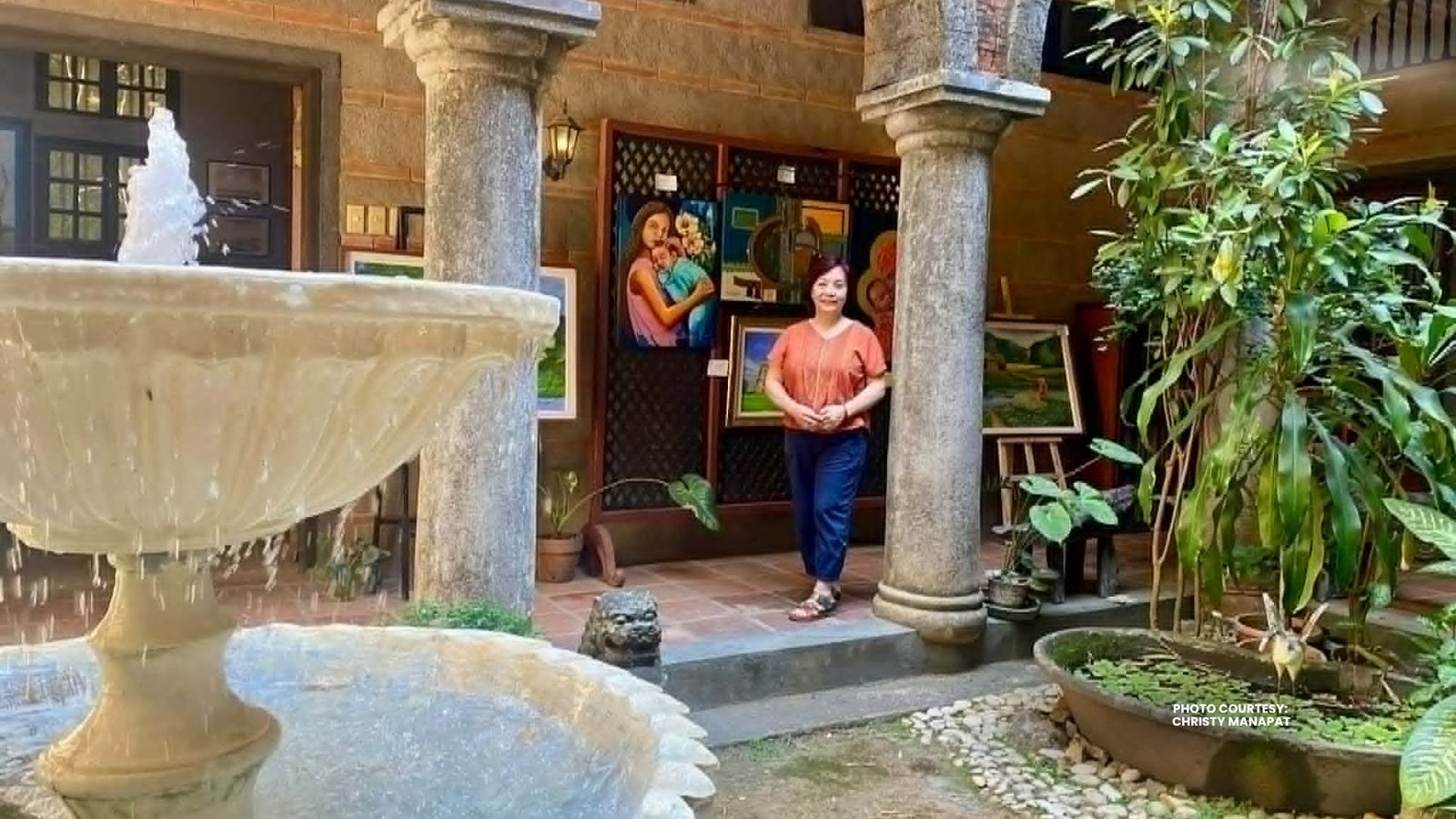
The phrase “not ready to hang my cap yet” captures this sentiment, and it is within this spirit that Christy Manapat lives, a cultural curator and advocate for the arts in Antipolo who continues to carve a path forward. She is driven not only to preserve a legacy, but to create a space where art can thrive, a home that inspires, unites, and supports both emerging and experienced artists.
Nestled in a quiet residential area in Antipolo City stands a house that has recently opened its doors not just as a home, but as a shared space. Known as the Manapat Residence, it now serves as a venue for exhibiting artworks from different towns in Rizal.
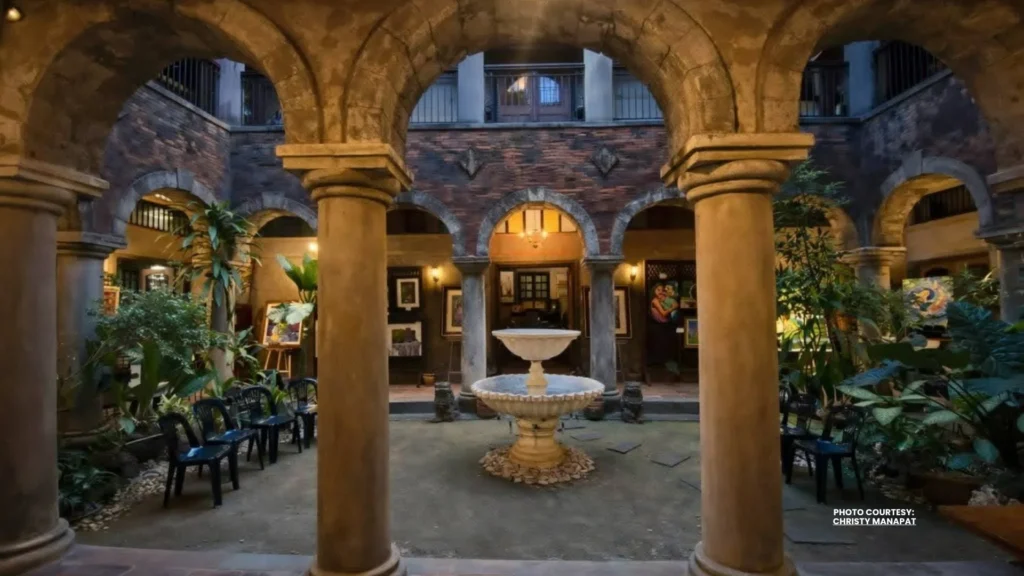
The house reflects the vision of its original owner, Ricardo Manapat, a man deeply devoted to academic excellence and the study of history. His fascination with colonial and postcolonial periods, particularly the Spanish era, is evident in the architecture of the home, which is grand, welcoming, and evocative of a bygone time.
His love for art and literature is equally present within its walls, seen in his extensive library and remarkable collection of antiques and artworks. For a time, the house stood as his sanctuary. In 1980, he was forced to flee to the United States, where he remained until 1986. He died in 2008, leaving behind the very space that embodied his life’s work. Today, the home is cared for by his youngest sister, Christy, who not only admires him but deeply understands the essence of his legacy.
Like her brother, Christy’s life has been shaped by a passion for understanding humanity. She studied Philosophy at Ateneo de Manila University and became the first female philosophy teacher in the university. After spending years abroad working in the nonprofit and philanthropic sectors, she now frequently returns to the Philippines in this stage of her life. It was during this time of reflection that she rediscovered her purpose, one rooted in both memory and service.
Inspired by her brother’s life and work, Christy reimagined the home into a living space for art, community, and advocacy. The Manapat Residence opens its doors selectively as a venue for exhibitions and other cultural and educational events, providing a setting that supports artists and fosters meaningful connections within the community. It is a continuation of legacy, not frozen in time, but actively evolving.
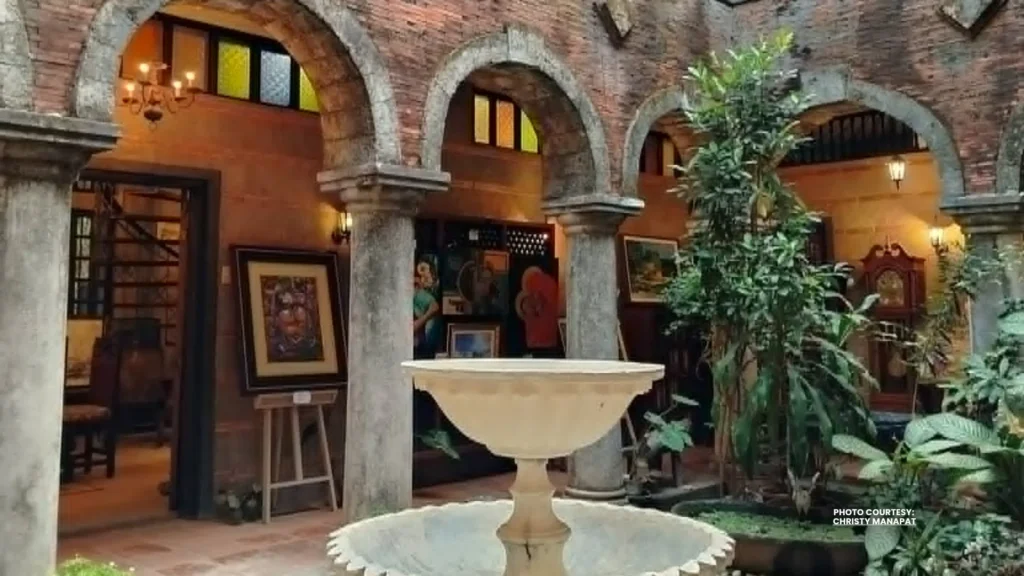
The residence first officially opened in collaboration with Totong Francisco II, featuring his exhibit “Chroma Terra: Where Color Meets Earth.” Beyond showcasing art, the exhibit carried a deeper advocacy, as a portion of the proceeds was donated to the Antipolo Highlands Agriculture Cooperative, where 39 farmers received support, including a pig to start a small livelihood.
Encouraged by this, Christy continued her efforts by organizing a larger exhibit featuring 21 artists from the Tanay Artist Group. Titled “Sining at Kalinga para sa Katutubong Tanay,” the exhibit supported outreach programs for children, including art workshops and feeding initiatives at Sto. Niño Integrated School. Through these efforts, the residence became more than just a space. It became a bridge between art and advocacy.
For Christy, this journey is her way of honoring her brother’s legacy while fulfilling her own calling. By intertwining art, education, and culture with community welfare and advocacy, she has found a purpose that is both deeply personal and socially meaningful. Yet, she acknowledges that this path is still unfolding. She continues to learn, adapt, and listen, remaining open to the evolving needs of the community she serves.
Interestingly, the house itself mirrors this duality. From the outside, it appears secluded and imposing, with its tall structure, multiple gates, and heavy doors, each firmly secured. But once inside, the atmosphere transforms entirely. The space feels warm, inviting, and almost timeless, as if it holds stories waiting to be discovered.
The Manapat Residence is, in many ways, a work of art in itself. It evokes emotion, inspires reflection, and fosters connection. Above all, it creates a sense of community, a gathering place for kindred spirits brought together by a shared love for art and purpose.