
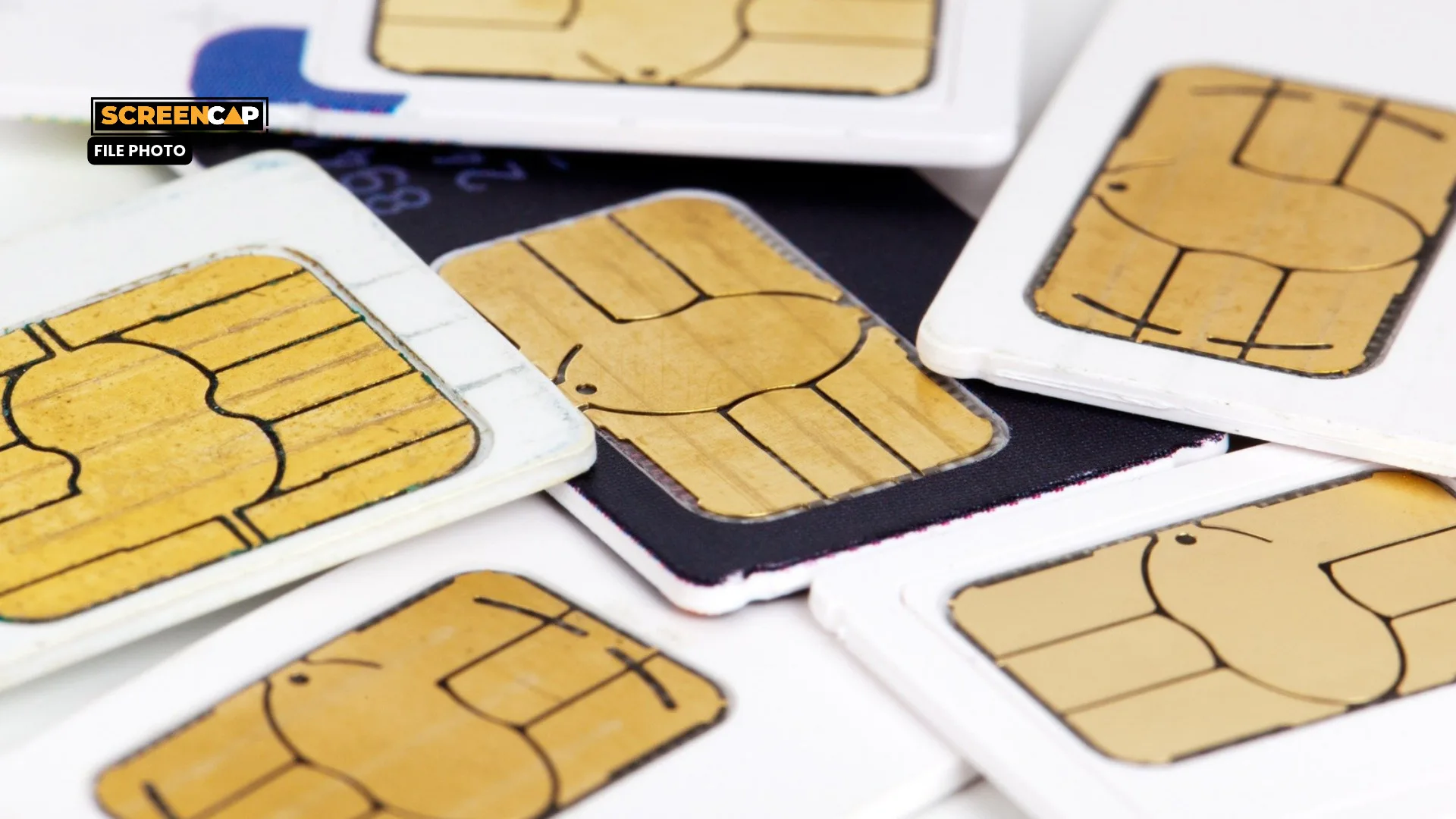
The National Telecommunications Commission (NTC) has warned the public that selling or transferring registered SIM cards without complying with registration requirements is a criminal offense punishable by up to six years in prison and a fine of as much as P300,000.
The warning comes as the NTC directs mobile network operators (MNOs) to intensify post-validation checks on subscribers who have registered more than 100 SIM cards under a single name, as part of efforts to curb scams and other illegal activities involving telecommunications services.
Under the directive, telecommunications companies have 15 days from receipt of the memorandum order to conduct know-your-client (KYC) checks on subscribers with unusually large numbers of registered SIM cards.
The verification aims to determine whether these subscribers still have full possession and control of their registered SIMs and are using them for legitimate purposes.
Under Republic Act No. 11934, or the SIM Registration Act, violators who sell or transfer registered SIM cards without complying with the required registration procedures face imprisonment of six months to six years, a fine ranging from P100,000 to P300,000, or both.
The NTC said SIM cards whose registered users cannot establish continued possession, control, and legitimate use must be deactivated.
“Once these numbers are deactivated, it is permanent, unless the person can prove, by proper identification documents, that the affected SIM is registered personally under their name,” NTC Deputy Commissioner Alvin Blanco said.
The commission said the measure seeks to prevent the misuse of telecommunications services by organized scam groups, individual scammers, and operators of SMS blaster devices, which can be used to send fraudulent text messages.
It also aims to address financial fraud covered by the Anti-Financial Account Scamming Act (AFASA) and deceptive business offers, amid concerns raised by the Philippine National Police (PNP) over scams related to El Niño.
The NTC clarified that the SIM Registration Act does not impose a limit on the number of SIM cards an individual may register. However, subscribers with more than 100 SIMs under their names will be subject to verification to establish legitimate ownership and use.
The agency also urged the public to ensure that all SIM cards they personally use, particularly those linked to banking applications, over-the-top platforms, and mobile payment services, are registered under their own names.
The initiative seeks to strengthen the integrity of SIM registration. The NTC assures the public that legitimate subscribers who have properly registered their SIMs and continue to use them lawfully are not the intended targets of this measure.