
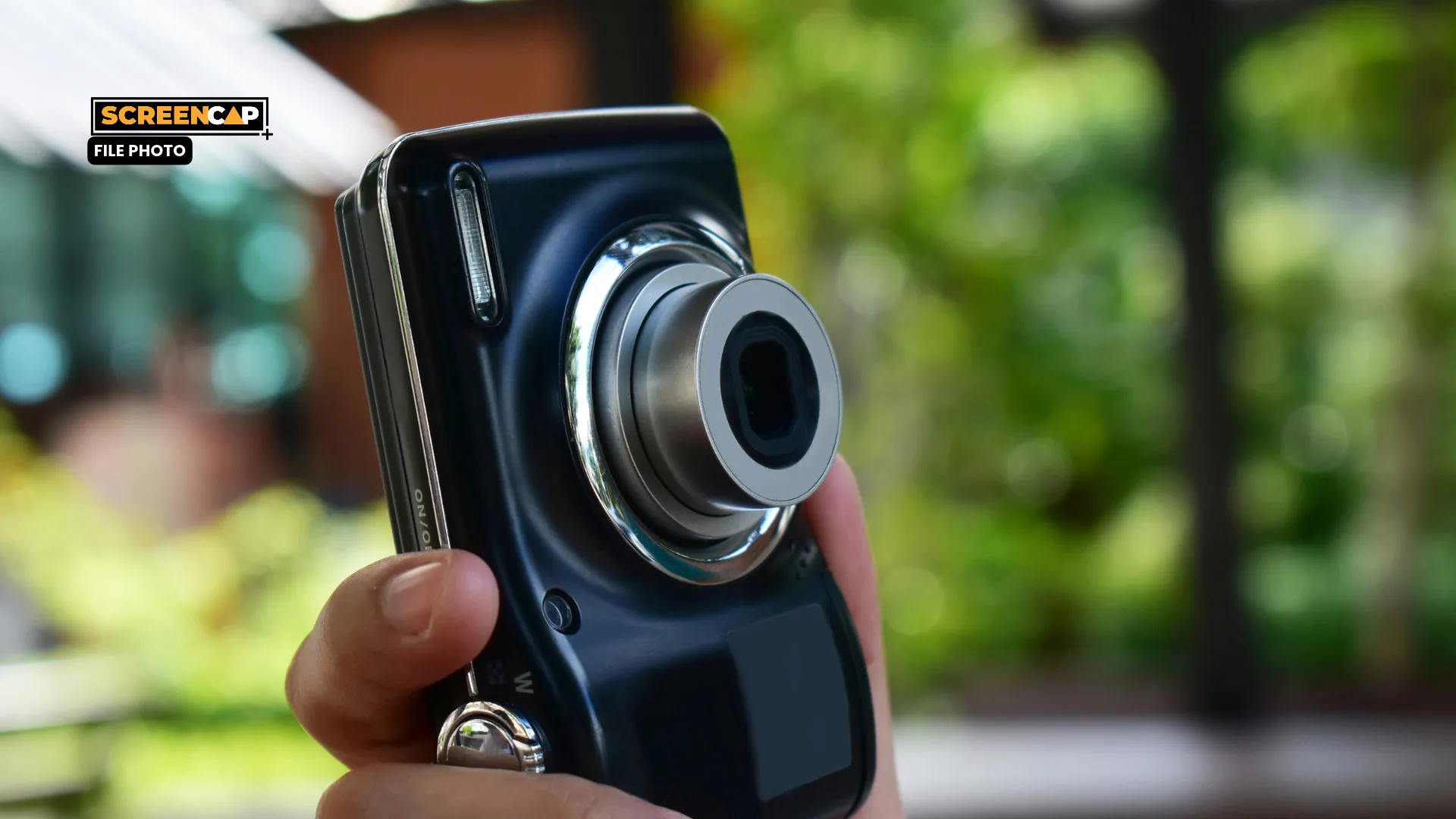
In an age of AI-enhanced photographs, sophisticated smartphone cameras, and carefully curated social media feeds, an unlikely piece of technology is finding its way back into the spotlight: the humble digicam.
There was a time when owning a compact digital camera felt like having the future in your pocket. Before smartphones became everyday necessities, small cameras from brands such as Canon, Sony, Nikon, and Fujifilm accompanied Filipinos to family reunions, school field trips, birthday parties, and summer vacations.
They captured graduation ceremonies, barkada outings, and ordinary afternoons, often producing photographs with harsh flashes, washed-out colors, and the unmistakable date stamps of the 2000s.
Today, these once-ordinary devices are attracting renewed interest among young photography enthusiasts and social media users.
Rather than seeking the latest technology, some are turning to older point-and-shoot cameras for their distinctive visual character.
The comeback raises an intriguing question: Why are people drawn to technology that an earlier generation was eager to replace?
When imperfections become the aesthetic
Modern smartphone cameras rely heavily on computational photography. Software can automatically balance exposure, reduce noise, enhance colors, and combine multiple frames to produce clearer images.
Portrait modes simulate background blur, while artificial intelligence can remove unwanted objects or modify parts of a photograph.
Older digicams offer a noticeably different result.
Many early consumer models have small sensors, limited dynamic range, slower autofocus, and basic image-processing capabilities. Their built-in flashes can produce brightly illuminated faces against dark backgrounds, while low-light photographs may appear grainy or slightly blurred.
These characteristics, once considered technical shortcomings, have become desirable elements of the early-2000s aesthetic.
The appeal reveals an important distinction between photographic quality and photographic character. An image can be technically imperfect yet visually distinctive and emotionally compelling.
For some photographers, that unpredictability is part of the creative experience.
A comeback with measurable signs
Interest in compact cameras extends beyond nostalgic social media posts.
The Camera & Imaging Products Association (CIPA), which tracks shipments among participating manufacturers, reported approximately 2.44 million worldwide shipments of built-in-lens digital cameras in 2025.
Its February 2026 forecast projected around 2.77 million shipments for the year, an expected increase of 13.6 percent.
The figures cover a broad category that includes both basic point-and-shoot devices and premium compact cameras. They do not specifically measure secondhand digicam purchases or demand among young Filipinos.
Nevertheless, they indicate continuing commercial interest in dedicated cameras despite the widespread availability of advanced smartphone photography.
Japanese retail sales data reported in October 2026 also showed relatively inexpensive point-and-shoot models remaining competitive within the compact-camera market.
This is a notable development for a product category that lost much of its mainstream appeal as smartphones became more capable.
Dedicated cameras are no longer essential for everyday photography, but their renewed popularity suggests that consumers still value experiences that smartphones cannot entirely replicate.
Nostalgia for a time barely remembered
The digicam revival also reflects the influence of nostalgia on contemporary youth culture.
For older millennials, compact digital cameras may bring back memories of school events, family vacations, and the early days of social networking.
For younger members of Generation Z, the attraction can be less about personal memories and more about the visual identity of an earlier era.
The 2000s have become a recognizable aesthetic across fashion, music, graphic design, and photography.
Direct-flash portraits, low-resolution images, and digital date stamps evoke a period when photography was becoming more accessible but had not yet acquired today’s highly processed appearance.
This fascination can be understood as nostalgia for an atmosphere rather than a lived experience.
In the Philippines, the aesthetic also resembles photographs preserved in family computers and old albums: birthday celebrations in living rooms, provincial vacations, neighborhood gatherings, and school programs.
Such images were often taken simply to document an occasion, without much concern for composition or presentation.
For younger enthusiasts, recreating that visual style can offer a connection to the past while giving familiar scenes a different artistic treatment.
The appeal of a slower experience
Beyond image quality, dedicated cameras change the process of taking photographs.
Smartphones allow users to capture, edit, and publish images almost instantly. The same device also delivers messages, notifications, entertainment, and countless other distractions.
An older digital camera has a narrower purpose.
Taking photographs becomes a separate activity, while transferring them may require a memory card reader, cable, or computer.
Although less convenient, this additional step creates a natural interval between capturing a moment and sharing it online.
Photographs can be reviewed after an event rather than immediately prepared for publication.
That does not necessarily make digicam users more mindful, but it illustrates the appeal of technology designed around a single function.
In an increasingly connected environment, a device that does only one thing can offer a welcome change of pace.
Does imperfect mean authentic?
The popularity of digicam photography is frequently associated with a desire for authenticity, but the relationship deserves closer examination.
An older camera does not automatically produce a more honest photograph.
Images have always been shaped by choices involving lighting, framing, timing, and presentation. A carefully staged digicam portrait can be just as curated as a smartphone selfie.
Conversely, a modern smartphone can capture a spontaneous, unedited moment.
What differs is the visual language.
Older cameras may produce images that appear less controlled or processed, creating an impression of spontaneity even when the photograph was deliberately arranged.
This reveals a paradox: people can carefully construct an aesthetic intended to look effortless.
The trend therefore reflects not necessarily a rejection of curated images, but a shift in what audiences consider visually appealing.
Authenticity remains a matter of context and intention, not simply the age of the equipment.
When outdated technology becomes desirable again
The revival also challenges the conventional relationship between technology and consumer value.
Electronic devices generally become less desirable as newer models offer improved specifications and greater convenience.
Yet older products can acquire cultural significance that extends beyond their original functionality.
A discontinued camera may become attractive because of its design, distinctive image output, or association with a particular era.
Secondhand marketplaces have made these devices more accessible, allowing buyers to compare models and search for older equipment.
However, purchasing vintage electronics involves practical risks.
Aging batteries, damaged screens, faulty lenses, and compatibility issues can make older cameras difficult to maintain. Replacement parts and proprietary accessories may also be expensive or unavailable.
There is an environmental dimension as well.
Continuing to use functioning electronics can extend their lifespan and potentially reduce waste. But acquiring additional gadgets solely to follow an aesthetic trend does not automatically make consumption more sustainable.
The digicam revival highlights how nostalgia can give outdated products a second life while also creating new consumer demand.
A distinctly Filipino connection
Photography has long played an important role in how Filipino families and communities preserve memories.
From reunions and fiestas to graduations and barkada trips, photographs document relationships, achievements, and shared experiences.
The arrival of smartphones made that process faster and more accessible, while social media transformed photographs into a central part of online identity.
The renewed interest in digicams introduces another dimension to this culture of documentation.
For many Filipino families, older digital photographs remain reminders of a period when images were transferred to computers, stored in folders, or uploaded long after an event had ended.
Revisiting that process through vintage cameras can be both a creative choice and a way of engaging with familiar memories.
Importantly, the trend does not suggest that young Filipinos are abandoning smartphones.
A digicam can complement a smartphone, serving a different purpose depending on the occasion and the desired result.
The two technologies can coexist, reflecting the increasingly personal ways people choose to document their lives.
Not everything needs to be in high definition
The return of old digital cameras is part of a broader cultural interest in earlier technologies.
Vinyl records, film cameras, and other older formats have retained or regained audiences despite the convenience of modern alternatives.
Their attraction lies not necessarily in superior performance, but in the experiences and associations they offer.
The digicam revival follows a similar pattern.
It suggests that technological advancement does not always determine cultural preference. Greater resolution, faster processing, and more sophisticated features may improve a device’s capabilities without replacing every quality people value in older equipment.
Nor should the trend be interpreted as proof that an entire generation is rejecting smartphones or artificial intelligence.
For many enthusiasts, vintage cameras are simply another creative tool.
What makes the comeback culturally interesting is the willingness to reconsider what constitutes a good photograph.
As technology continues to make images sharper, cleaner, and easier to manipulate, older cameras remind users that visual perfection is not the only measure of a meaningful picture.
Years from now, the photograph that matters most may not be the sharpest image in the album. It may be a slightly blurred picture of friends laughing, an overexposed family portrait, or an ordinary afternoon captured without much planning. Not because the camera performed perfectly, but because the moment was worth remembering.