
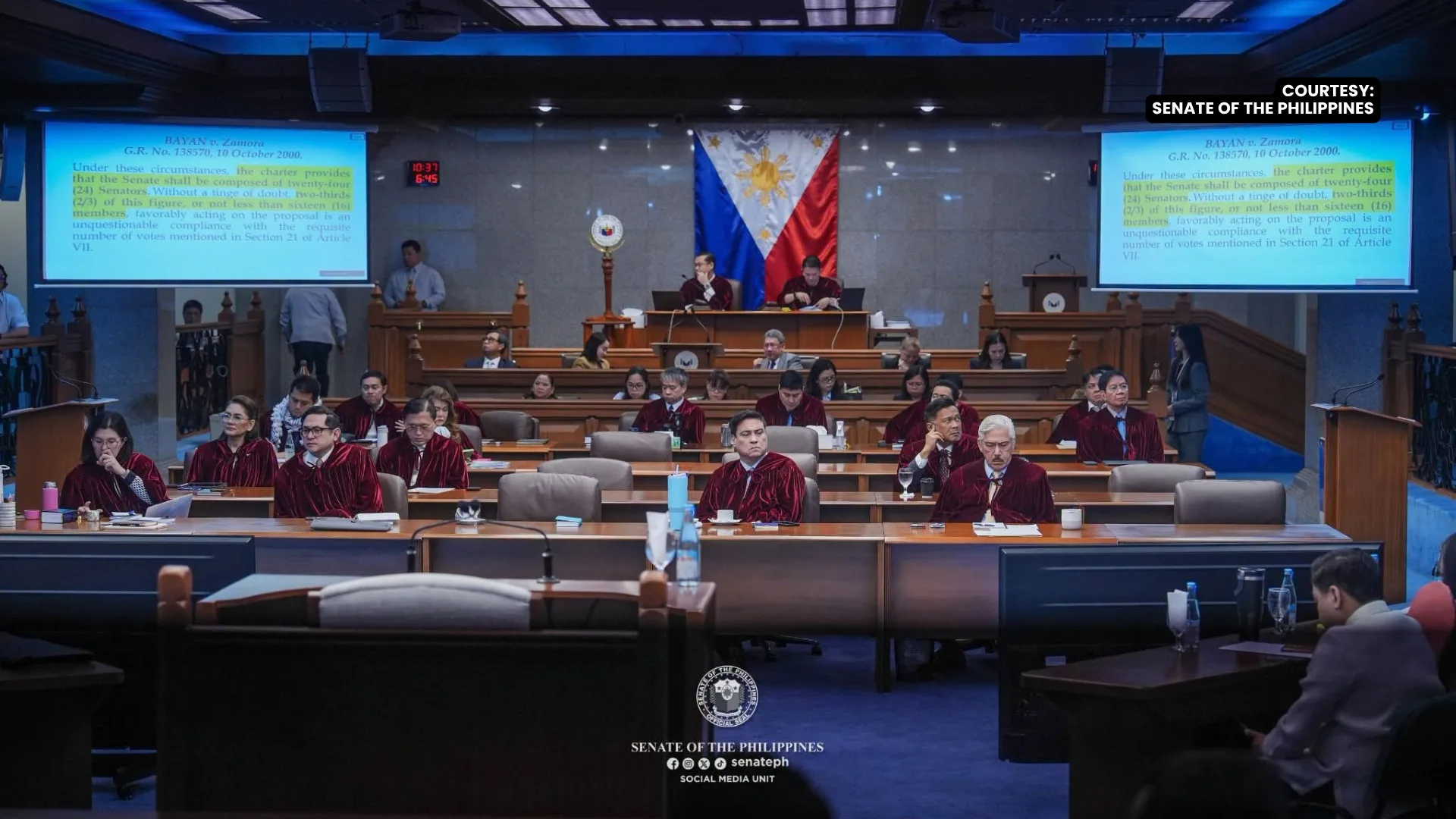
House impeachment prosecutors noted that the impeachment trial of Vice President Sara Z. Duterte could move at a faster pace if six minority senator-judges continue to abstain from court proceedings, while observing that the lawmakers hold the option to challenge recent procedural rulings before the Supreme Court.
Speaking on the operational impact of potential absences, House Impeachment Prosecutor and San Juan Representative Ysabel Maria “Bel” Zamora explained that fewer interventions from the bench would streamline witness examinations.
“Well, that may be correct. I mean, we will be lessening the time that we or the witness would have to answer the questions, and we will be more focused on the presentation of our witnesses and the propounding of questions unto them,” Zamora said regarding whether the trial timeline would shorten.
“So yes, it might be easier. The time might be shorter. But again, we will still present the same evidence that we had intended to present before,” she added, emphasizing that prosecutors will proceed with their planned evidence regardless of attendance.
The prosecution panel is currently presenting evidence under Article II, focusing on allegations of unexplained wealth with incoming witnesses scheduled to testify on corporate, procurement, and financial records.
Zamora underscored that the presentation of evidence serves a broader constitutional purpose beyond the trial chamber itself.
“Whether the minority senators will participate or not, we owe it to the public. We owe it to our people to show the evidence that the prosecution has,” Zamora stressed. “So this is not only for the senator-judges, but this is also for the public.”
Minority Boycott and Potential High Court Challenge
The development follows a controversial 13-1 vote by the Senate of the PhilippinesClick to open side panel for more information sitting as an impeachment court to adjust the formula for calculating the constitutional two-thirds conviction threshold, basing it on senator-judges who are legally capable of participating when judgment is rendered rather than the total statutory membership.
Six minority senator-judges: Alan Peter Cayetano, Pia Cayetano, Bong Go, Imee Marcos, Robin Padilla, and Camille Villar, abstained from the procedural vote after the court rejected a motion led by Cayetano to defer the decision to a later date.
Addressing the legal avenues open to the dissenting lawmakers, House Impeachment Prosecutor and Bukidnon Representative Jonathan Keith Flores noted that the minority members possess the standing to seek judicial review.
“I think it’s their freedom also from questioning the actions of the impeachment court before the Supreme Court, siguro, if they should decide to go to the Supreme Court,” Flores said.
“I think they did not participate on the voting lang for using the threshold because they already filed the motion na hindi natin pagbotohan ’to, but then it was overruled, so they went to voting and ayaw nilang mag-participate,” Flores added.
While none of the six senator-judges have formally announced an intent to petition the Supreme Court, the high tribunal retains constitutional authority to review actions of state bodies to determine if grave abuse of discretion occurred.