
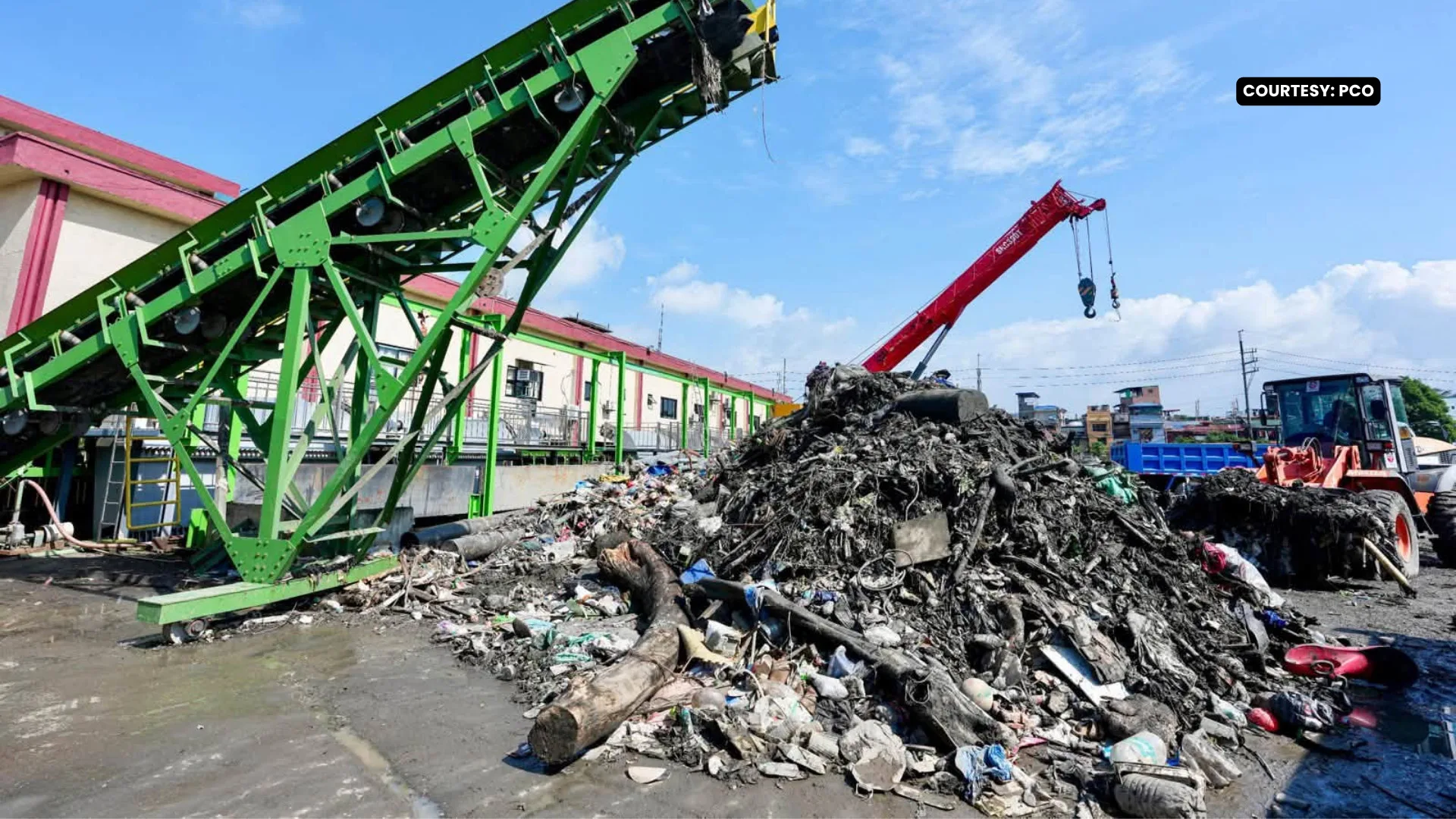
President Ferdinand Marcos Jr. on Thursday renewed his call to address the country’s worsening garbage problem, warning that improper waste disposal continues to clog drainage systems and exacerbate flooding across Metro Manila and surrounding areas.
Marcos made the remarks following an inspection of the Tripa de Gallina Pumping Station in Pasay City, the largest pumping station operated by the Metropolitan Manila Development Authority (MMDA).
While noting that the facility’s pumps are running at full capacity and helping floodwaters recede faster, the President pointed to accumulated trash as the primary obstacle to efficient drainage.
“Ang nakikita natin problema, number one, ‘yung basura ulit. Kasi, kaya’t ‘yan ang tiningnan natin, okay naman, malakas naman ‘yung mga bomba natin, umaandar naman silang lahat,” Marcos said.
The President noted that 13 additional pumping stations are scheduled for installation and upgrading, with full operations expected by late 2026 or early 2027. He added that intensified rainfall driven by climate change necessitates expanding drainage infrastructure throughout the National Capital Region.
Accompanied by MMDA Chairman Romando Artes, MMDA General Manager Nicolas Torre III and Pasay City Mayor Imelda Calixto-Rubiano, Marcos observed the collection of solid waste and debris from the estero and received a briefing on the facility’s catchment area.
To provide a long-term solution to both waste management and flood control, Marcos reiterated that the government is advancing a waste-to-energy initiative targeted for implementation in 2027. The national government is currently coordinating with local government units to identify suitable sites for waste-to-energy plants.
The Department of Energy (DOE) opened registration on May 25, 2026, for Qualified Suppliers under the Green Energy Auction Program’s Special Auction Round for Waste-to-Energy, launching a 230-megawatt auction dedicated to thermal combustion waste-to-energy technology.
Marcos added that the administration is also expanding community composting programs and recycling efforts, pointing to sample products made from upcycled waste, including small vases crafted from coconut husks retrieved from cleared waterways.