
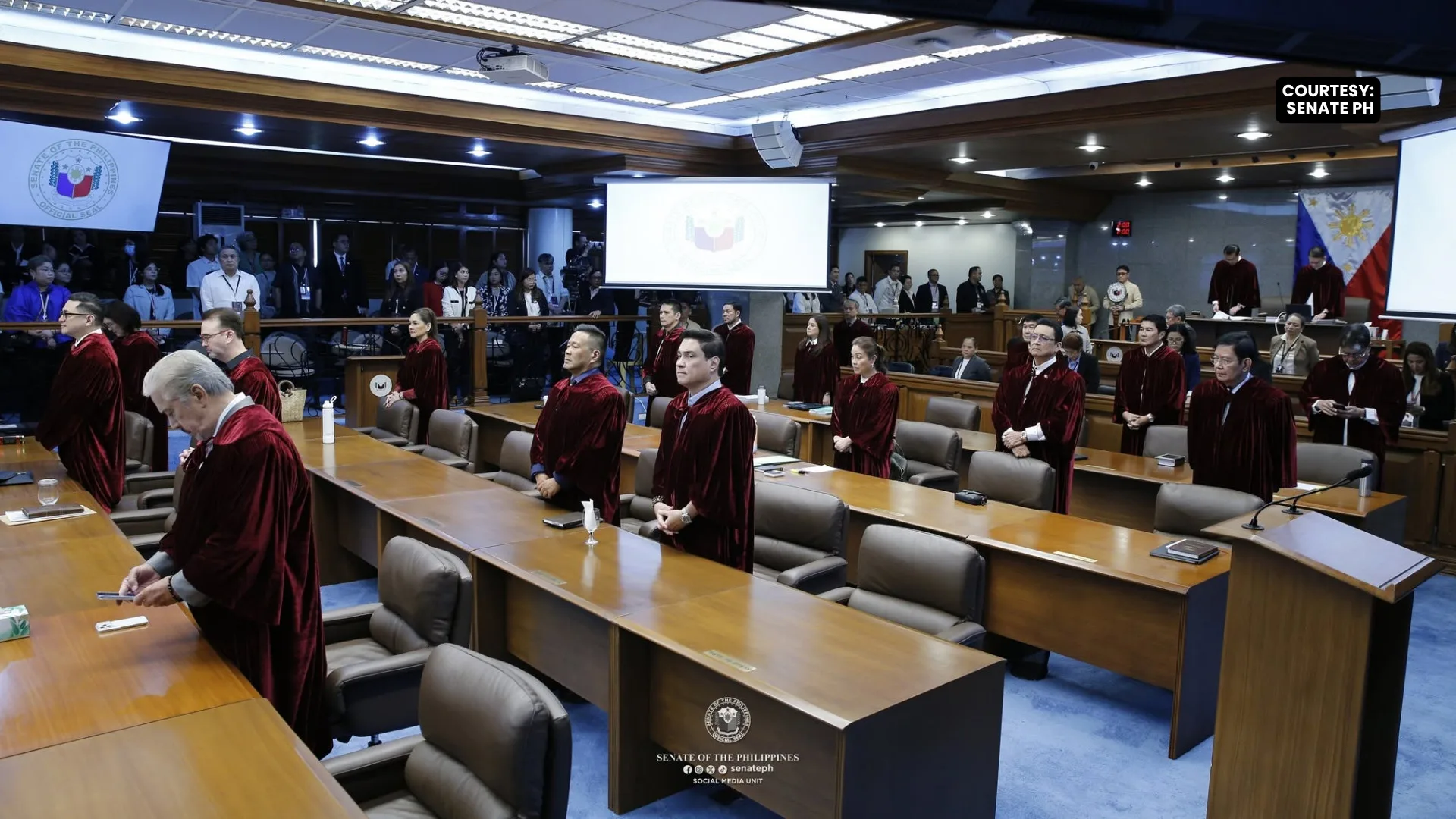
Whether Vice President Sara Duterte intended to carry out her alleged threats is not the central issue in her impeachment trial, former Senate President Franklin Drilon said, arguing that the Senate impeachment court must instead determine whether her conduct amounted to betrayal of public trust.
Drilon said impeachment is not a criminal prosecution and does not require the court to decide whether Duterte committed the crime of grave threats.
“The more fundamental issue is a constitutional one: Do we, as a nation, expect and require our highest public officials to speak and conduct themselves in this manner?” he said.
“If such statements were in fact made, are they consistent with the dignity, restraint, and sense of responsibility that the office demands?” he added. “Those are ultimately questions of constitutional accountability, not merely criminal law.”
Duterte is facing an impeachment charge over her Nov. 23, 2024 remarks involving President Ferdinand Marcos Jr., First Lady Liza Araneta-Marcos and former Speaker Ferdinand Martin Romualdez.
The impeachment article alleges that she contracted someone to kill the three officials if she herself were killed, made grave threats and incited sedition.
Duterte has not denied making the recorded remarks. Her defense has argued that the statements were conditional, exaggerated and made while she was under extreme stress.
Drilon said those arguments do not resolve the constitutional question before the court.
“Whether it is a grave threat or a threat, it does not matter. Sa akin po, ang importante ay kung ito po ay act na sapat upang siya ay ma-declare na guilty. Hindi criminal offense ang pinag-uusapan dito kung hindi betrayal of public trust,” he said in an interview on DWIZ.
He also said procedural objections should not overshadow the court’s duty to determine whether Duterte’s conduct met the standards expected of the country’s second-highest official.
“The defense may attempt to bury it behind technicalities, but procedural objections cannot overshadow the constitutional questions the impeachment court is duty-bound to resolve,” Drilon said.
Much of the first three days of trial focused on the identification and authentication of a video containing Duterte’s statements.
Drilon said the proceedings could have moved faster had the prosecution and defense agreed on facts that were not genuinely disputed, particularly the authenticity of the recording.
“Ang dapat, magkaroon ng stipulation of facts. Iyon ba ay in dispute o hindi? Para ang pag-uusapan na lang ay kung ito ay impeachable offense. Ang nangyari ay humaba,” he said.
“Hindi ito trial kung guilty siya ng grave threats o hindi. Ang trial ay kung yung bang behavior ay karapat-dapat sa isang bise president. Is that betrayal of public trust kung sinabi mong papatayin kita,” he added.
Drilon also questioned the defense’s continued challenge to the recording after relying on the same video in proceedings involving Duterte’s chief of staff, Zuleika Lopez.
He said the argument that Duterte was under extreme stress when she made the remarks could raise further questions about her judgment and fitness for office rather than strengthen her defense.
Drilon assessed that the prosecution held a modest early advantage, not because it had already proved its case, but because it had kept the proceedings centered on Duterte’s own statements.
“The trial is, of course, still in its early stages, and much evidence remains to be presented. But after three days, the prosecution would seem to hold a modest advantage, both in terms of keeping the legal issues centered on the constitutional inquiry and, perhaps just as importantly in a proceeding of this nature, in shaping the broader public narrative surrounding the case,” he said.