
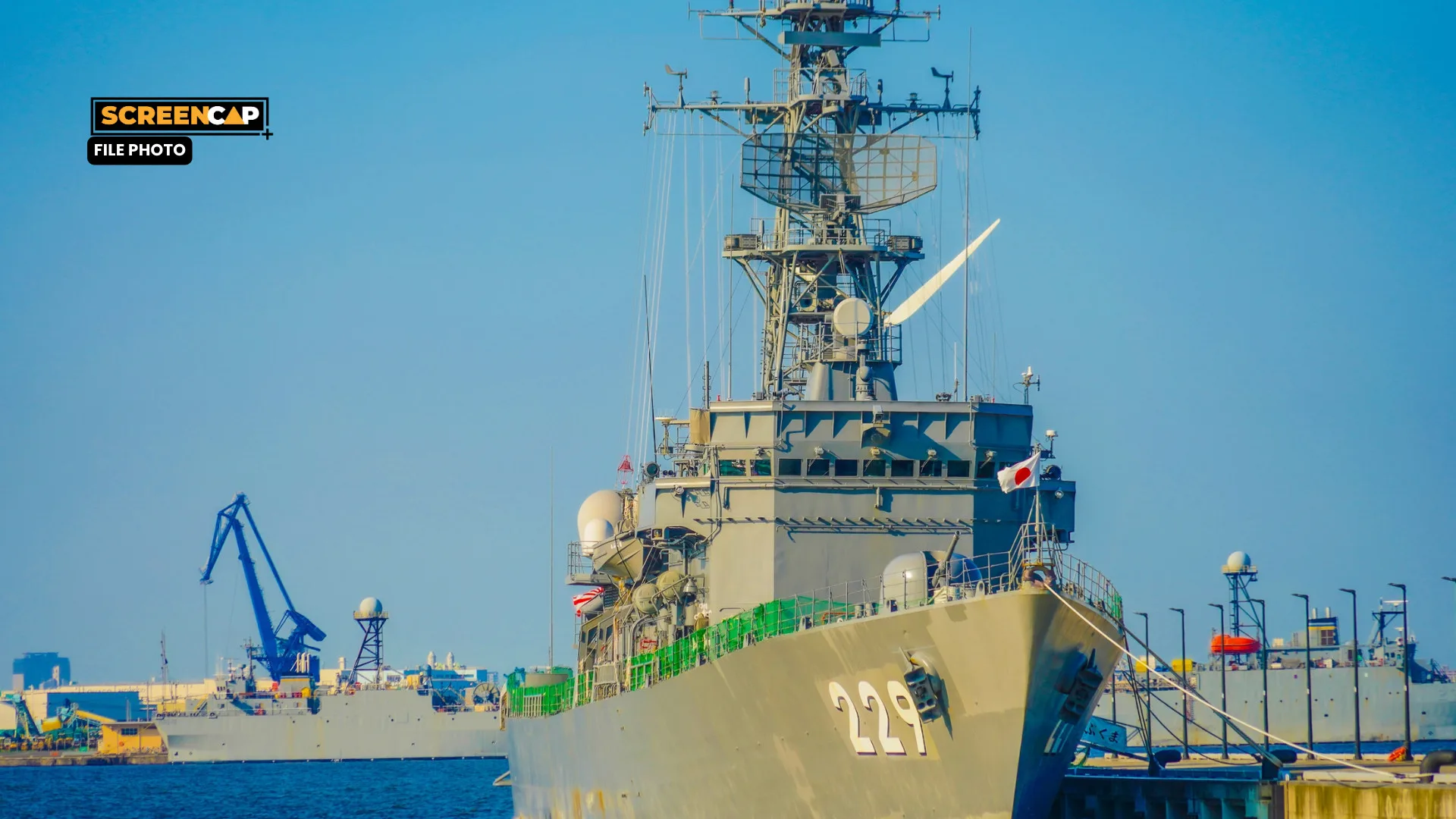
Defense Secretary Gilberto Teodoro Jr. said the Philippines has accepted in principle the proposed transfer of five Japanese warships, but stressed that the process remains under negotiation and will take time to complete.
In an ambush interview, Teodoro said the transfer is “not a simple matter” and involves logistical, administrative, training, and interoperability requirements.
“Well, as I said yesterday, it’s being worked on. It’s already accepted in principle. It’s being worked on. I cannot give timelines because it’s not a simple matter of transferring,” Teodoro said.
Asked how many warships are involved, Teodoro replied: “Five.”
He clarified that no payment would be made to Japan for the vessels, but the Philippines would shoulder related costs.
“No transfer of money will be given to the Japanese, but costs of shipping it, sailing it here, costs of training the crew, costs of interoperating the systems with our systems, are to be borne by us,” Teodoro said.
The defense chief also said the government must invest in naval facilities to support incoming platforms, noting that the country’s need for upgraded military infrastructure is long overdue.
“The Abukuma is the least of the problem because it’s one of the smaller platforms that we will have. It’s the bigger platforms that we have. And it was probably 30 years to 40 years overdue that we have new naval facilities,” he said.
Teodoro said the Philippines also needs to strengthen patrols not only in the West Philippine Sea but across all maritime areas, including the Pacific Ocean and the Philippine Rise.
“No, we will increase our patrols in all areas. In all areas. Mind you, even in the Pacific Ocean and in the Philippine Rise we need to do that, because once we be remiss in that, then somebody else may claim ownership over it,” he said.
On the claim by Chinese scholars that Batanes is part of China by way of Taiwan, Teodoro called for strong pushback and dismissed the assertion as contrary to international law, the Constitution, and basic reason.
“Natural, dapat talaga strong ang pushback natin dyan. Kasi, number one, hindi na ito, hindi lamang ito labag sa international law, hindi labag sa ating Saligang Batas, kung hindi labag sa normal na pag-iisip ng tao,” Teodoro said.
He said the claim underscored the need for the Philippines to rapidly build its internal defense and deterrence capability.
“No, that’s one component only. The basis really is to build our own internal deterrence mechanisms as quickly as possible,” Teodoro said when asked whether more exercises and maritime cooperative activities should be held in the area.
Teodoro also said the Philippines must realign resources to support defense priorities, stressing that the national budget is finite and that strengthening defense would require difficult funding decisions.
“We definitely need to realign, it’s not might. We need to, because the budget is a finite item, right? And so, more for one means less for another,” he said.
He added that the country should work toward raising defense spending to at least two to four percent of gross domestic product.
Teodoro also said the 2016 arbitral ruling has already become part of the country’s legal position and should no longer be treated as a matter of debate.
“I believe that is already institutionalized, that it is already beyond debate that the arbitral award is part and parcel of our legal arsenal,” he said.
“What we need to scale up is the pace by which our agencies responsible for implementing that arbitral award are capacitated for doing so,” he added.
Asked about concerns that the country’s position on the arbitral ruling could change after 2028, Teodoro said the possibility remains a concern, but he doubted it would happen because Filipinos have already embraced the ruling.
“Definitely the concern is there. The likelihood, I doubt, given the fact that the Filipinos already embrace the arbitral ruling. And I do not think that any leader who goes against the arbitral award will have the mandate of the people,” Teodoro said.
He said strong public support for the country’s maritime position is one of the best safeguards against partisanship compromising national interests in the West Philippine Sea and other maritime areas.
“Our maritime entitlements is a public issue, hence political. But it should not be partisan,” Teodoro said.