
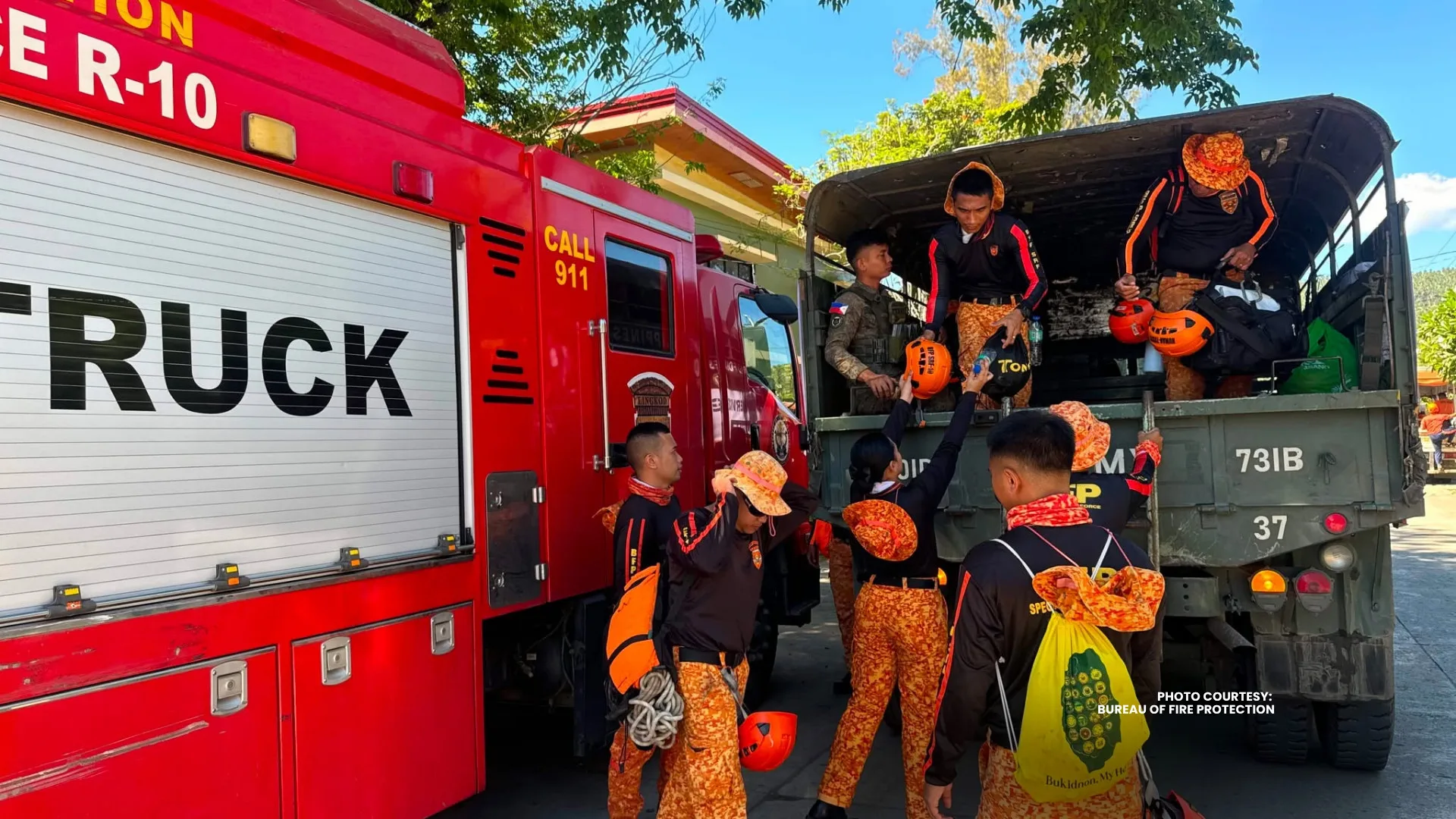
A new study warning that stress levels along two major California fault systems have reached their highest point in about 1,000 years is drawing attention not only in the United States but also in earthquake-prone countries such as the Philippines, where a major active fault cuts through densely populated areas.
Researchers found that tectonic stress along the San Andreas and San Jacinto fault systems in Southern California has built up to levels not seen in a millennium. In some sections, the stress may have already exceeded historical levels, raising fresh concern over the potential for a powerful and destructive earthquake in one of the most populated regions of the United States.
The study, led by researchers from the University of Hawaiʻi at Mānoa and published in the peer-reviewed Journal of Geophysical Research: Solid Earth, used computer modeling to examine how stress has accumulated and been released along the two fault systems over the past 1,000 years.
The model drew from geological records, including radiocarbon dating of displaced sediments and tree-ring data, to reconstruct centuries of earthquake activity. Researchers then projected those records forward to estimate the amount of stress currently stored along the faults.
One of the most concerning findings centered on the San Jacinto-Bernardino section, where stress was estimated at 3.6 megapascals. While the figure may sound abstract, scientists said the danger lies in the fact that the pressure is spread across a vast fault plane extending for several kilometers and reaching depths of about 10 to 20 kilometers.
Lead researcher Liliane Burkhard of the University of Bern in Switzerland said the number is significant not merely because of the pressure itself, but because of the size of the area where that stress is acting.
What makes large earthquakes devastating is not only the amount of stress locked in the rocks, but the wide area that can rupture when the fault finally gives way. When that stored energy is released, the resulting ground shaking can affect cities, infrastructure, roads, homes, hospitals, schools, and lifelines across a wide region.
The study also focused on Cajon Pass, a critical area where the San Andreas and San Jacinto fault systems intersect. Scientists described it as a possible “earthquake gate,” capable at times of stopping a rupture from jumping between faults, but also capable under certain conditions of allowing both fault systems to rupture together.
Such a joint rupture would be more destructive than a major earthquake occurring on only one fault. Researchers said it could threaten areas including Los Angeles, San Bernardino, Riverside, and the Coachella Valley, where millions of people live.
The scientists stressed, however, that the study does not predict when a major earthquake will happen. Earthquakes cannot be forecast with exact timing. Instead, the findings are meant to improve hazard assessment, guide infrastructure planning, strengthen building standards, and support emergency preparedness.
For the Philippines, the warning is familiar.
The country sits along the Pacific Ring of Fire and regularly experiences destructive earthquakes. In Metro Manila and nearby provinces, the West Valley Fault remains one of the most closely watched seismic threats. The fault runs through parts of Bulacan, Rizal, Metro Manila, Cavite, and Laguna and has long been identified as capable of generating a major earthquake.
The California study underscores a lesson relevant to the Philippines: fault systems may stay quiet for long periods, but silence does not mean safety. Stress can continue building underground while cities expand above it.
This is particularly important for Metro Manila, where dense communities, high-rise buildings, roads, bridges, railways, power lines, water systems, and telecommunications networks all face potential disruption in the event of a major quake.
The findings also highlight the importance of updated hazard maps, strict enforcement of building codes, structural retrofitting, evacuation planning, public drills, and household-level preparedness.
In both California and the Philippines, the central message is the same: no scientific model can say exactly when a major earthquake will strike, but the absence of a date should not become an excuse for delay.
For countries living with active faults, preparedness is not a one-time campaign. It is a continuing obligation.