
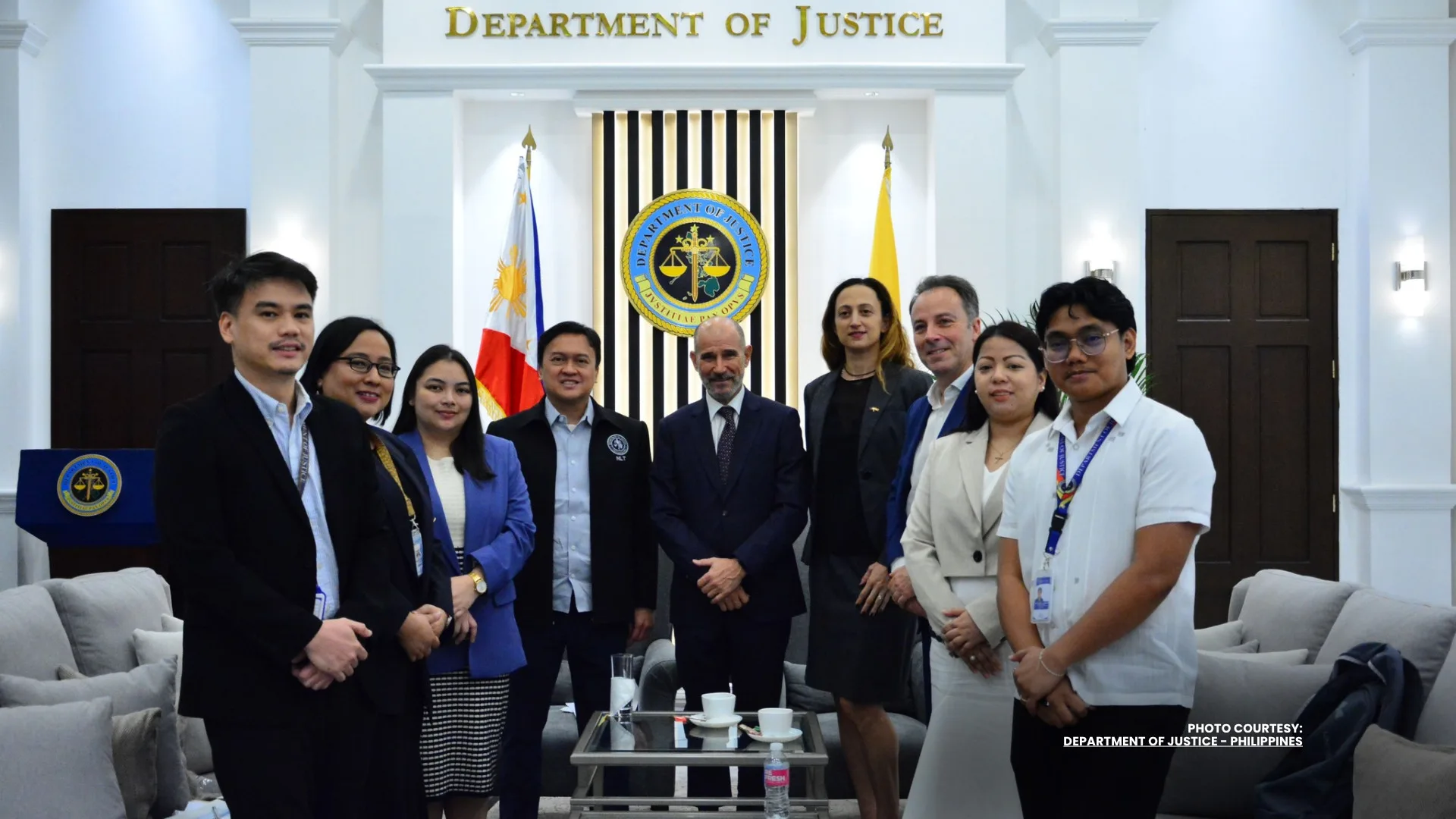
The Department of Justice (DOJ) is looking to Spain’s experience in digital transformation as it moves to modernize the Philippine justice system and improve the delivery of legal services.
The initiative builds on the “Calesa Digital” project, a joint effort launched in late 2024 by the DOJ, the Supreme Court and the University of the Philippines Institute of Government and Law Reform. The project seeks to develop a digital legal framework to support reforms in the administration of justice.
The program gained momentum in 2025 after a Philippine delegation attended a conference in Granada, Spain, where officials from the health, security and legal sectors discussed digital systems that could help improve public service delivery.

The DOJ also received support from the Spanish Agency for International Development Cooperation.
On May 21, 2026, Spanish Ambassador Miguel Utray met with DOJ Undersecretary Nicholas Felix Ty and Inter-Agency Council Against Trafficking Executive Director Hannah Lizette Manalili to discuss possible areas of cooperation.
The meeting also introduced Philippine officials to representatives of INECO, a Spanish technology firm that has been involved in the digitization of Spain’s justice system for more than a decade.
The DOJ said it will study INECO’s digital platforms and methods as it seeks to improve local databases, legal records and case management systems.
Justice Secretary Fredderick Vida welcomed the partnership, saying technology will be crucial in making justice more accessible, efficient and responsive to the public.
“Real justice for all can only be fully achieved by steering our justice system toward technology and digital innovation. This is a crucial step to ensure that our government can adapt to the fast-changing landscape of technology so that public service will never be compromised and justice will always be swift and efficient,” Vida said.