
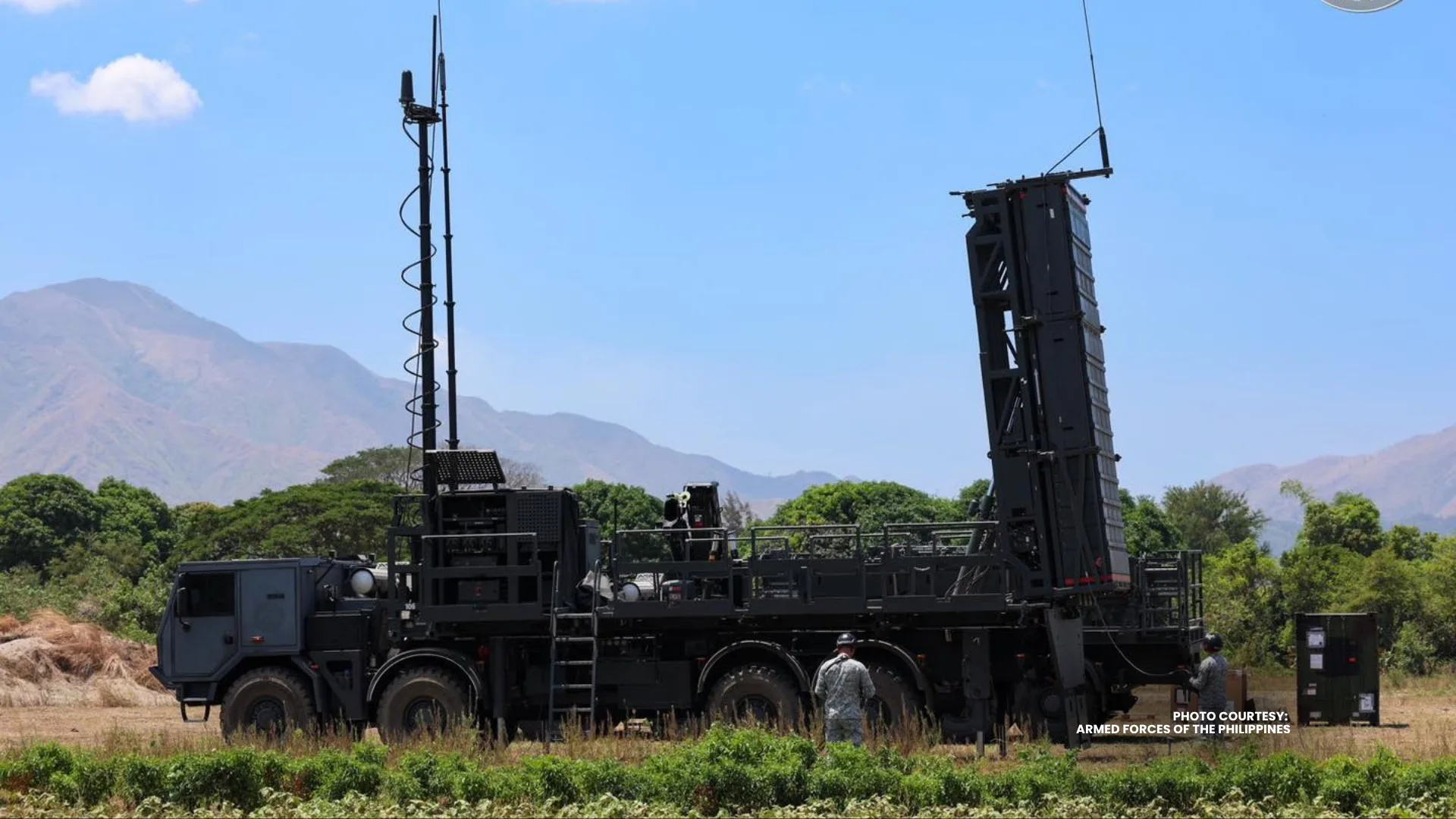
A high-precision missile strike carried out during joint military exercises underscored deepening defense cooperation between Manila and Washington, as US forces successfully launched a long-range weapon from the Philippines and hit a distant inland target.
United States troops fired a Tomahawk missile from Tacloban City in Leyte early Tuesday, striking a designated impact area roughly 1,000 kilometers away at Fort Magsaysay, according to officials overseeing the ongoing Balikatan Exercise.
Col. Dennis Hernandez, Balikatan 2026 spokesperson on the Philippine side, said the missile was launched at around 12:12 am using the Typhon missile system and reached its target shortly before 1 am, demonstrating the system’s precision in supporting simulated ground operations.
The drill formed part of a “land-based scenario” within Fort Magsaysay, where the missile system was used to support notional ground attack activities. Hernandez emphasized that the Tomahawk, a precision-guided munition, successfully struck its intended target area.
Only one missile was fired during the activity, which officials described as a standalone event and the sole Tomahawk launch for this year’s Balikatan exercises, running from April 20 to May 9.
Hernandez also clarified that the Typhon system will not be used in the upcoming maritime strike exercise in Ilocos Norte, which is one of the highlight events of this year’s drills.
That exercise will involve a coordinated live-fire operation targeting a decommissioned naval vessel positioned about 40 kilometers off Laoag City. Military assets from the United States, the Philippines, Japan, and Canada are expected to participate, deploying a range of weapon systems including rocket artillery, anti-ship missiles, and aircraft.
The maritime strike is set to be observed by key defense officials, including Japan’s defense leadership and Philippine authorities, with President Ferdinand Marcos Jr. expected to monitor the activity from Camp Aguinaldo.
Officials said strict safety protocols will be enforced throughout the exercise, with all firing conducted in carefully sequenced operations to ensure coordination among participating forces.
The long-range strike drill highlights the increasing complexity and scale of joint military exercises in the region, as allied forces enhance interoperability and readiness in response to evolving security challenges.