
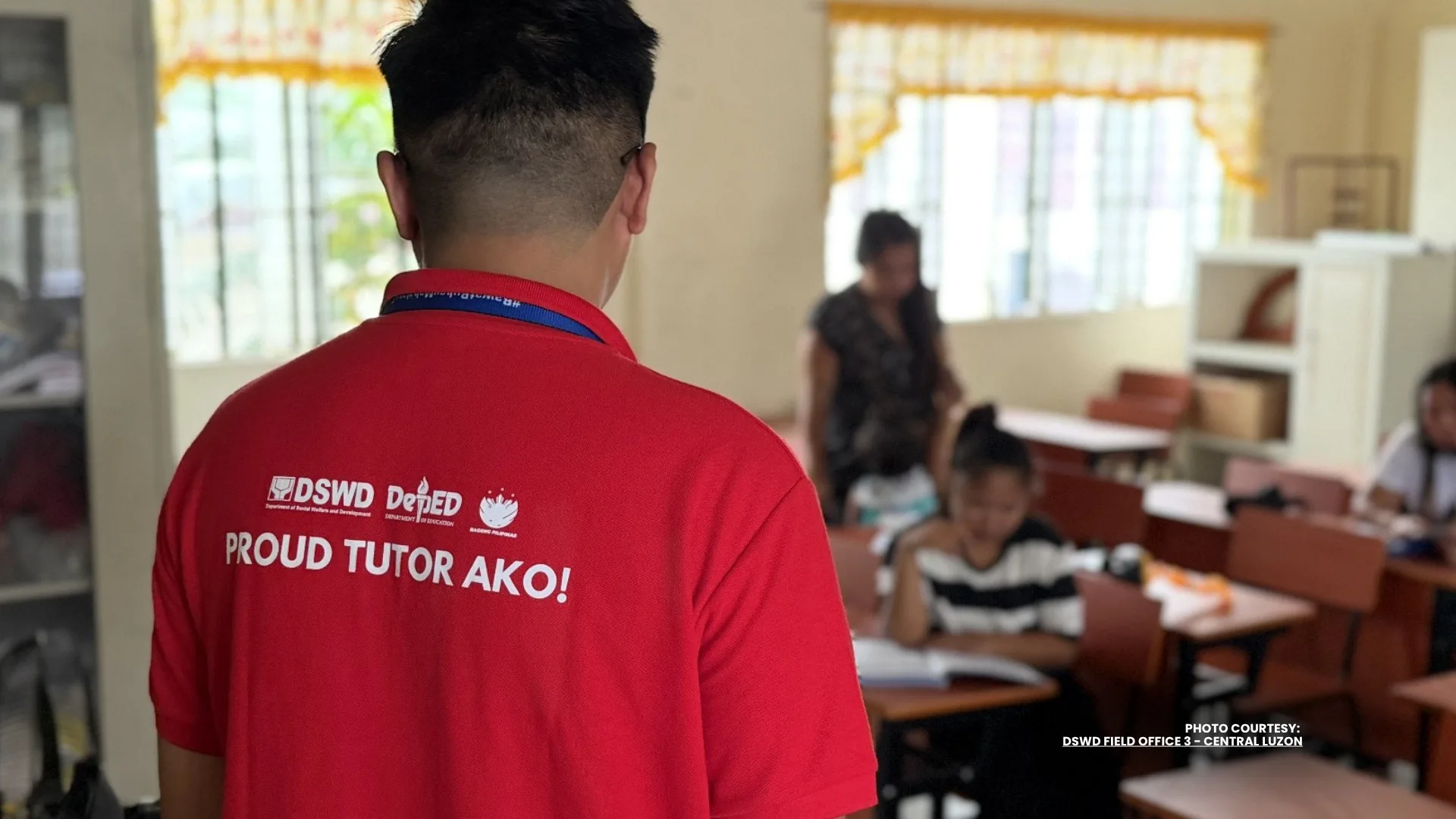
The Department of Social Welfare and Development (DSWD) has launched the fourth year of its nationwide Tara, Basa! Tutoring Program, kicking off 20 days of tutoring and parenting sessions aimed at improving literacy among young learners and strengthening parental support at home starting May 4.
The program mobilizes thousands of college students as tutors and youth development workers (YDWs) to assist more than 57,000 child learners and parents across the country, focusing on helping struggling and non-reading students reach grade-level proficiency.
DSWD Undersecretary Edu Punay, who leads the program, said the initiative continues to equip young volunteers with the necessary skills while directly addressing learning gaps in basic education.
“Our tutors and YDWs are ready to help learners improve their reading skills while also guiding parents to become more active in their children’s education at home,” Punay said.
For 2026, the program will deploy 11,468 tutors and 7,570 YDWs nationwide, with the National Capital Region recording the largest deployment at 2,600 tutors and 1,413 YDWs.
Other regions also mobilized significant numbers, including CALABARZON with over 1,000 tutors, Central Visayas with 1,110, SOCCSKSARGEN with 1,321, and Eastern Visayas with 1,000 tutors, among others.
The Tara, Basa! program pairs college students with elementary learners struggling in reading while also conducting parenting sessions that encourage parents to take a more active role as their children’s first teachers.
Punay reminded participating families to consistently attend sessions to maximize the program’s benefits, noting that both learners and parents play a role in its success.
He added that attendance rules are designed to ensure engagement, with incentives tied to participation in both tutoring and parenting sessions.
Now in its fourth year, the program targets over 133,000 beneficiaries nationwide and operates as a community-based cash-for-work initiative that provides allowances to student tutors in exchange for their service.
The DSWD said the program continues to support both education recovery and youth employment while addressing foundational learning gaps among Filipino students.