

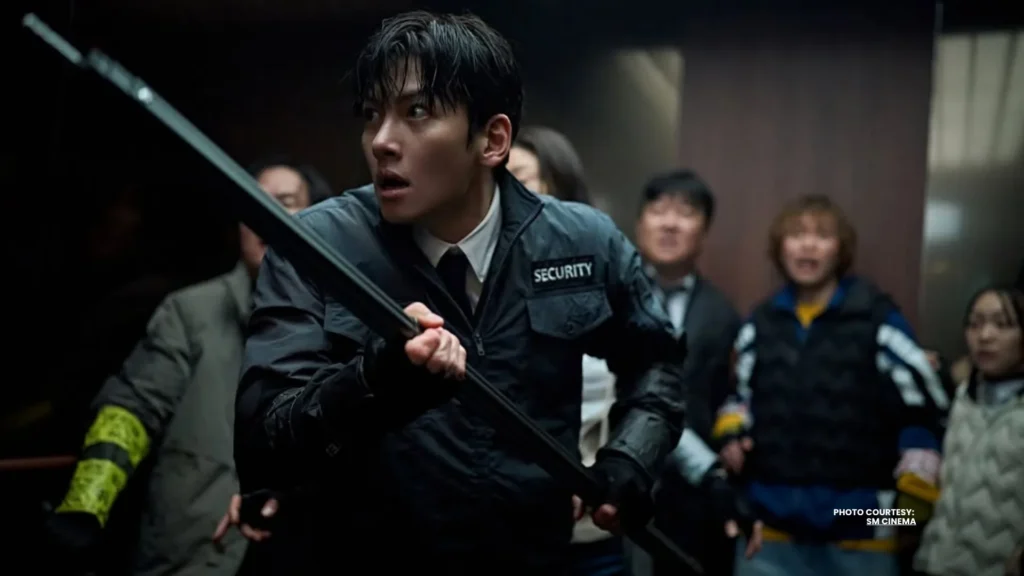
On May 27, Colony, Yeon Sang-ho’s latest zombie spectacle starring Jun Ji-hyun and Ji Chang-wook, opened in Philippine cinemas and immediately delivered the country’s biggest box-office debut of 2026, earning P20 million in a single day.
That number is striking not simply because a foreign-language horror film performed well here. Foreign genre titles often do. What makes it more revealing is the kind of film that drew the crowd. It’s a Korean zombie thriller from the same filmmaker who, nearly a decade ago, turned the undead into an emotional event for Filipino audiences.
The modern K-zombie entered the Filipino mainstream through Train to Busan in 2016, when Yeon’s outbreak thriller about passengers trapped inside a speeding train became more than a hit. It became communal viewing. The film drew more than 11.5 million admissions in South Korea, premiered in the Midnight Screenings section of Cannes, earned nearly $100 million worldwide on an $8.5-million budget, and became the rare horror movie that Filipino viewers did not merely recommend. They revisited it, argued about it, cried over it, and treated it less like a zombie film than a disaster melodrama with teeth.
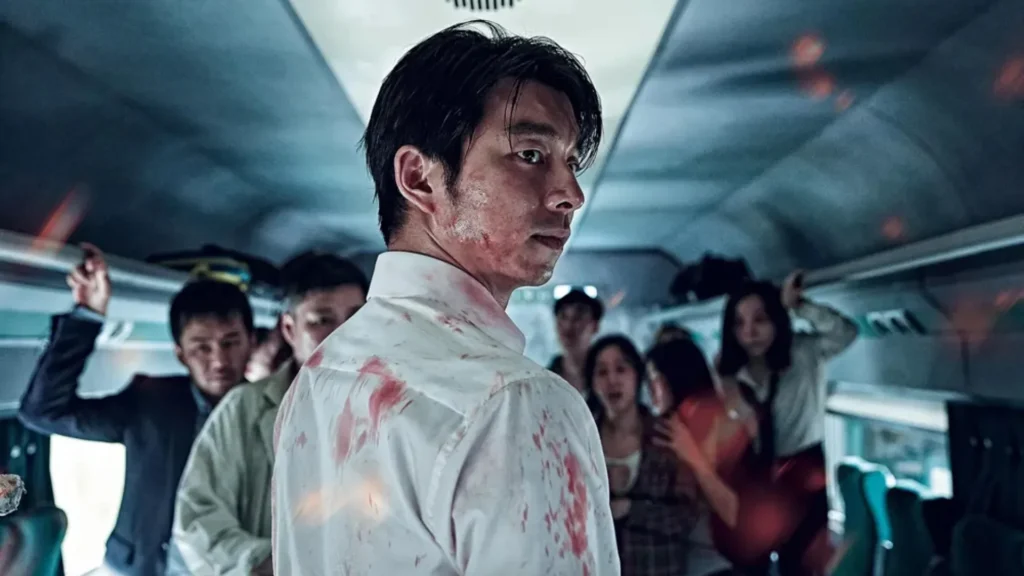
Its genius was compression. The apocalypse unfolded inside train cars, leaving nowhere to hide from the people making terrible choices under pressure. Who gets protected? Who gets pushed aside? Who survives because someone else is sacrificed? The infected bodies were frightening, but the uninfected passengers were often worse.
That moral stress test, more than the gore, explains why the film landed so cleanly in the Philippines, where horror audiences have long expected monsters to expose something rotten among the living.
Colony extends that same architecture into a quarantined building: same pressure-cooker logic, bigger scale, and a reported ₩17-billion budget. Filipino audiences responded as if the loyalty had never lapsed.
The Philippines has a horror tradition rooted in very different creatures: the aswang, the manananggal, the tiyanak, the multo. These are monsters of folklore, barrio fear, family curse, blood debt, and the supernatural. The long-running Shake, Rattle & Roll anthology franchise, which began in 1984, became a local institution because it knew how to dress Filipino anxieties in genre clothing.
The zombie belongs to none of that mythology. It was an import, culturally neutral but structurally flexible. That flexibility became its advantage.
Filipino filmmakers have used the zombie form in wildly different ways. Remington and the Curse of the Zombadings turned it into queer horror-comedy and camp allegory against homophobia. Block Z placed the outbreak inside a university campus and played it as a straight survival thriller. Day Zero pushed the genre into prison-action territory, with Brandon Vera fighting through a facility overrun in chaos. Netflix’s Outside pulled the zombie film inward, following a family whose buried trauma made the infected outside the farmhouse feel almost secondary to what was already decaying inside.
No single film has fully defined a dominant Filipino zombie style. That may be the most honest thing about the genre here. Local zombie films do not move in one direction because Filipino fear does not come from one source.
Still, the K-zombie remains the most commercially powerful reference point.
The reason is not production value alone, although scale helps. It is the way Korean outbreak films build catastrophe out of materials Filipino audiences recognize instantly: unreliable systems, dangerous public spaces, class divisions that do not disappear during crisis, and the particular terror of being separated from family when order collapses.
The zombie does not merely eat people. It reveals how fragile the arrangements between people have always been.
In the Philippines, where disaster preparedness is a lived anxiety, where urban congestion is daily experience, and where the question of who gets rescued first is never purely hypothetical, the outbreak scenario does not feel distant. It feels exaggerated, but not by much.
That is the zombie’s secret durability. It is a monster of systems, not just bodies.
Vampires seduce. Ghosts haunt. The Aswang stalks the dark. Zombies overwhelm infrastructure. They turn trains, malls, hospitals, schools, prisons, and apartment buildings into stress tests for human decency. The best zombie films have always been sociological first and horrifying second.
Colony’s box-office milestone in the Philippines is an indication that the K-zombie still carries cultural charge here, now boosted by Cannes prestige, global release momentum, and stars with devoted Filipino fan bases.
Filipino audiences did not show up on opening day simply because zombies are trendy again. They showed up because the genre keeps delivering something they have been fluent in for years: horror that asks what kind of people we become when the world gives us permission to stop pretending.
The dead return. The living reveal themselves. And apparently, that never gets old.