
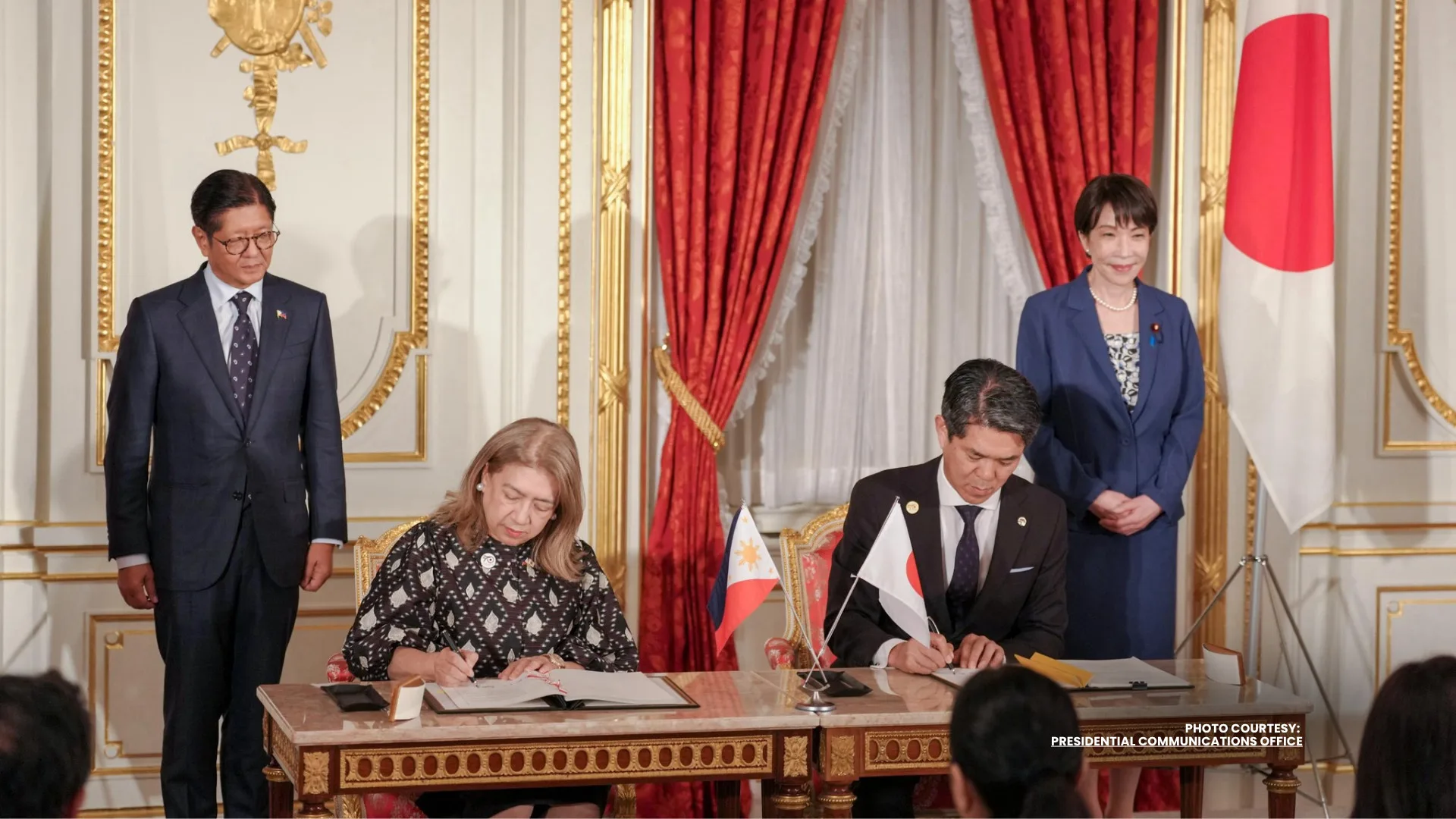
The Philippines and Japan have signed an updated tax treaty aimed at preventing double taxation, improving tax certainty, and encouraging more cross-border investments between the two countries.
The Department of Finance said the renegotiated Convention for the Avoidance of Double Taxation and the Prevention of Fiscal Evasion with Respect to Taxes on Income was signed during President Ferdinand Marcos Jr.’s State Visit to Japan.
The agreement replaces the previous tax treaty concluded in 1980 and partially amended in 2008, giving both countries a modernized framework for fiscal cooperation as they mark 70 years of diplomatic relations.
The updated treaty is designed to ensure that income earned across the Philippines and Japan is not taxed twice, reducing the cost of doing business and giving companies, investors, and individuals clearer rules on cross-border income.
The DOF said the agreement is expected to create a more stable and predictable environment for trade and investment, particularly as both countries deepen economic cooperation in advanced manufacturing, infrastructure, digital innovation, and other key sectors.
The treaty also updates provisions on withholding taxes on dividends, interest, and royalties, changes meant to support greater investment flows and technology transfer into the Philippine economy.
“This agreement reflects the Philippines’ commitment to fostering a more competitive, predictable, and investment-friendly environment that will create high-quality employment opportunities and sustained economic growth,” Finance Secretary Frederick Go said.
Japan remains one of the Philippines’ major sources of foreign direct investment, with annual inflows exceeding $800 million in both 2022 and 2023.
The DOF said the new tax framework is expected to further strengthen investor confidence and expand business activity between Manila and Tokyo.
The agreement is also expected to benefit more than 245,000 overseas Filipino workers in Japan by providing clearer and more predictable rules on taxation of cross-border income.
The DOF said the modernized treaty reaffirms the Philippines’ commitment to transparency, predictability, and a rules-based global tax system, while reinforcing the country’s position as an investment-ready economy.